
CES 2006: Motherboards, Memory, Cooling, and a Few Surprises
- Posted in
- Trade Shows
ASUS
The bread and butter of ASUS has always been motherboards, and it comes as little surprise that they have products using just about every conceivable chipset and for every market segment.
At the high-end, they have the workstation class P5WDG2-WS motherboard using the 975X chipset and sporting dual PCI-X slots as well as dual PCIe X16 (with X8 data connections) slots for CrossFire.
They're also working on "Digital Home" uATX boards for Pentium D (P5LD2-VM DH) and Core Duo (N4L-VM DH), which naturally means that they're Intel Viiv ready. Viiv has been a major point at most of the motherboard locations, and it appears to be the HTPC equivalent of Centrino: a mostly pre-existing set of technologies that are now being grouped and branded under a single name. Like Centrino, the Viiv name will require the use of an Intel processor (dual core Pentium D or Yonah/Core Duo) and chipset. The push into the consumer space is often more about marketing than technological prowess, and Viiv will be leading the way. Don't get us wrong - it's not a terrible platform, but honestly, it doesn't appear to add anything new to the market; it's just Intel's take on HTPC.
We found their Asus A8R-MVP to be a good quality ATI CrossFire solution at a great price, and they're looking to improve on the design with the RD580-based follow-up, the A8R32-MVP. The RD580 chipset will be the first major chipset to support true dual X16 slots off of the Northbridge, and it looks to be one of the more exciting chipsets of the coming year. The layout has also been modified from the original MVP to improve the support for running two large GPUs, with two slots separating the X16 slots. Overclocking should be even better than the already impressive RD480-based boards. It's a bit surprising that the design is still targeting the mainstream market rather than the high-end, since in every other way, this appears to be a great high-end board.
ASUS was also one of the few locations to have a K8T890 board on display, their A8V-E SE. While the features and specifications on the board appear decent, it's difficult to find a place for the board in an already crowded market. Compared to nForce4 Ultra boards, the lack of SATA 3.0 Gbps support or any other standout features seems to indicate that this is largely a value-oriented board. As long as the price and performance are right, though, there will likely be a few willing buyers.
The bread and butter of ASUS has always been motherboards, and it comes as little surprise that they have products using just about every conceivable chipset and for every market segment.
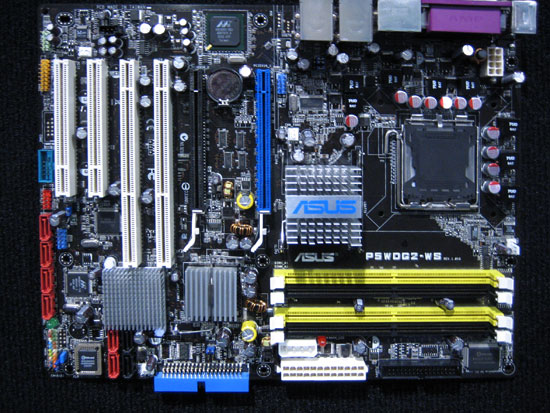
At the high-end, they have the workstation class P5WDG2-WS motherboard using the 975X chipset and sporting dual PCI-X slots as well as dual PCIe X16 (with X8 data connections) slots for CrossFire.
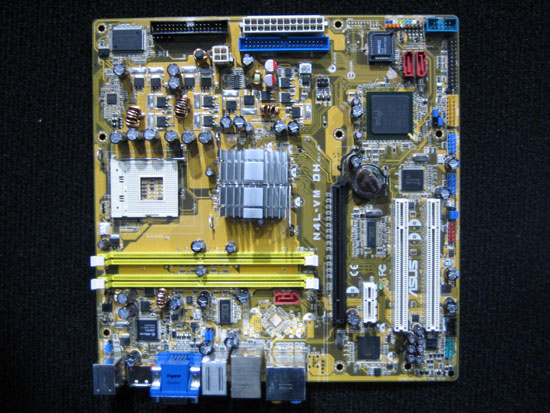
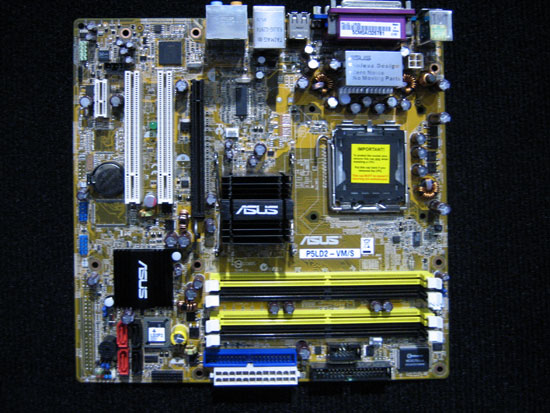
They're also working on "Digital Home" uATX boards for Pentium D (P5LD2-VM DH) and Core Duo (N4L-VM DH), which naturally means that they're Intel Viiv ready. Viiv has been a major point at most of the motherboard locations, and it appears to be the HTPC equivalent of Centrino: a mostly pre-existing set of technologies that are now being grouped and branded under a single name. Like Centrino, the Viiv name will require the use of an Intel processor (dual core Pentium D or Yonah/Core Duo) and chipset. The push into the consumer space is often more about marketing than technological prowess, and Viiv will be leading the way. Don't get us wrong - it's not a terrible platform, but honestly, it doesn't appear to add anything new to the market; it's just Intel's take on HTPC.
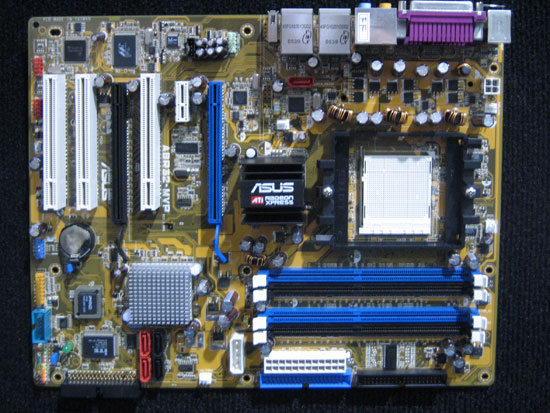
We found their Asus A8R-MVP to be a good quality ATI CrossFire solution at a great price, and they're looking to improve on the design with the RD580-based follow-up, the A8R32-MVP. The RD580 chipset will be the first major chipset to support true dual X16 slots off of the Northbridge, and it looks to be one of the more exciting chipsets of the coming year. The layout has also been modified from the original MVP to improve the support for running two large GPUs, with two slots separating the X16 slots. Overclocking should be even better than the already impressive RD480-based boards. It's a bit surprising that the design is still targeting the mainstream market rather than the high-end, since in every other way, this appears to be a great high-end board.
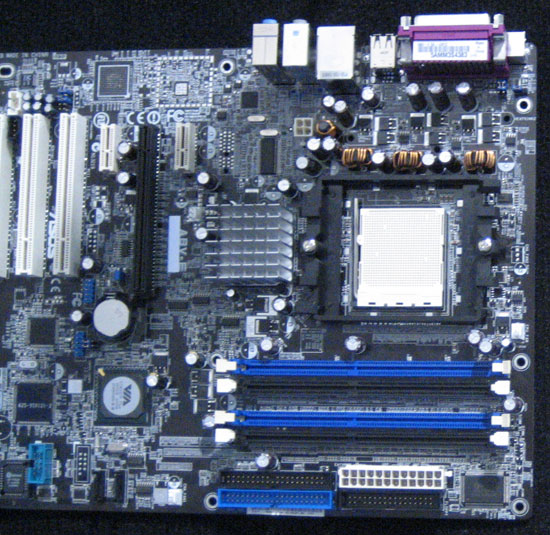
ASUS was also one of the few locations to have a K8T890 board on display, their A8V-E SE. While the features and specifications on the board appear decent, it's difficult to find a place for the board in an already crowded market. Compared to nForce4 Ultra boards, the lack of SATA 3.0 Gbps support or any other standout features seems to indicate that this is largely a value-oriented board. As long as the price and performance are right, though, there will likely be a few willing buyers.
Originally published at https://www.anandtech.com/show/1921 (Wayback Machine).