
ATI Radeon X800 GTO Mini Roundup: Sapphire, Connect3D, and PowerColor
- Posted in
- GPUs
Sapphire X800 GTO2
The GTO2's box looks very similar to the GTO Ultimates, except that the weird looking girl has different skin and is making a “Charlie's Angels”-style gun with her hands. There's also the GTO2 logo in the corner with the words “Limited Edition”, which stands out somewhat.
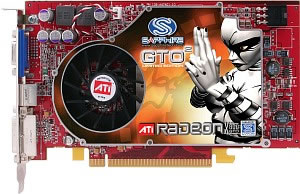
As far as the card architecture goes, the core for the X800 GTO is the same as the X800 GT, which makes sense given the similarity in name. The core is clocked lower on the GTO than the GT (400MHz as opposed to 475MHz), but the GTO has 4 more pixel pipelines than the GT (12 vs 8). The extra pipes will obviously give it an advantage, but there are other things here that make the GTO so special. Cards like these are made from parts that were originally going to be more powerful cards, but for some reason or other, it didn't quite pass the grade. These could have been intended for cards like the X800 XT or X850 for instance. The cores are then clocked down and sold to manufacturers like Sapphire who then produce their own variation at a much lower cost to the consumer. What’s interesting is that because these cores were intended for higher end cards, there is a lot of potential for user-overclocking, which we'll talk more about later.

The GTO2's box looks very similar to the GTO Ultimates, except that the weird looking girl has different skin and is making a “Charlie's Angels”-style gun with her hands. There's also the GTO2 logo in the corner with the words “Limited Edition”, which stands out somewhat.
As far as the card architecture goes, the core for the X800 GTO is the same as the X800 GT, which makes sense given the similarity in name. The core is clocked lower on the GTO than the GT (400MHz as opposed to 475MHz), but the GTO has 4 more pixel pipelines than the GT (12 vs 8). The extra pipes will obviously give it an advantage, but there are other things here that make the GTO so special. Cards like these are made from parts that were originally going to be more powerful cards, but for some reason or other, it didn't quite pass the grade. These could have been intended for cards like the X800 XT or X850 for instance. The cores are then clocked down and sold to manufacturers like Sapphire who then produce their own variation at a much lower cost to the consumer. What’s interesting is that because these cores were intended for higher end cards, there is a lot of potential for user-overclocking, which we'll talk more about later.
Originally published at https://www.anandtech.com/show/1908 (Wayback Machine).
