
ATI MultiGPU Done Right: The Radeon X1800 CrossFire Edition
- Posted in
- GPUs
The New Improved CrossFire
With the X1800 series of CrossFire cards, we will finally be able to test resolutions above 1600x1200. When it comes to multiGPU solutions, the more flexibility the user gets, the better. It is difficult to justify dropping over a thousand dollars on a setup that has limitations, and the removal of the single-link TMDS receivers definitely makes this version of CrossFire a more viable solution than its first incarnation in the X800 series.
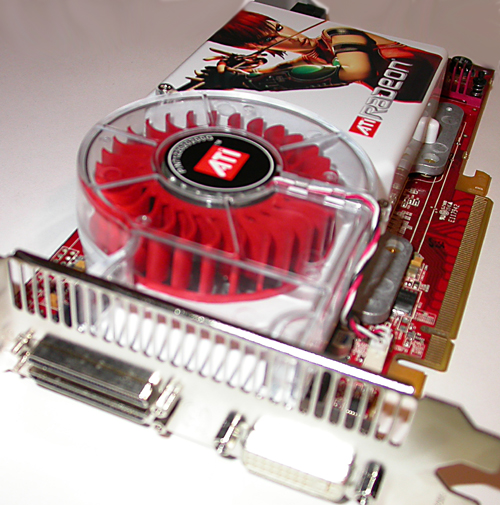
The addition of dual-link TMDS receivers on the master card marks the biggest upgrade we see on the X1800 version of CrossFire. With a new dongle connector, and the improved bandwidth of dual-link DVI, ATI has given their customers what they need to power huge resolutions. We will still be limited in performance on a game by game basis, as alternate frame rendering (AFR) is still the most efficient (and most restrictive) multiGPU mode in which to work. While ATI's Scissor and SuperTiling modes offer some flexibility and the extended SuperAA modes offer an alternate way to add value to games (enhancing quality rather than performance), there are some caveats we will mention in our performance analysis (in particular with Black and White 2).
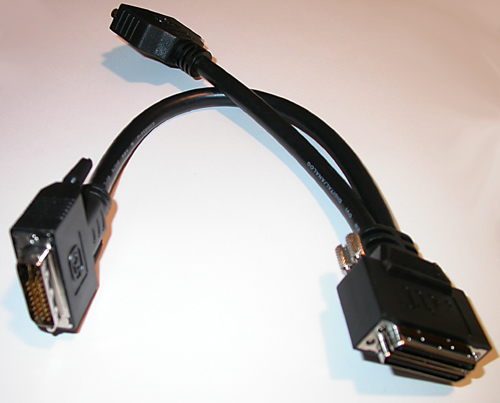
The basic features of CrossFire haven't changed from the initial design. For a refresher on CrossFire, check out our previous articles on the subject. Aside from the TMDS upgrades, ATI has refreshed their compositing engine with a larger FPGA from Xilinx. This allows ATI to composite the larger images possible with dual-link DVI input. Most of the rest of the CrossFire hardware is either unchanged or only slightly altered. From a board layout stand point, it would certainly make more sense if ATI were to build GPU to GPU communication into their parts as NVIDIA has done with SLI. Incorporating a silicon version of their compositing engine onto their GPUs would save board space and could improve performance even more.
From a high level, the X1800 CrossFire edition can be paired with a regular X1800 XT or an X1800 XL. There isn't a cheaper CrossFire card for the cheaper X1800 XL, and in order to get CrossFire setup and running with the X1800 XL, half of the RAM on the card needs to be disabled. In order to disable the RAM, the system needs to be rebooted, but in other cases CrossFire can be enabled and disabled without rebooting. While adding a CrossFire card to one's existing X1800 XL setup will definitely increase performance, it is ends up delivering even less for your money than when pairing it with an X1800 XT. The price tag is already a bit hefty, and we expect that most people who want this card will be those who need the absolute maximum performance possible. The value of CrossFire as an upgrade won't really be worth it unless the price of the X1800 CrossFire card comes down quite a bit.
With the X1800 series of CrossFire cards, we will finally be able to test resolutions above 1600x1200. When it comes to multiGPU solutions, the more flexibility the user gets, the better. It is difficult to justify dropping over a thousand dollars on a setup that has limitations, and the removal of the single-link TMDS receivers definitely makes this version of CrossFire a more viable solution than its first incarnation in the X800 series.
The addition of dual-link TMDS receivers on the master card marks the biggest upgrade we see on the X1800 version of CrossFire. With a new dongle connector, and the improved bandwidth of dual-link DVI, ATI has given their customers what they need to power huge resolutions. We will still be limited in performance on a game by game basis, as alternate frame rendering (AFR) is still the most efficient (and most restrictive) multiGPU mode in which to work. While ATI's Scissor and SuperTiling modes offer some flexibility and the extended SuperAA modes offer an alternate way to add value to games (enhancing quality rather than performance), there are some caveats we will mention in our performance analysis (in particular with Black and White 2).
The basic features of CrossFire haven't changed from the initial design. For a refresher on CrossFire, check out our previous articles on the subject. Aside from the TMDS upgrades, ATI has refreshed their compositing engine with a larger FPGA from Xilinx. This allows ATI to composite the larger images possible with dual-link DVI input. Most of the rest of the CrossFire hardware is either unchanged or only slightly altered. From a board layout stand point, it would certainly make more sense if ATI were to build GPU to GPU communication into their parts as NVIDIA has done with SLI. Incorporating a silicon version of their compositing engine onto their GPUs would save board space and could improve performance even more.
From a high level, the X1800 CrossFire edition can be paired with a regular X1800 XT or an X1800 XL. There isn't a cheaper CrossFire card for the cheaper X1800 XL, and in order to get CrossFire setup and running with the X1800 XL, half of the RAM on the card needs to be disabled. In order to disable the RAM, the system needs to be rebooted, but in other cases CrossFire can be enabled and disabled without rebooting. While adding a CrossFire card to one's existing X1800 XL setup will definitely increase performance, it is ends up delivering even less for your money than when pairing it with an X1800 XT. The price tag is already a bit hefty, and we expect that most people who want this card will be those who need the absolute maximum performance possible. The value of CrossFire as an upgrade won't really be worth it unless the price of the X1800 CrossFire card comes down quite a bit.
Originally published at https://www.anandtech.com/show/1901 (Wayback Machine).