
The AMD Ryzen 7 7800X3D Review: A Simpler Slice of V-Cache For Gaming
CPU Benchmark Performance: Science
Our Science section covers all the tests that typically resemble more scientific-based workloads and instruction sets. For our 2023 CPU suite, we've also added SciMark 2.0 which measures numerical kernels and various computational routines found in numeric coding.
We are using DDR5 memory on the Ryzen 7 78000X3D and the other Ryzen 7000 series we've tested. This also includes Intel's 13th and 12th Gen processors. We tested the aforementioned platforms with the following settings:
- DDR5-5600B CL46 - Intel 13th Gen
- DDR5-5200 CL44 - Ryzen 7000
- DDR5-4800 (B) CL40 - Intel 12th Gen
All other CPUs such as Ryzen 5000 and 3000 were tested at the relevant JEDEC settings as per the processor's individual memory support with DDR4.
Science
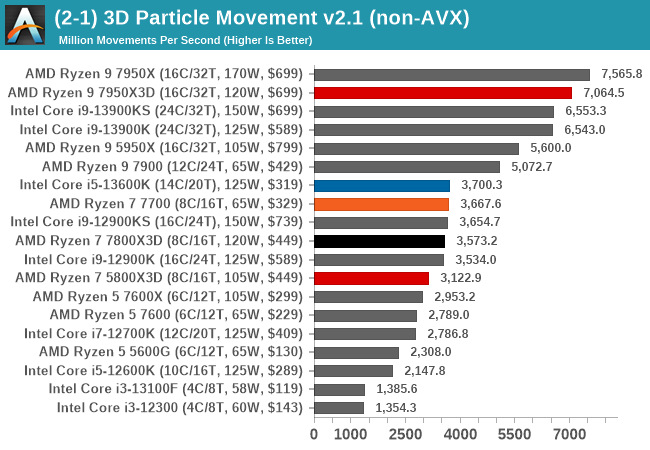
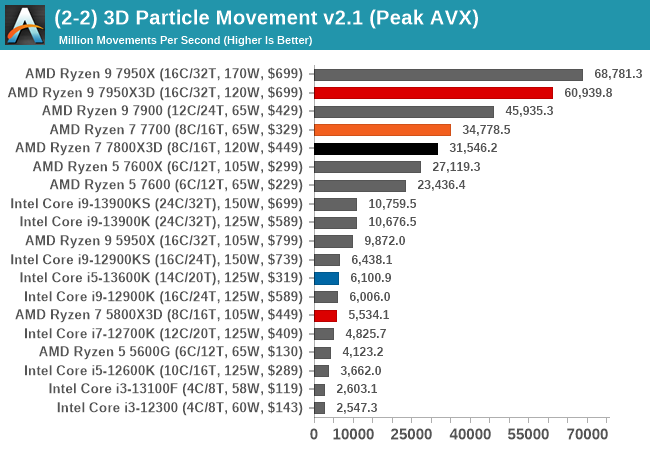
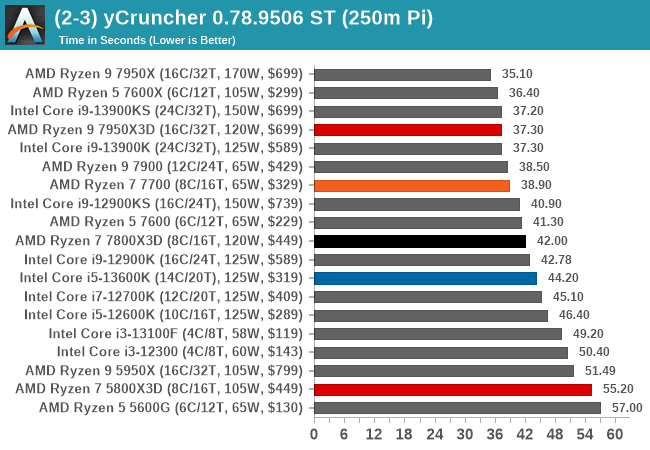
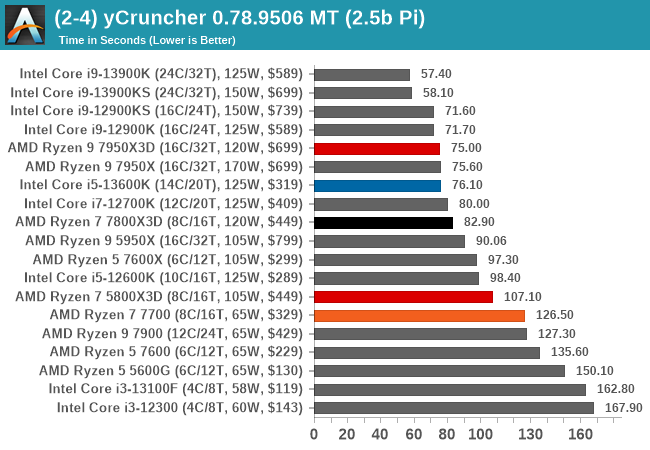
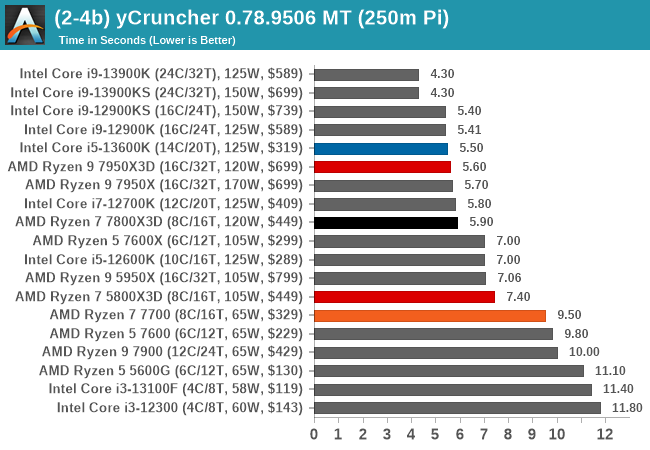
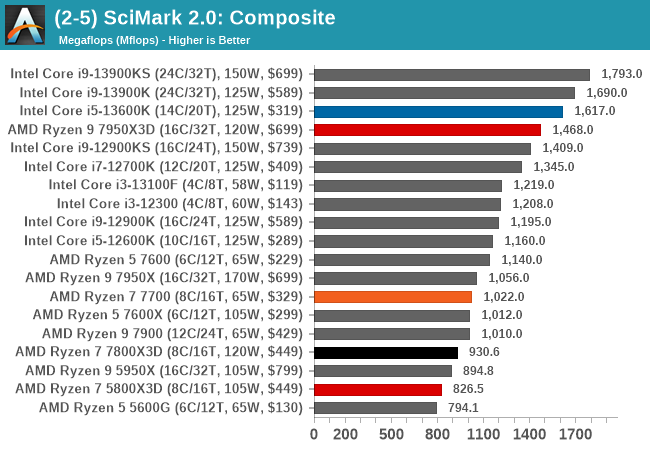
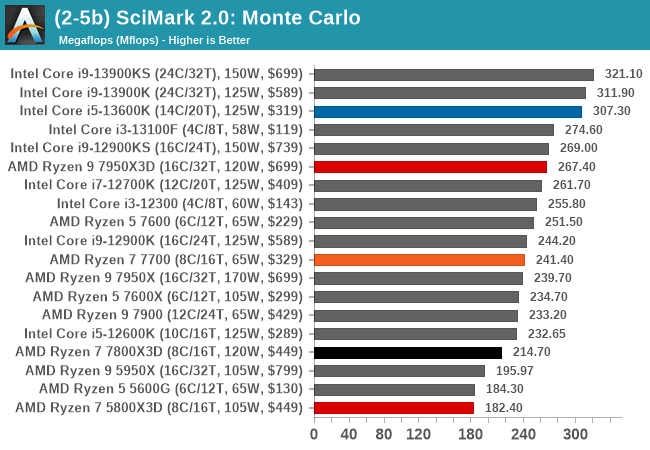
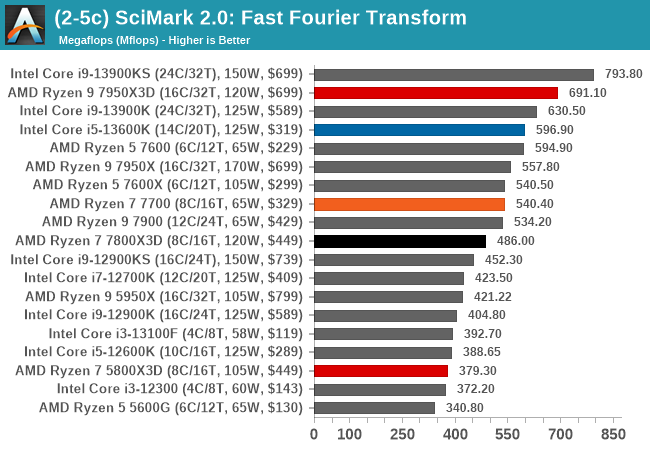
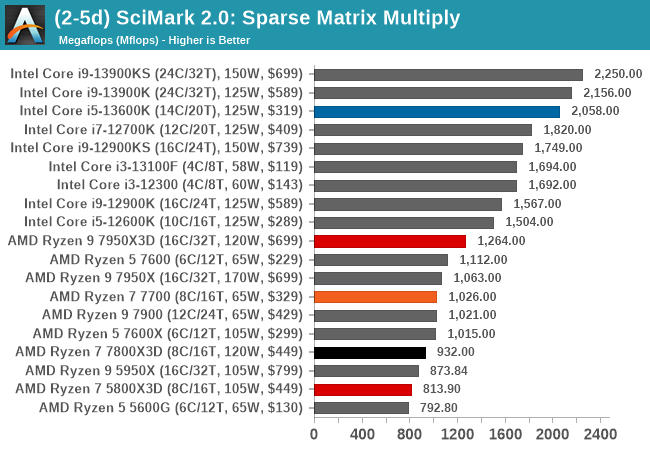
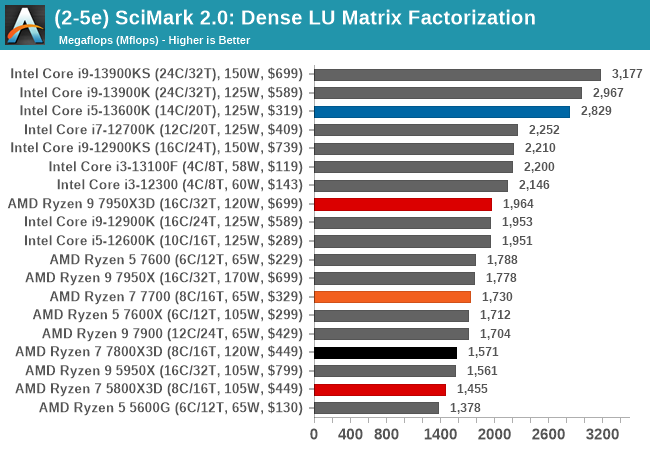
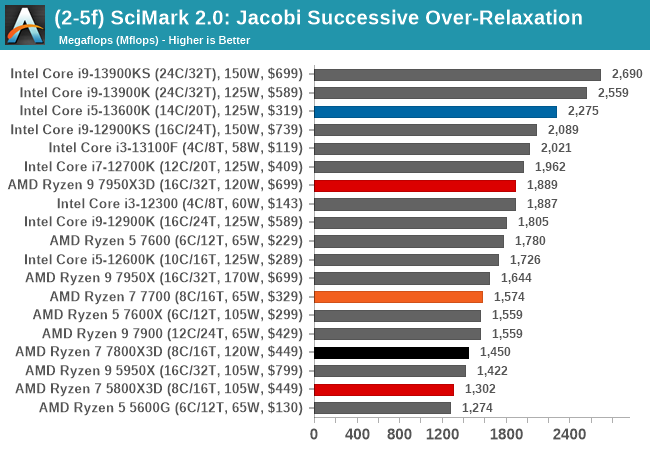
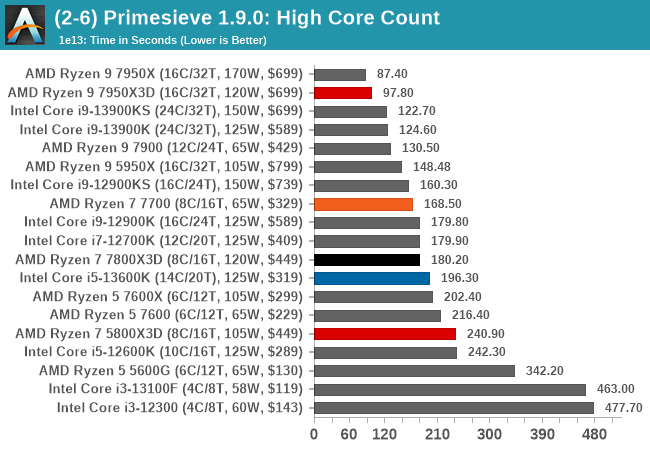
Looking at the performance of the Ryzen 7 7800X3D in our scientific-based workload testing, we can see that the 7800X3D is comparable to its lower-powered and 3D V-Cacheless Ryzen 7 7700 sibling. As we would expect from a newer chip, we can see that the Zen 4-based Ryzen 7 7800X3D for the most part beats out the Zen 3-based Ryzen 7 5800X3D.
Originally published at https://www.anandtech.com/show/18795/the-amd-ryzen-7-7800x3d-review-a-simpler-slice-of-v-cache-for-gaming (Wayback Machine).