
The AMD Ryzen 9 7900, Ryzen 7 7700, and Ryzen 5 7600 Review: Zen 4 Efficiency at 65 Watts
CPU Benchmark Performance: Simulation
Simulation and Science have a lot of overlap in the benchmarking world. The benchmarks that fall under Science have a distinct use for the data they output – in our Simulation section, these act more like synthetics but at some level are still trying to simulate a given environment.
In the encrypt/decrypt scenario, how data is transferred and by what mechanism is pertinent to on-the-fly encryption of sensitive data - a process by which more modern devices are leaning to for software security.
We are using DDR5 memory on the 12th and 13th Gen Core parts, as well as the Ryzen 7000 series, at the following settings:
- DDR5-5600B CL46 - Intel 13th Gen
- DDR5-5200 CL44 - Ryzen 7000
- DDR5-4800 (B) CL40 - Intel 12th Gen
All other CPUs such as Ryzen 5000 and 3000 were tested at the relevant JEDEC settings as per the processor's individual memory support with DDR4.
Simulation
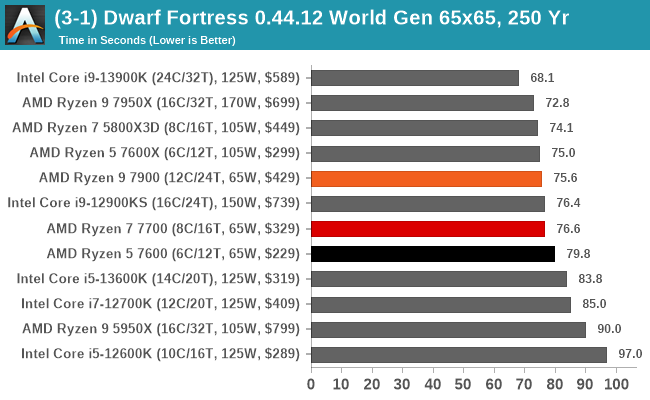
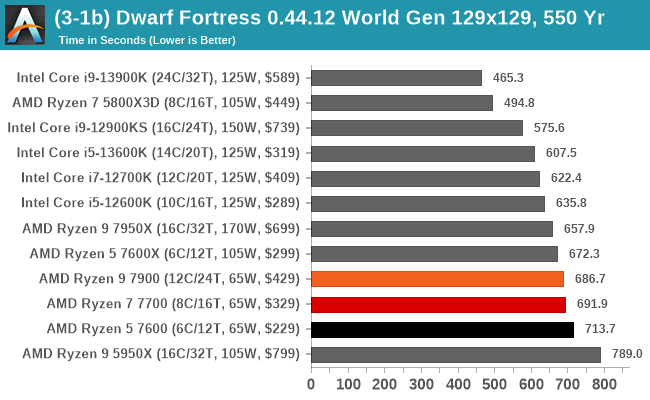
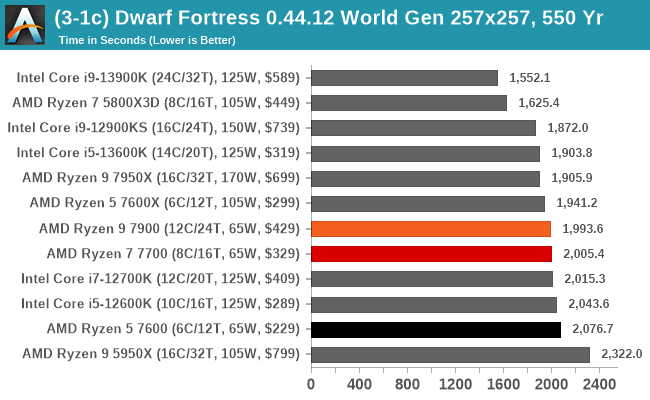
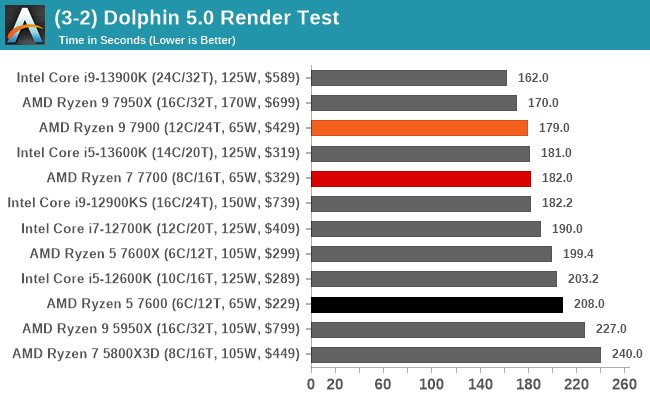
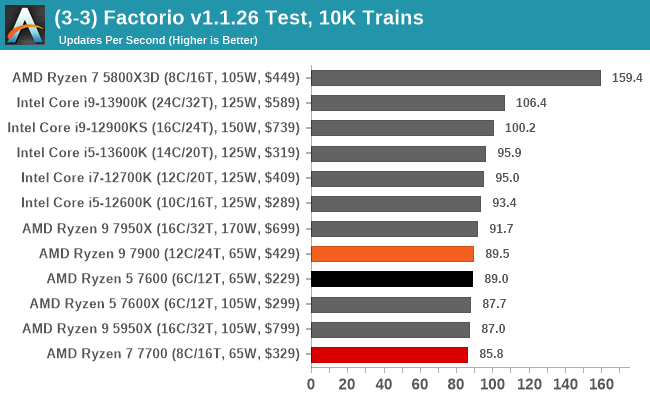
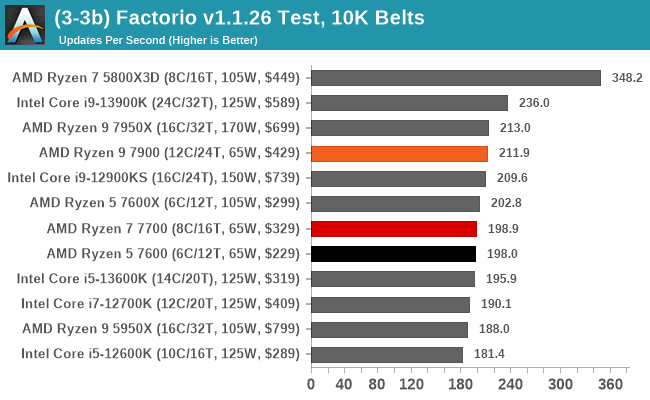
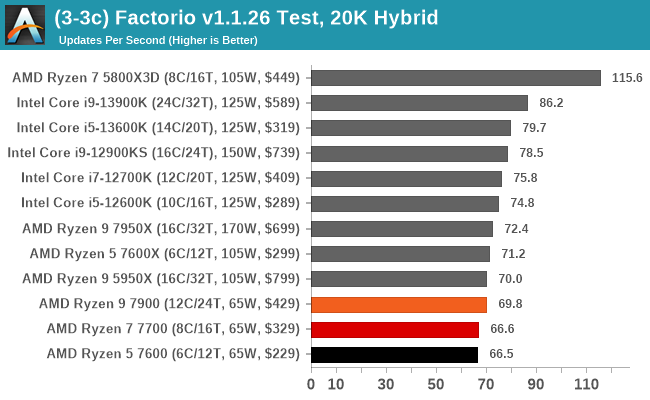
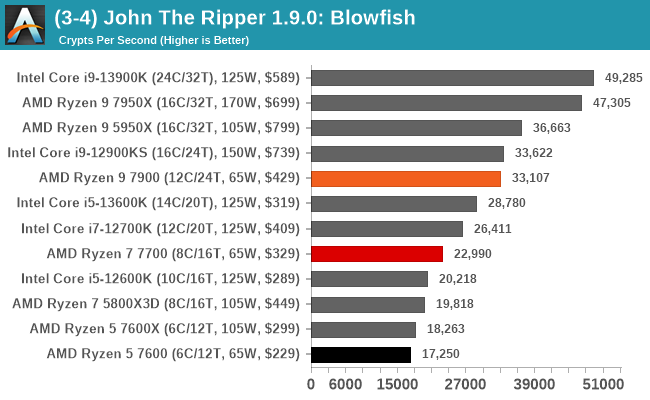
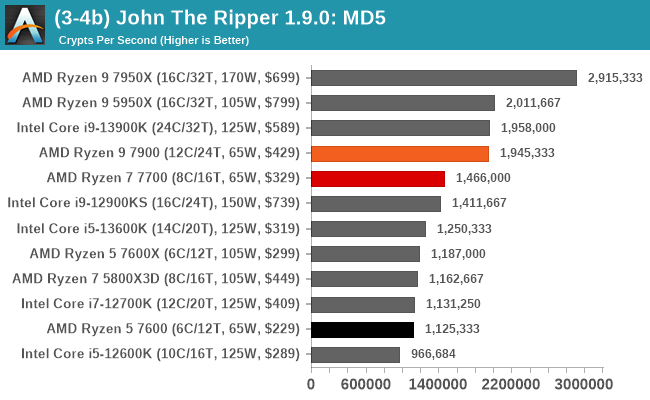
In our simulation-based tests, the AMD Ryzen 7000 65 W SKUs start to break away from each other as single-core IPC performance isn't as crucial as multi-threaded performance in some cases.
The 65 W implementation on the 6C/12 Ryzen 5 7600 starts to show its limitations as a hex-core part, with the Ryzen 9 7900 (12C/24T) performing above our expectations in the majority of our simulation tests.
As expected, the Ryzen 7 7700 (8C/16T) sits in the middle of the three Ryzen 7000 65 W series processors in regards to performance, but it also sits in the middle in terms of specifications, core count, and pricing.
Originally published at https://www.anandtech.com/show/18693/the-amd-ryzen-9-7900-ryzen-7-7700-and-ryzen-5-5-7600-review-ryzen-7000-at-65-w-zen-4-efficiency (Wayback Machine).