
ATI's X1800 XL All-In-Wonder: Performance and TV in One Package
- Posted in
- GPUs
Test Setup and Performance
We have already looked at how the X1800 XL performs in different games, but we'll take another look at performance in relation to a few other graphics cards we have. The X1800 XL is one of the most powerful ATI cards out now, and as our tests show, it does a good job at running the latest games smoothly. Here is the test hardware we used: (Note that we test out benchmarks with sound disabled)
Test Hardware
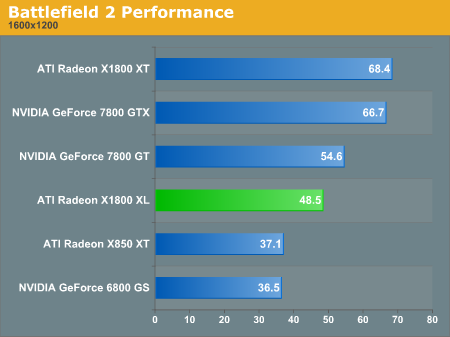
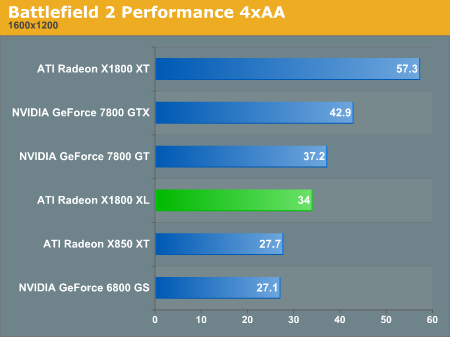
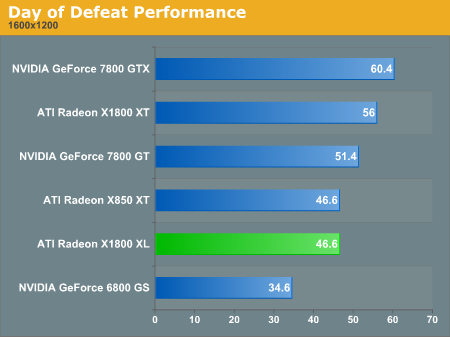
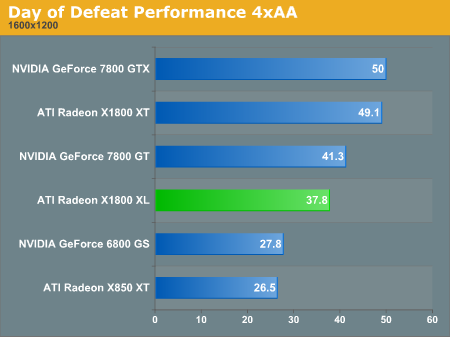
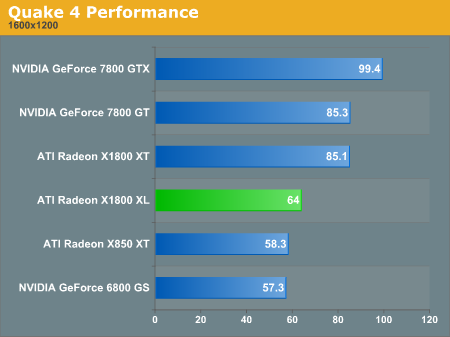
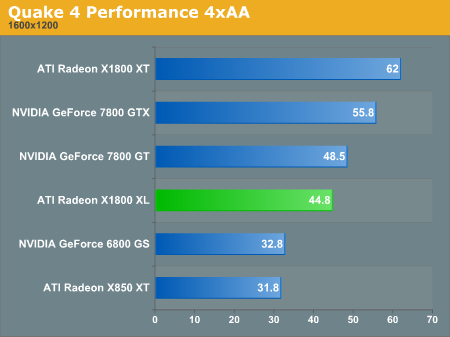
For testing, we chose three games which best reflect the card's overall potential for gaming. Battlefield 2, one of the most popular and graphically demanding first-person-shooters to date still manages to tax the high-end cards significantly. Day of Defeat is an important benchmark for us because the game is based on the Halflife 2 engine, and introduces Valve's recent High Dynamic Range effects which yields much lower framerates than Halflife 2 on all graphics cards. The third game we tested was Quake 4, which gives us an idea of how the card handles the Open Gl Doom 3 engine. We tested each of these games at 1600x1200 with and without 4x AA enabled.
Power Load
We also tested power loads to give us an idea of how much power this card uses at different states. We tested the power draw while the system was idle, as well as running a Splinter Cell benchmark to test the card under stress. We also were curious how much of a power load we saw while recording full screen video through the card. The wattage the system pulled while idle was 157Watts. While recording video at full screen, the power load we recorded was 189Watts. Finally, the power draw of the system while under Splinter Cell stress testing was 256W.
We have already looked at how the X1800 XL performs in different games, but we'll take another look at performance in relation to a few other graphics cards we have. The X1800 XL is one of the most powerful ATI cards out now, and as our tests show, it does a good job at running the latest games smoothly. Here is the test hardware we used: (Note that we test out benchmarks with sound disabled)
Test Hardware
| CPU: | AMD Athlon 64 FX-57 (2.8GHz) |
| Motherboard: | ASUS A8N32-SLI Deluxe |
| Chipset: | NVIDIA nForce4 SLI X16 |
| Chipset Drivers: | nForce4 6.82 |
| Memory: | OCZ PC3500 DDR 2-2-2-7 |
| Video Card: | ATI Radeon X800 XL ATI Radeon X1800 XT ATI Radeon X850 XT NVIDIA GeForce 6800 GS NVIDIA GeForce 7800 GT NVIDIA GeForce 7800 GTX NVIDIA GeForce 7800 GTX 512 |
| Video Drivers: | ATI Catalyst 5.11 (WHQL) NVIDIA ForceWare 81.89 (Beta) |
| Desktop Resolution: | 1280x960 - 32-bit @ 60Hz |
| OS: | Windows XP Professional SP2 |
| Power Supply: | OCZ PowerStream 600W PSU |
For testing, we chose three games which best reflect the card's overall potential for gaming. Battlefield 2, one of the most popular and graphically demanding first-person-shooters to date still manages to tax the high-end cards significantly. Day of Defeat is an important benchmark for us because the game is based on the Halflife 2 engine, and introduces Valve's recent High Dynamic Range effects which yields much lower framerates than Halflife 2 on all graphics cards. The third game we tested was Quake 4, which gives us an idea of how the card handles the Open Gl Doom 3 engine. We tested each of these games at 1600x1200 with and without 4x AA enabled.
Power Load
We also tested power loads to give us an idea of how much power this card uses at different states. We tested the power draw while the system was idle, as well as running a Splinter Cell benchmark to test the card under stress. We also were curious how much of a power load we saw while recording full screen video through the card. The wattage the system pulled while idle was 157Watts. While recording video at full screen, the power load we recorded was 189Watts. Finally, the power draw of the system while under Splinter Cell stress testing was 256W.
Originally published at https://www.anandtech.com/show/1867 (Wayback Machine).