
ATI Radeon X800 GT: A Quality Mid-range Solution
- Posted in
- GPUs
Power Consumption
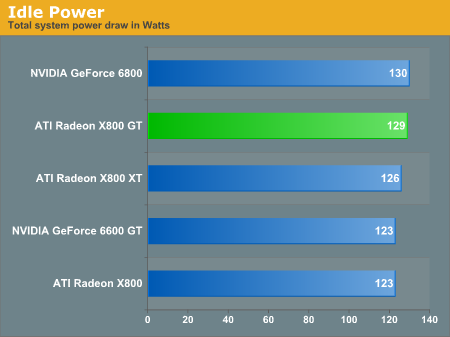
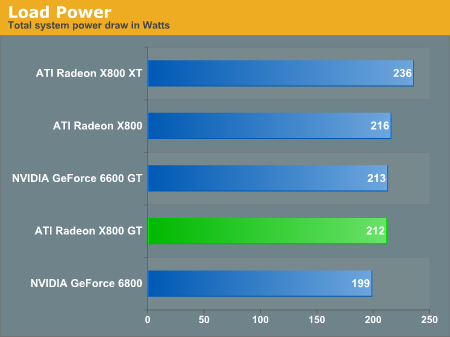
Power draw is something worth looking at when comparing graphics cards, as there are distinct advantages to having a cooler-running GPU, especially in applications like mobile computing. Those who don't purchase high-end, 600W PSUs might also appreciate a less hungry GPU.
We tested the power draw of these cards similarly to how we have in the past. First, we measure the total wattage of the system with the graphics card installed while the system is idle, then we loop several game benchmarks to stress test the card, and take the highest wattage generated. This gives us a relative idea of what kind of power load each card generates.
Originally published at https://www.anandtech.com/show/1798 (Wayback Machine).