
X-Fi and the Elite Pro: SoundBlaster's Return to Greatness
- Posted in
- Smartphones
- Mobile
Quantitative Analysis: RMAA 16-bit / 44.1 kHz
RightMark Audio Analyzer is the best tool that we have right now for determining solid numbers that describe the precision and capabilities of sound hardware in our labs. We are able to measure many of the interesting electrical characteristics of the hardware by running RMAA, which captures the output of a sound card playing a test file and analyses the recording. Unfortunately, the electrical characteristics of the recording hardware come into play when using RightMark. By using quality recording equipment, we can still get a very good idea of the hardware's capabilities. For a more in-depth look at what we are looking for in our RMAA tests, check out this page on our electrical analysis of sound hardware.The best way to see what's going on is to dive into the numbers.
| Test | Echo Audio Gina3G | SB Audigy 4 Audio | SB X-Fi Audio |
| Frequency response (from 40 Hz to 15 kHz), dB: | +0.04, -0.09 | +0.13, -0.36 | +0.01, -0.07 |
| Noise level, dB (A): | -94.3 | -94.5 | -94.7 |
| Dynamic range, dB (A): | 94.1 | 94.1 | 94.6 |
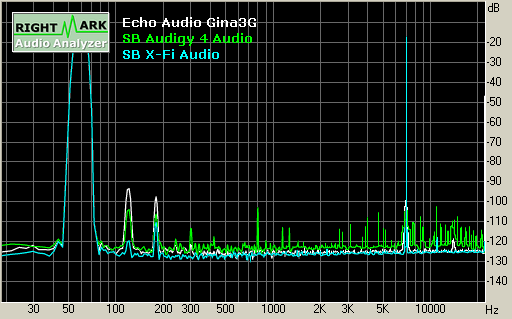
| THD, %: | 0.0057 | 0.0033 | 0.0008 |
| IMD + Noise, %: | 0.0079 | 0.0081 | 0.0054 |
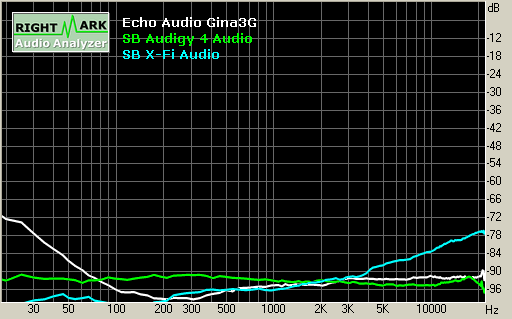
| Stereo crosstalk, dB: | -94.9 | -93.3 | -97.0 |
Frequency response of the X-Fi is much better at 16-bit 44.1 kHz than the Audigy. In fact, we can see that the frequency response curve is even flatter than the Gina 3G here. The SoundBlaster X-Fi Elite Pro posts better numbers any card we've yet tested in our labs at this very heavily used bitrate.
When looking at the graphs, note that the X-Fi is able to post these numbers while maintaining consistant performance in each test. The only tradeoff we see is in stereo cross-talk, which just shows a trade off at high frequencies rather than low.
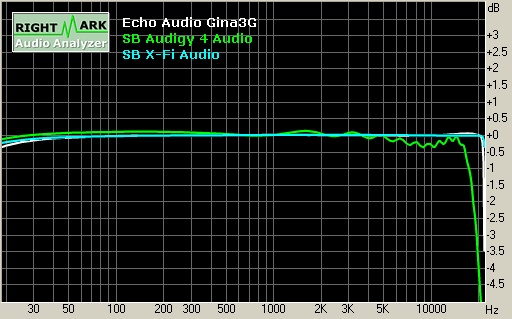
Frequency Response
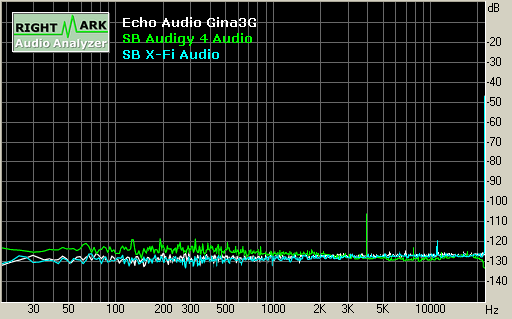
Noise Level
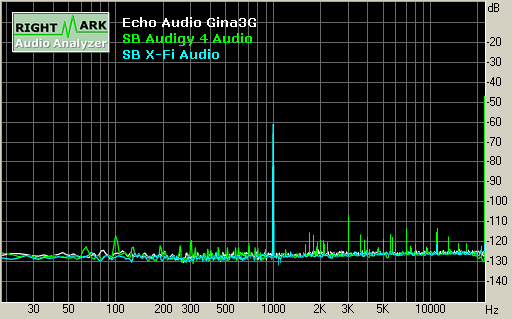
Dynamic Range
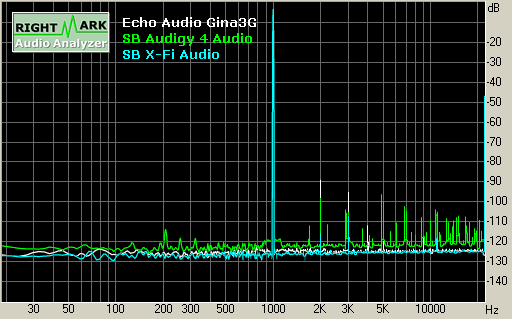
THD+N at -3dB FS
Intermodulation Distortion
Stereo Crosstalk
Originally published at https://www.anandtech.com/show/1776 (Wayback Machine).