
Jasper Lake Fanless Showdown: ECS LIVA Z3 and ZOTAC ZBOX CI331 nano UCFF PCs Review
Concluding Remarks
The PC market had been waiting expectantly for systems based on Jasper Lake, given the time elapsed since the introduction of Gemini Lake products. The ECS LIVA Z3 and ZOTAC ZBOX CI331 nano provided us with the opportunity to evaluate Jasper Lake in a passively-cooled system. From our evaluation of the Z3's board - JSLM-MINI, it is clear that Jasper Lake can provide admirable performance in a limited power envelop. It is a solid successor to Gemini Lake.
The microarchitectural improvements have led to significant performance increase in many real-world CPU-intensive workloads, particularly evident when the numbers of the JSLM-MINI are compared against those of the LIVA Z2. On the GPU front, the updates are rather modest. While a complete verdict can only be delivered after evaluating actively-cooled systems and performing additional apples-to-apples comparisons, Jasper Lake appears to have delivered the goods it promised.
Unfortunately, the same can't be said for the systems themselves. The ECS LIVA Z3 shoots itself in the foot with an abysmal chassis choice. The ECS LIVA Z2, despite its thickness, possessed a rather effective thermal design. It never throttled in any of the workloads. In moving to the Z3, ECS unfortunately did not pay heed to the old adage of not fixing things that aren't broken. Followers of the ECS LIVA lineup of PCs might have noticed that the LIVA Z3 chassis and the Z2 chassis are very different from each other.

Chassis and Thermal Modules - ECS LIVA Z3 (L) and ECS LIVA Z2 (R)
The LIVA Z2 was roomier and possessed a metal frame along with a slightly larger thermal module. Unfortunately, the LIVA Z3 leaves very little gap between the plastic top and the thermal module. The Z3's chassis is actually the same as that of the LIVA Z3 Plus.
However, the Z3 Plus was an actively cooled system. For some reason, ECS decided to take a chassis meant for an actively cooled board and reuse it for a passively cooled one. The complete lack of support for convective cooling of the thermal module puts a huge dampener on the performance and user experience with the LIVA Z3. The fact that the motherboard / thermal module combination (JSLM-MINI) by itself performs admirably across the board only adds to the disappointment.
We had plenty of back-and-forth with ECS as we processed the review. ECS did give us a look at their thermal chamber evaluation test reports for the system - the workloads processed were Intel's Thermal Analysis Tool and Passmark Software's BurnIn Test for one hour each. Given that our Prime95 + Furmark test triggered throttling around the 85-minute mark (which then carried on over to the AIDA64 SST despite the cool-down period), it is not surprising that ECS's tests didn't catch the problem. The thermal throttling issue has been reported by other reviewers too.
In our opinion, the only way to ensure the ECS LIVA Z3's intended performance would be to have a fan blowing across the ventilation holes on the side of the chassis.
ECS has also opted for an ancient WLAN card - the Wireless-AC 3165 was introduced back in 2014. The RAM supplied with the pre-built configuration is DDR4-2666, while the Jasper Lake platform supports up to DDR4-2933. However, these choices have allowed ECS to price the system quite reasonably. A ready-to-use configuration can be purchased for just $250. This is in complete contrast to the other system reviewed today - the ZOTAC ZBOX CI331 nano's barebones version without RAM or SSD costs around $260.
The thermal design of the ZBOX CI331 nano also left us a bit disappointed. The absence of proper support for cooling the SATA drive is a minor issue. However, the inability of the system to handle a 7W package (when a similarly designed system was able to handle 12W easily back in the Skylake days) warrants further investigation. The saving grace in the proactive throttling is that the system is able to deliver much higher performance for extended durations after recovering from the thermal throttling. This is not an ideal situation, but appears to be better (both from a performance and user-experience perspective) compared to the LIVA Z3.
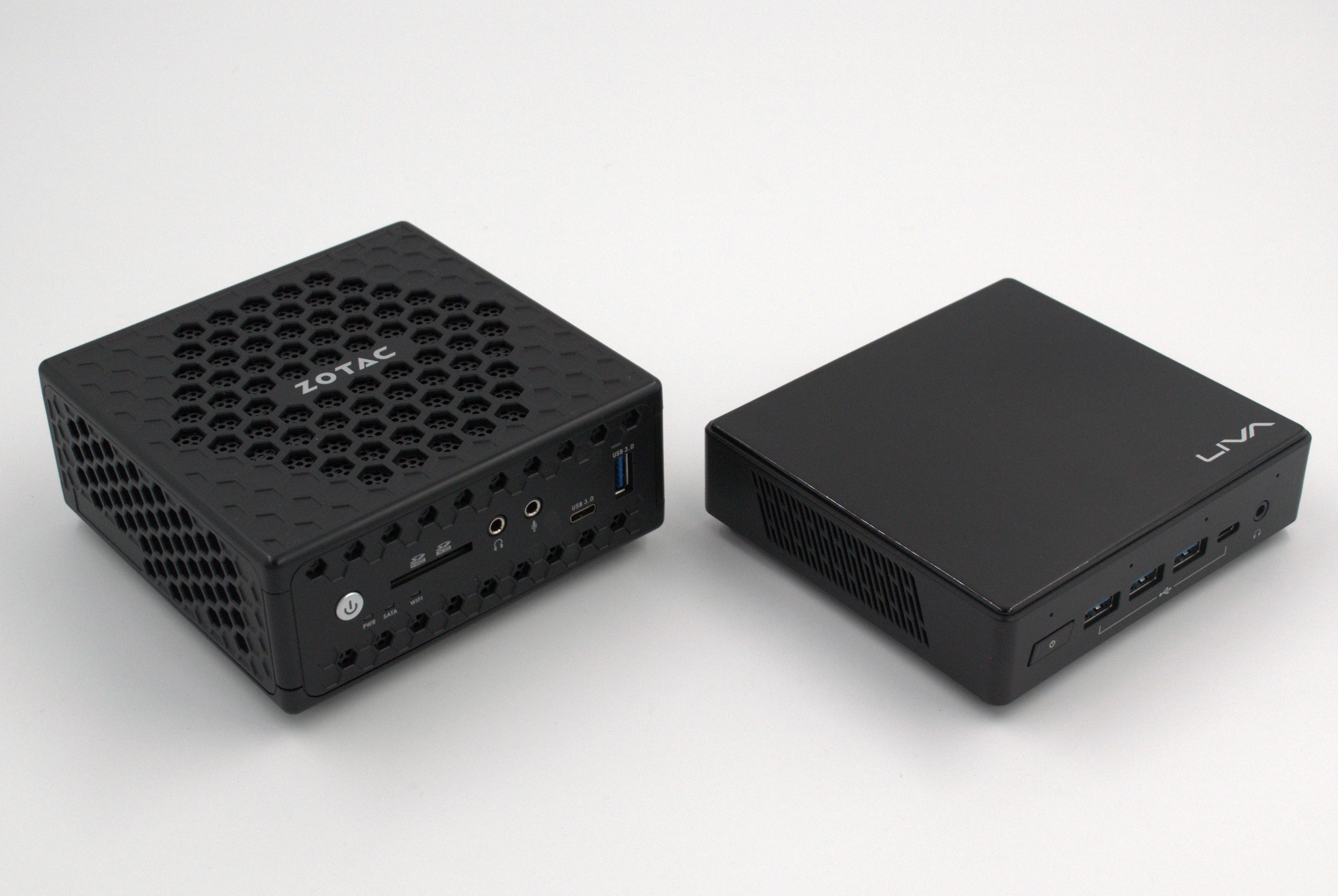
The pricing of the ECS LIVA Z3 is quite attractive, coming in at $232 in the US market. The ZBOX CI331 nano, on the other hand, is harder to come by, and available on special order ($260), though it should be much easier to find outside North America. Given the performance profile of the two systems, they can be recommended for duties such as thin clients and lightweight browsing.
Workloads involving hardware acceleration (such as video decoding and rendering for digital signage purposes) will also not make the systems sweat. On the business front, point-of-sale terminals and digital kiosks also present workloads that these systems should be comfortable with. Hobbyists and tinkerers might also appreciate them to get an understanding of what makes passively-cooled systems work. Fixing the thermal throttling issues could be an interesting challenge for such folks.
Originally published at https://www.anandtech.com/show/17481/ecs-liva-z3-and-zotac-zbox-ci331-nano-jasper-lake-minipcs-review-lessons-in-fanless-system-design (Wayback Machine).