
The Huawei MateBook 16 Review, Powered by AMD Ryzen 7 5800H: Ecosystem Plus
Graphics Performance: Vega 8 in Mobile
The world of mobile graphics is somewhat of a wild west right now. Both AMD and Intel equip all their mobile processors with, at least physically, the same configuration from top to bottom in their stacks. Intel has a base 96-EU Xe graphics solution that goes in all of its 15 W to 65 W mobile processors, while AMD has a Vega 8 solution that also goes from 15 W to 45 W and above. That means the graphics performance of these parts matters a lot on the processor performance being used, how well the power is managed between the CPU and GPU, but also the memory solutions.
This is where the Vega 8 inside the Ryzen 7 5800H might falter. The best design for this processor would be to enable LPDDR4X memory, with a 68.2 GB/s bandwidth. That configuration is typically used for super thin and light ultrabooks with U-series processors. The bigger the system, the more likely you are to end up with regular DDR4-3200, which in dual channel mode goes up to 51.2 GB/s bandwidth. This is also because most big H-series systems come with discrete graphics, and so DDR4 vs LPDDR4x is more a discussion about cost.
That being said, the Vega 8 graphics solution typically has to game at lower resolutions and quality settings, where CPU performance matters more. Between the synthetic and real-world gaming tests, this could be interesting.
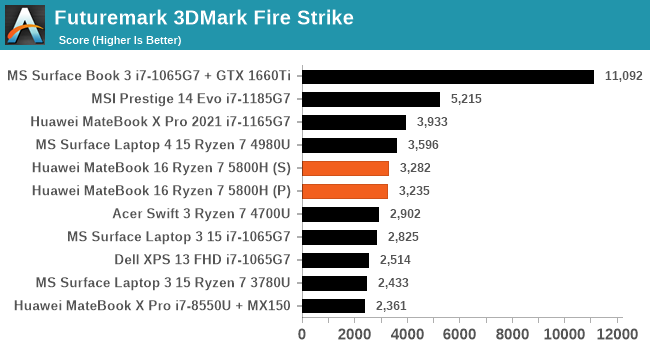
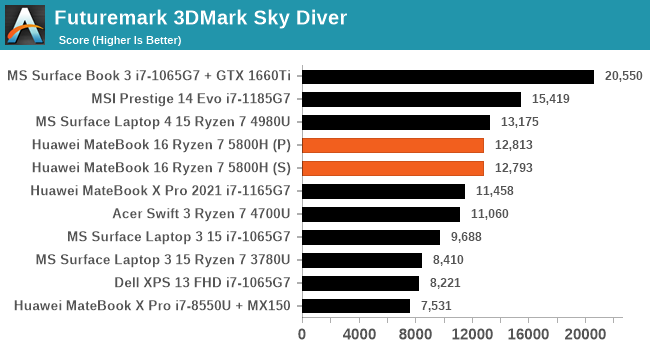
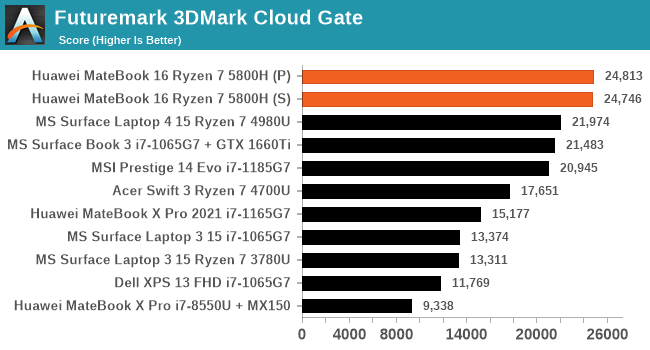
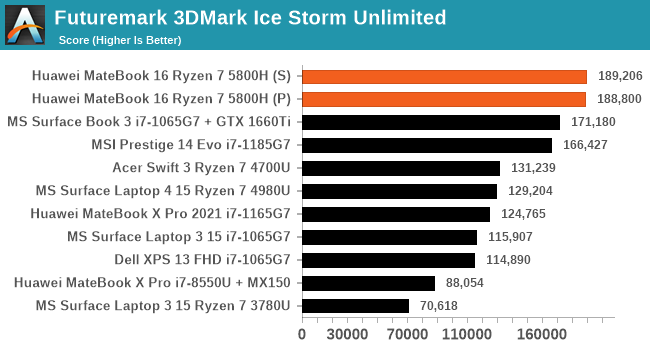
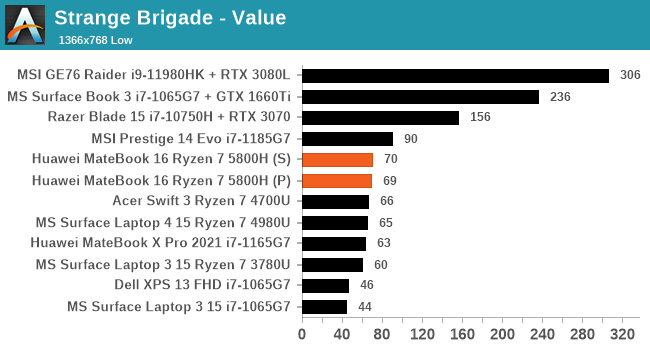
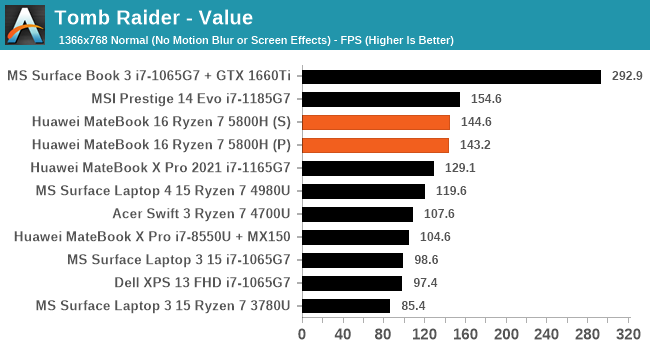
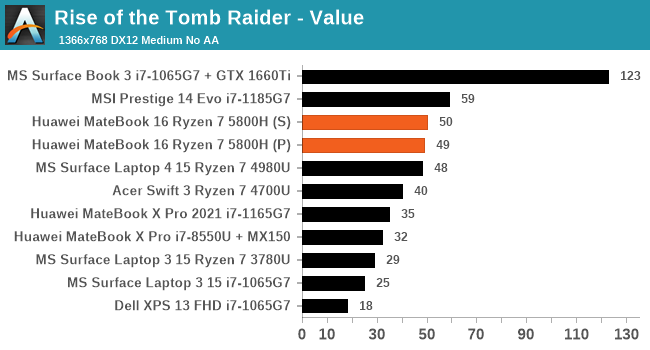
Overall we’re seeing small improvements compared to Zen 2 processors with integrated graphics, however the Vega 8 solution still sits behind the Intel Core i7-1185G7, which is usually equipped with LPDDR4X.
Originally published at https://www.anandtech.com/show/17015/the-huawei-matebook-16-review-powered-by-amd-ryzen-7-5800h-ecosystem-plus (Wayback Machine).