
AMD EPYC Milan Review Part 2: Testing 8 to 64 Cores in a Production Platform
SPEC - Multi-Threaded Performance - Aggregate
Due to the number of SKUs, I’m splitting up the aggregate scores on its own page:
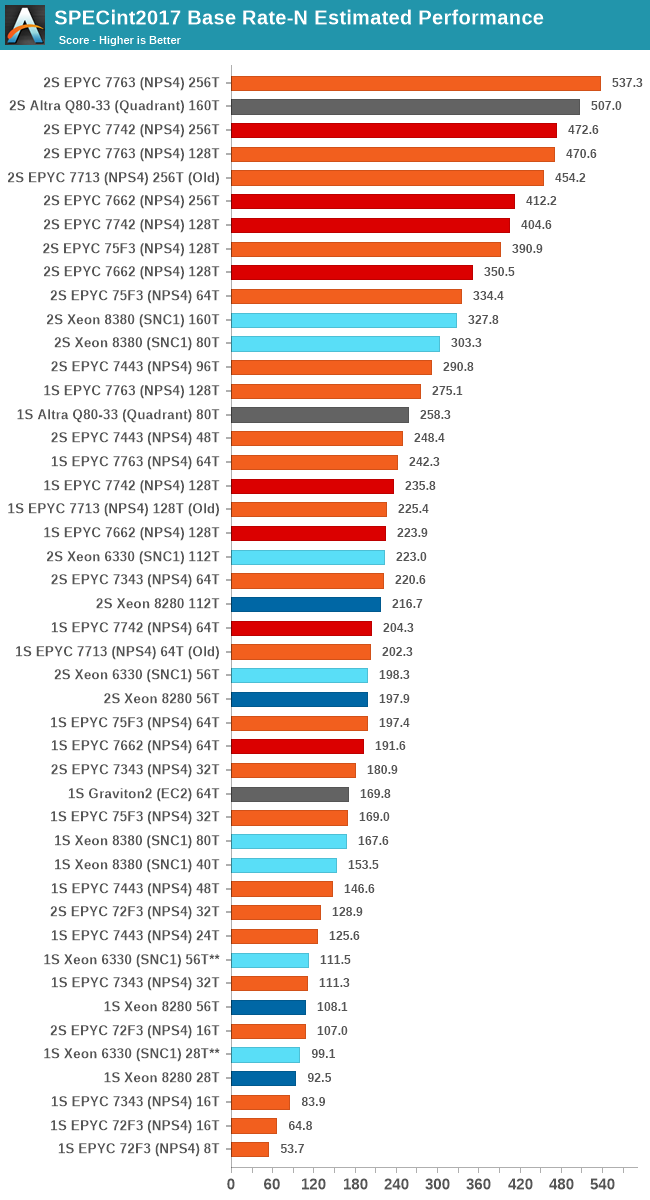
In SPECint2017, for the high-end SKUs, we see the 7763 improve its 2S score by 4.89%, while the 1S score increases by 7.9%. The 75F3 also similarly sees a +3.9% 2S increase, and a 5.4% 1S increase, both extending their leadership positions.
The low-core count SKUs, while notably quite lower in their relative performance, are still extremely impressive from a competitive landscape, with again the 16-core 7343 having no issues in keeping up with the new 28-core Xeon 6330 or last-gen flagship Xeon 8280.
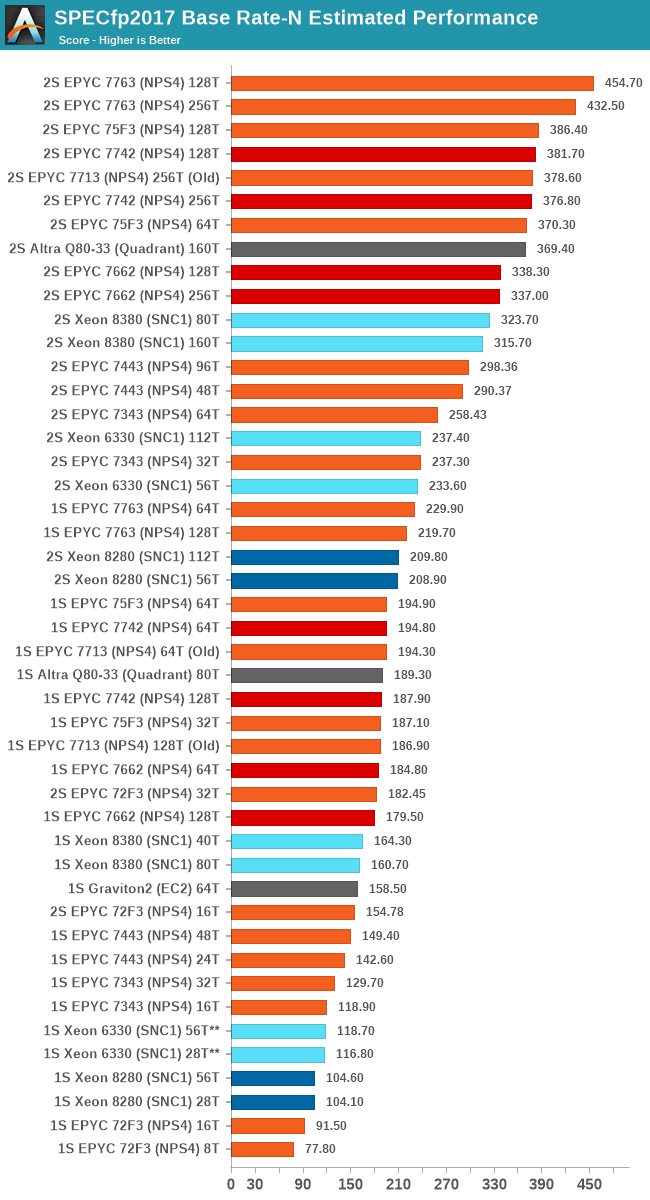
In the floating-point suite more representative of HPC workloads, we again also see the 7763 increase its scores by +1.3% in 2S and +4.2% in 1S configurations, while the 75F3 increases its positioning by +4.2% and +4.8%. The increases don’t change the overall landscape much, but it allows the parts to be better than initially reviewed.
Again, the 7443 and 7343 are excellent performers here given they outperform the Xeon 6330 and Xeon 8280.
Originally published at https://www.anandtech.com/show/16778/amd-epyc-milan-review-part-2 (Wayback Machine).