
Sabrent Rocket Q4 and Corsair MP600 CORE NVMe SSDs Reviewed: PCIe 4.0 with QLC
Advanced Synthetic Tests
Our benchmark suite includes a variety of tests that are less about replicating any real-world IO patterns, and more about exposing the inner workings of a drive with narrowly-focused tests. Many of these tests will show exaggerated differences between drives, and for the most part that should not be taken as a sign that one drive will be drastically faster for real-world usage. These tests are about satisfying curiosity, and are not good measures of overall drive performance. For more details, please see the overview of our 2021 Consumer SSD Benchmark Suite.
Whole-Drive Fill
 |
|||||||||
| Pass 1 | |||||||||
| Pass 2 | |||||||||
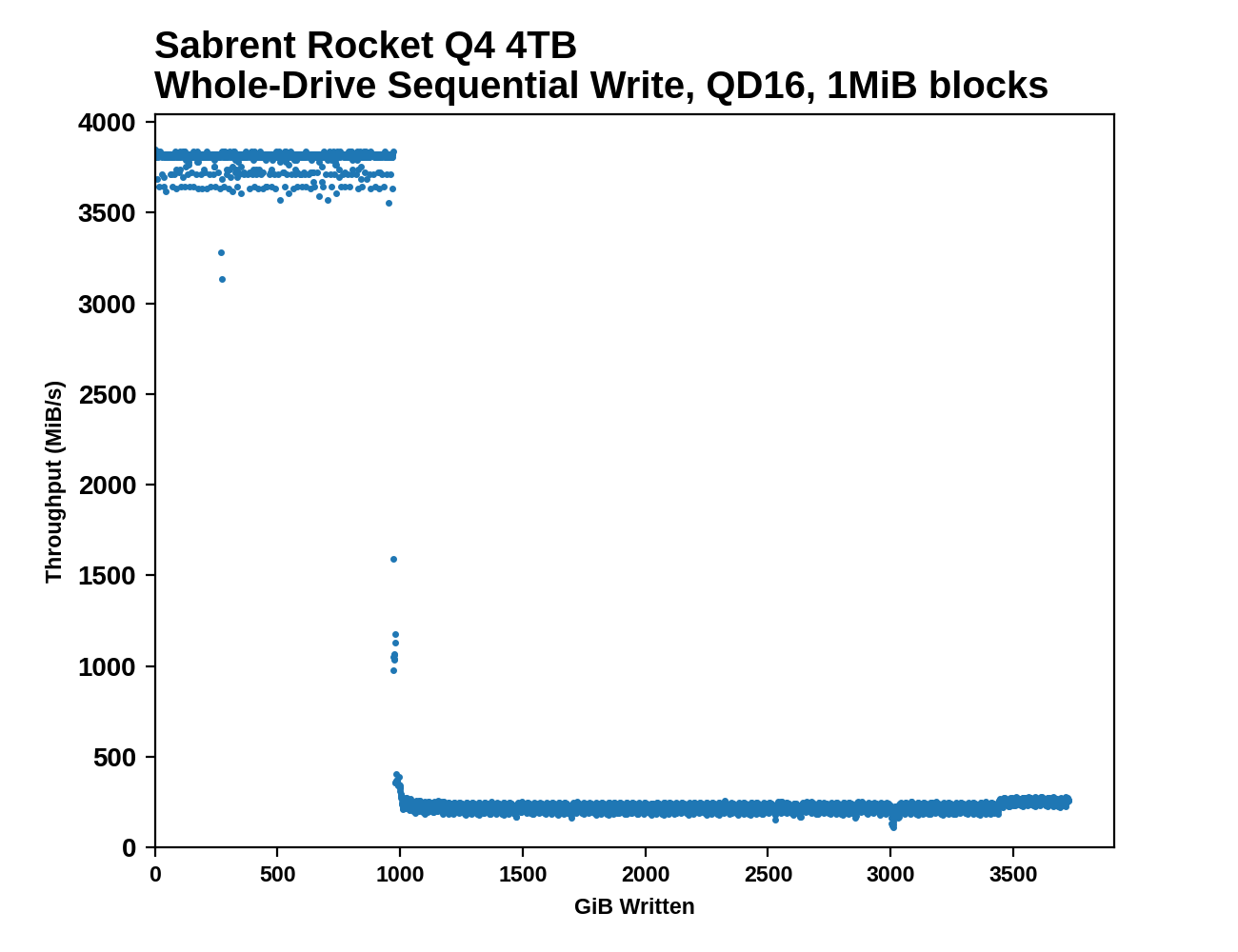
As is typical for QLC drives based around Phison controllers, the SLC caches on the Rocket Q4 and MP600 CORE are as large as possible: about 1/4 the usable capacity of the drive. Write speeds to the cache hover around or just above the limit of what a PCIe 3 x4 link could handle, and once the cache is full performance drops down to well below the limit of what a SATA link could handle.
 |
|||||||||
| Average Throughput for last 16 GB | Overall Average Throughput | ||||||||
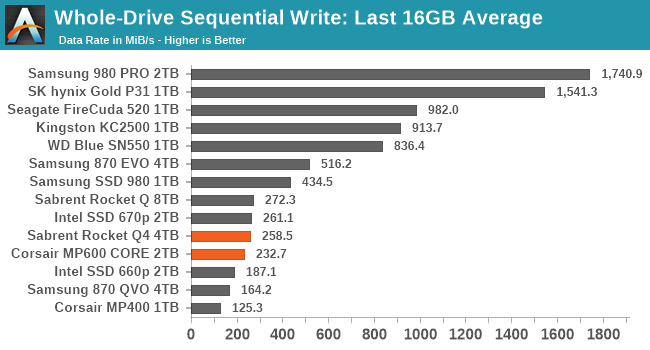
Both the 2TB MP600 CORE and the 4TB Rocket Q4 have about the same overall write speed, and they're in the middle of the pack of QLC drives: the older 8TB Rocket Q and the more recent Intel 670p both outperform the Phison E16 drives. And all of the TLC drives naturally sustain higher write speeds than any of these QLC drives.
Working Set Size
 |
|||||||||
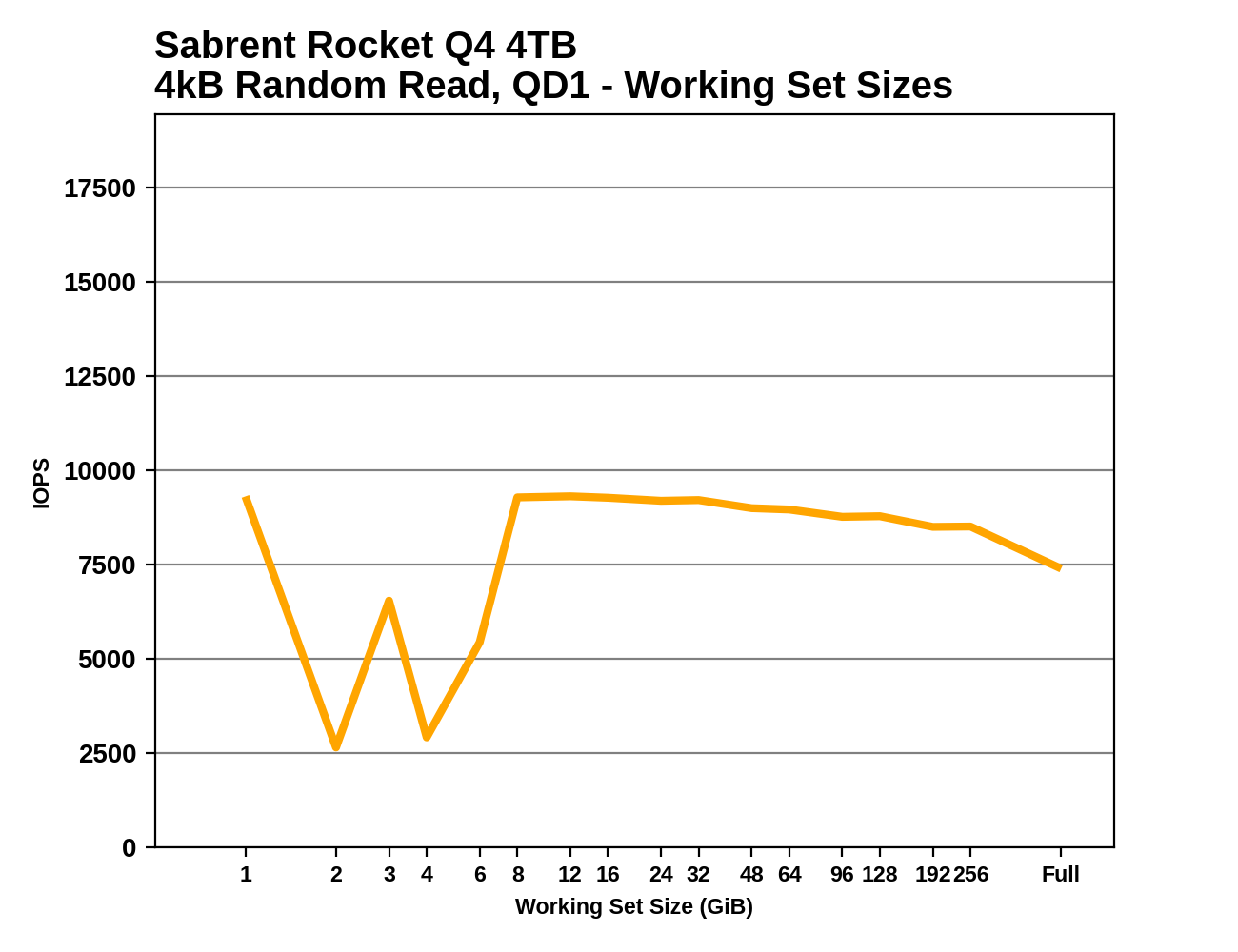
Both the Rocket Q4 and MP600 CORE have some disappointing performance drops during the working set size test, suggesting there's background work keeping the drives busy despite all the idle time they get before the test and between phases of the test. But aside from that, we see the expected trends: the MP600 CORE has flat overall performance on account of having 2GB of DRAM for its 2TB of NAND, while the Rocket Q4 shows a slight performance decline for large working sets because it's managing 4TB of NAND with the same 2GB of DRAM.
Performance vs Block Size
 |
|||||||||
| Random Read | |||||||||
| Random Write | |||||||||
| Sequential Read | |||||||||
| Sequential Write | |||||||||
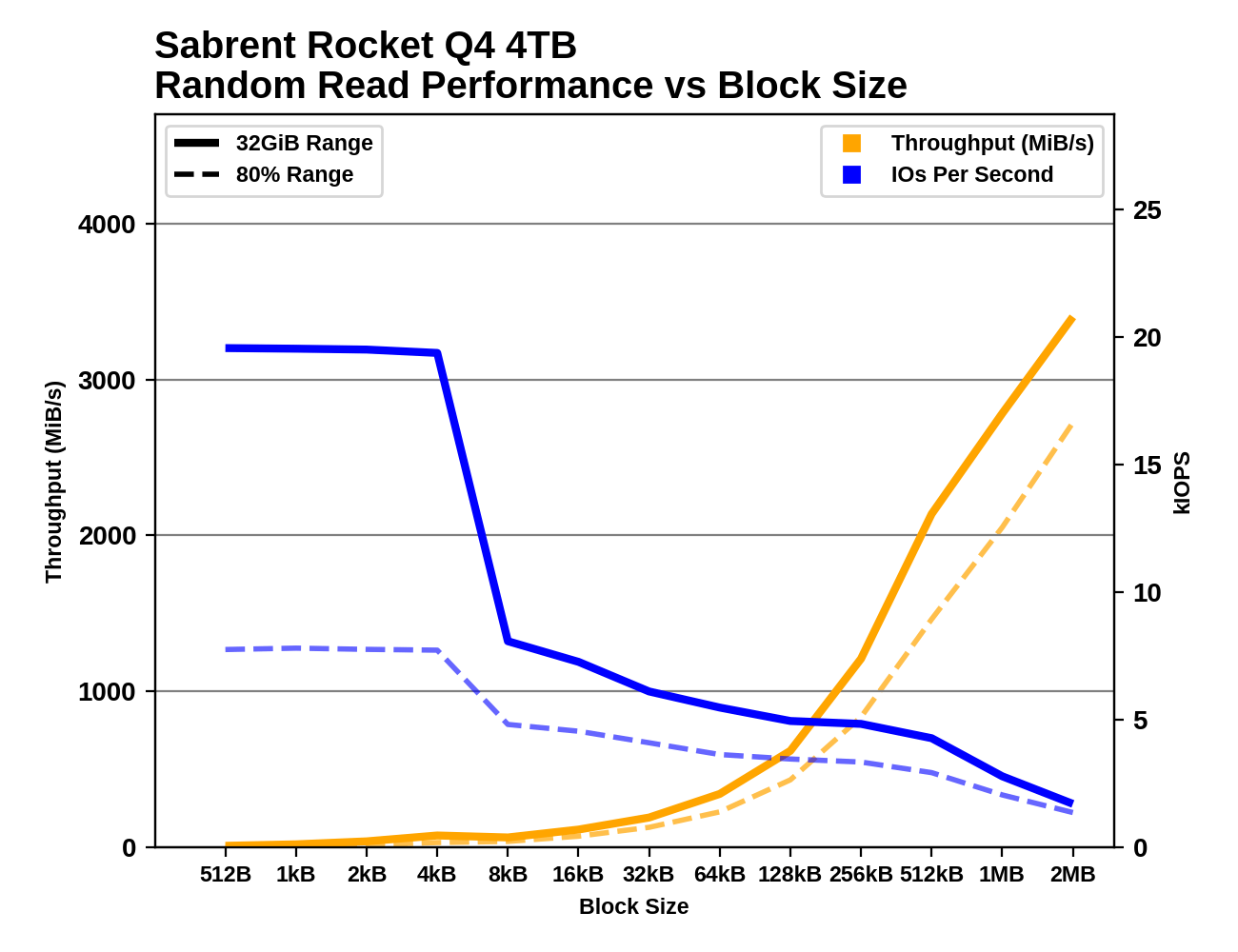
The two Phison E16 drives with QLC show similar patterns to the E12 QLC drives, but with substantial performance improvements in several places, most notable for random reads. These drives don't have any issues with block sizes smaller than 4kB, but there are performance drops at larger block sizes where the SLC cache runs out while testing random writes.
Originally published at https://www.anandtech.com/show/16577/qlc-pcie-40 (Wayback Machine).