
Intel's Pentium M Desktop Part II: ASUS' Pentium M to Pentium 4 Socket Adapter
- Posted in
- CPUs
Overclocked Performance
Thus far, the Pentium M's performance is improved in some areas, but still remains weak overall in multimedia content creation applications, workstation apps, and media encoding. The ASUS CT-479 adapter allows the Pentium M to have more memory bandwidth than it needs, so if removing that bottleneck doesn't send the Pentium M to the top of the charts, then there's only one solution to improve its performance - overclocking.
Overclocking on the ASUS P4P800-SE with the CT-479 adapter is a much more positive experience than on any of the 855GME motherboards simply because the platform is far more stable when overclocked. But remember, you can't adjust the CPU core voltage or multiplier, so your only overclocking options are through increasing the FSB.
The Pentium M 770 has a 16.0x default clock multiplier running at a 133MHz FSB; we bumped the FSB up to 160MHz and took the CPU up to 2.56GHz. The memory speed stayed at a 5:4 ratio, which put our memory bus running at DDR400 speeds. Everything else remained the same, so let's look at how performance improved.
Overclocked Workstation Performance
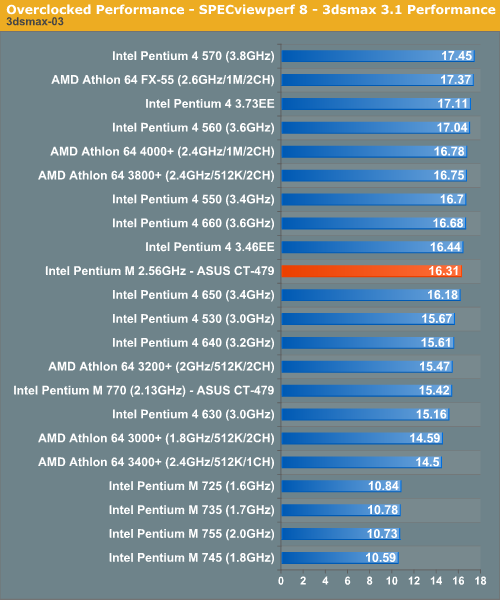
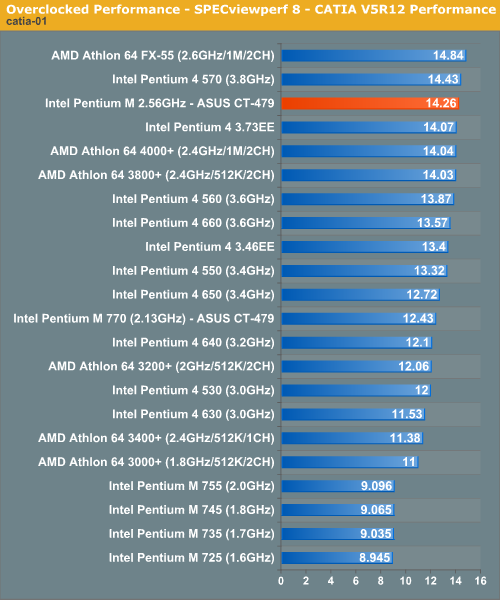
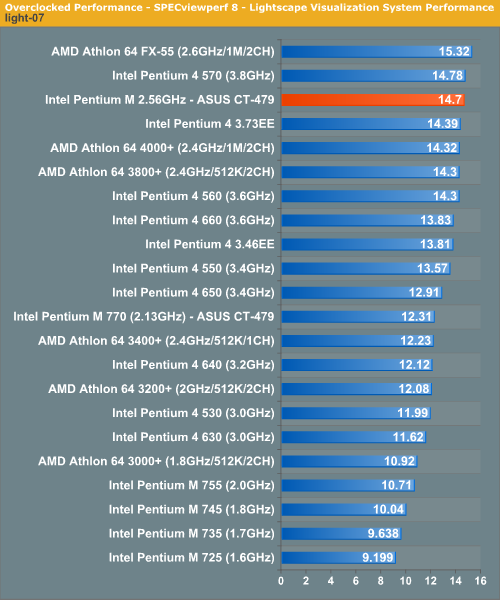
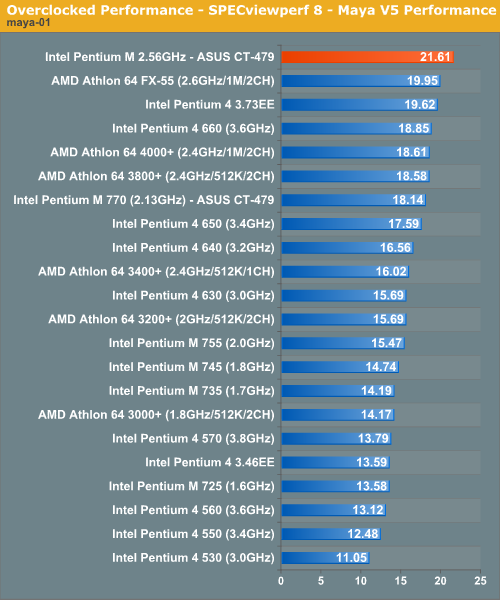
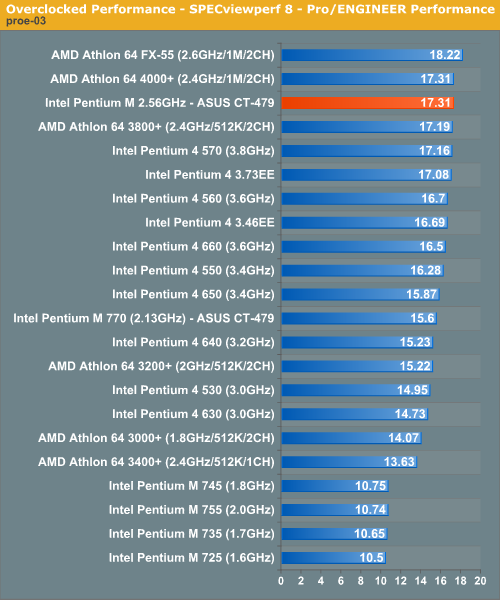
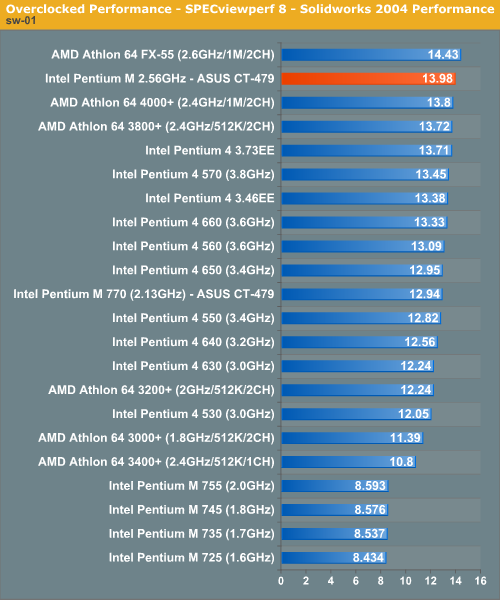
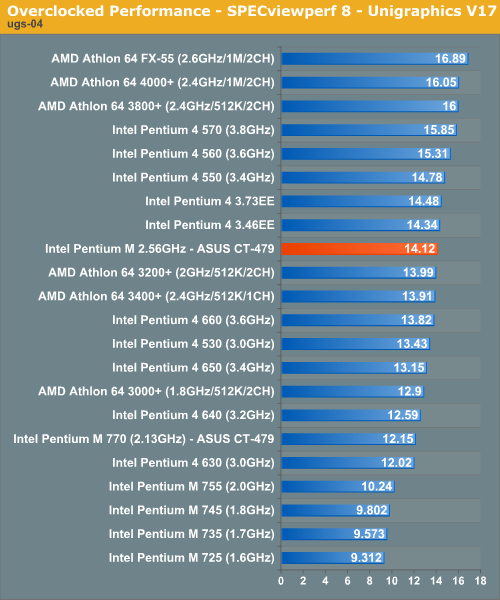
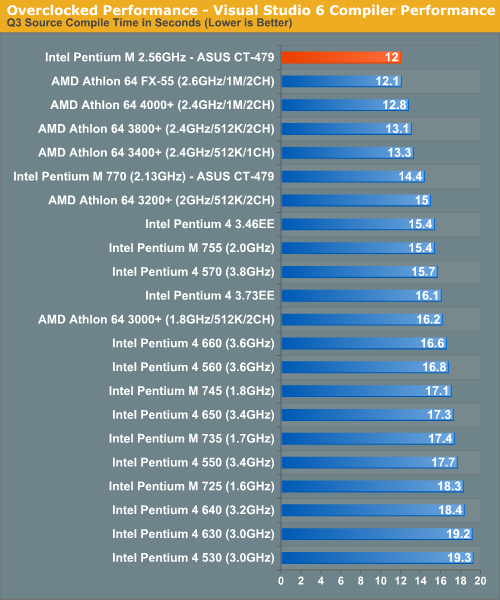
With the exception of a couple of SPECviewperf tests, the Pentium M running at 2.56GHz ends up being a pretty formidable contender in our workstation tests:
Originally published at https://www.anandtech.com/show/1650 (Wayback Machine).