
Sun's W2100z Dual Opteron Workstation
- Posted in
- Systems
Synthetic Benchmarks
Spec Viewperf 8.0.1 (GCC 3.4.2)
SPEC released their newest benchmarks just a couple of months ago, and we have been doing our best to validate SpecViewperf 8.01 as our main synthetic benchmark for some time. Our Viewperf was compiled via GCC 3.4.2. Much to our surprise, Viewperf 8.0.1 compiles without much tweaking. We only needed to edit the Makefile to change a few X11 lib references from lib to lib64 (we are running a 64-bit environment).You may wish to check out Anand's analysis of the FX-55 processor. Anand has a very good breakdown of each individual test, and what they mean. Do keep in mind that his analyses are done in a 32-bit, single CPU Windows environment and are very difficult to assess comparatively next to our SMP Linux tests.
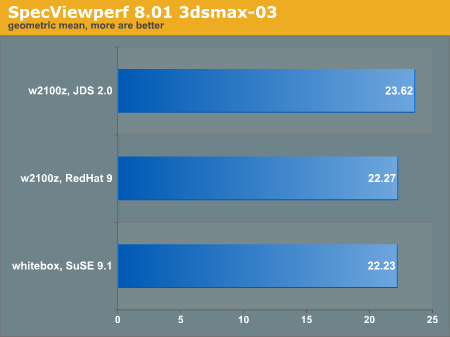
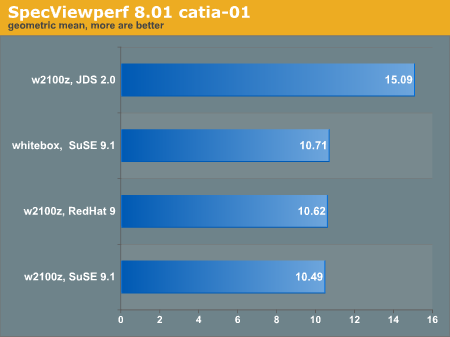
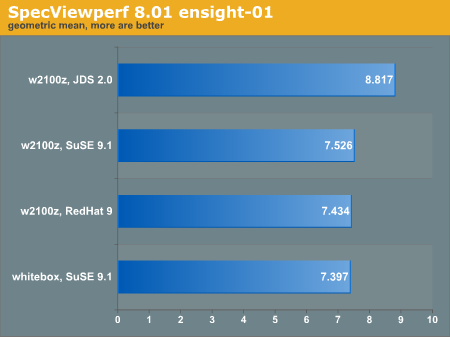
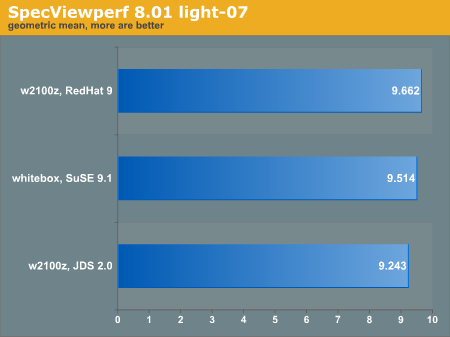
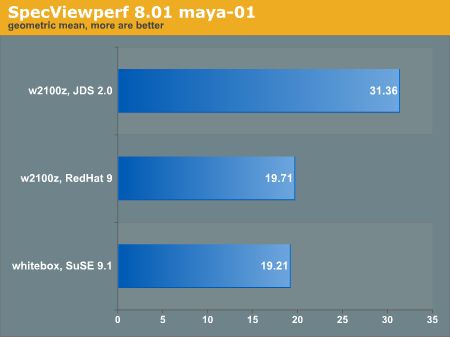
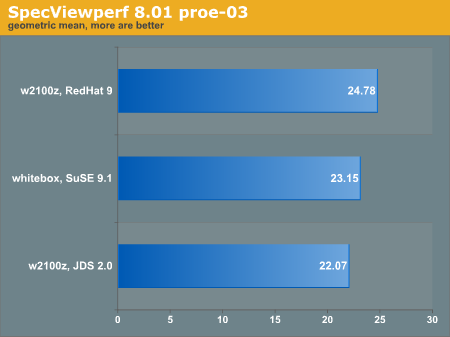
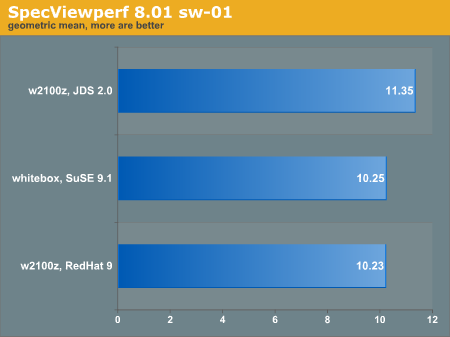
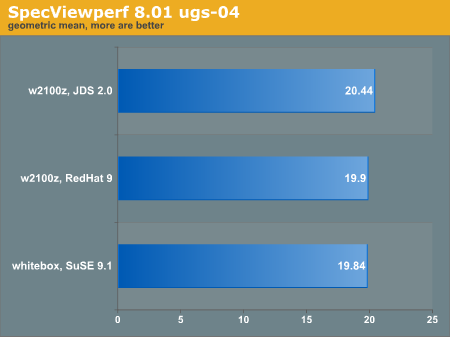
We found some very interesting results here. Almost all of our applications favored the 32-bit Linux 2.4 kernel over the 64-bit Linux 2.6 kernel! As you will see in our next few benchmarks, the 32-bit JDS platform actually performed poorer than our 64-bit platforms in almost every instance. While SPEC's benchmarks are the industry standard, we put more weight on real world rendering benchmarks, like Shake and MentalRay, which you will see on the following pages.
When compared to Anand's windows benchmarks, some applications favor our Linux setup thoroughly, although they could be benefiting from our dual processor setup. In any case, they are not particularly comparable as we are comparing "32-bit Windows" apples to "64-bit Linux" oranges. Perhaps, we will explore the differences between the performances on the two OS's again in the future. Also keep in mind that Anand uses a PCIe Radeon X800XT video card whereas we are using an AGP Quadro FX 3000. Differing video cards will change the results significantly.
We attempted to run Viewperf 7.1.1 as well, but we ran into several issues. The first time that we ran 7.1.1, the machine actually rebooted with no errors or warnings. We suspect something may have overheated, but there were no indications of that from our thermal tests that we ran after the reboot. Faulty code may also be to blame; the benchmark always crashed 2/3 of the way through on our RedHat 9 workstation.
Originally published at https://www.anandtech.com/show/1523 (Wayback Machine).