
MGE Sidewinder: A Look at a Gaming Chassis
- Posted in
- Cases/Cooling/PSUs
Benchmarking - Thermal
When benchmarking the Sidewinder, we test the temperatures of key components including the actual CPU temperature, the actual temperature inside the heatsink, the temperatures of the DDR, Northbridge, Southbridge, HDD, PSU, and the ambient temperature inside the case, all during normal operation. During our testing, the PSU and CPU heatsink fans remain on to measure temperatures during normal system operations.Chaintech VNF3-250 |
|

The thermal readings for the key components and points on the motherboard during operation were as follows:
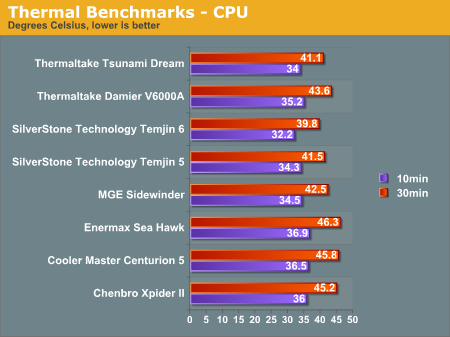
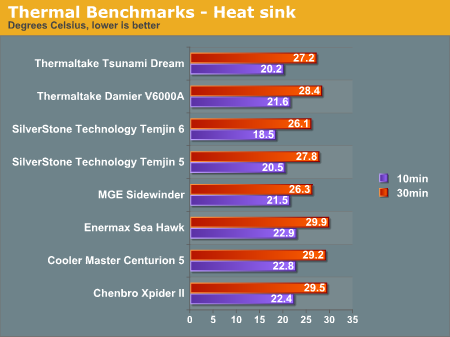
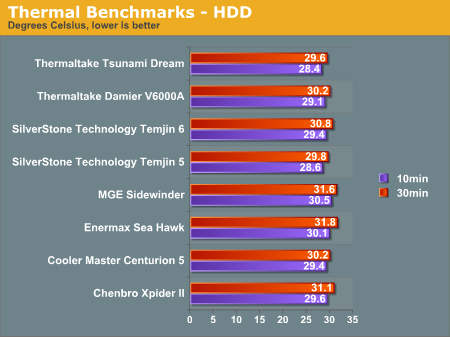
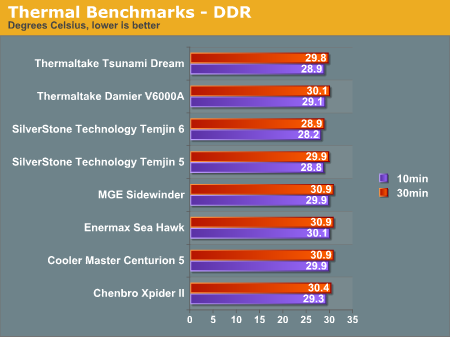
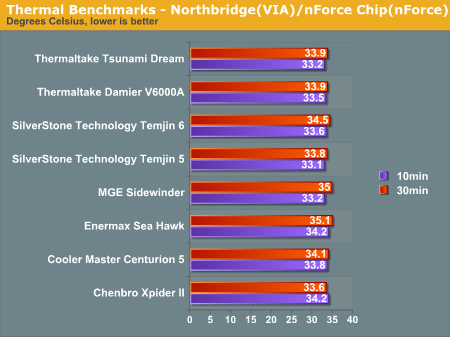
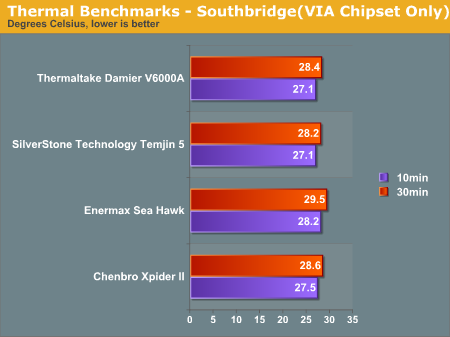
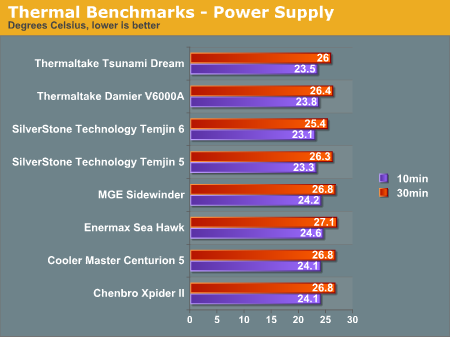
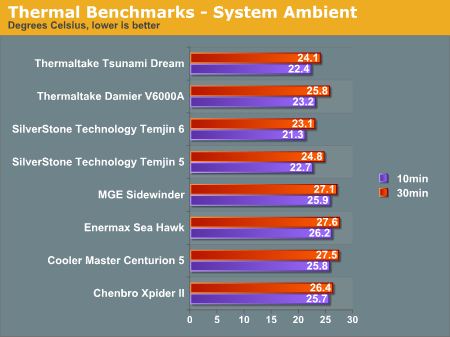
From our results, we can see that the two 80mm fans on the left side panel helped in moving air into the Sidewinder. This chassis performed a few degrees cooler compared to Enermax's Sea Hawk that we benchmarked, only because of the side panel fans. The Sidewinder does have the potential to perform even better than it has this time around by adding a couple more fans to the back of the case to increase air flow through the chassis.
Originally published at https://www.anandtech.com/show/1513 (Wayback Machine).