
The Snapdragon 855 Phone Roundup: Searching for the Best Implementations
- Posted in
- Mobile
- Qualcomm
- Smartphones
- Snapdragon 855
- Galaxy S10
- Xiaomi Mi 9
- Xperia 1
- OPPO Reno
- OnePlus 7 Pro
- Black Shark 2
- Reno 10x
- Nubia RedMagic 3
GPU Performance
Gaming performance in a smartphone is dictated by three aspects: Firstly, naturally the hardware itself and how efficient and performance the GPU and Soc are. Secondly, the hardware design of the phone and how well it was designed to dissipate heat from the SoC to the whole chassis of the device, and secondly, the software thermal throttling configurations and how the vendor has programmed the thermal behaviour of the phone, such as how hot it allows the phone to get.
The results here can be all over the place depending on the vendor implementation, and it’s amongst the more interesting tests for this article.
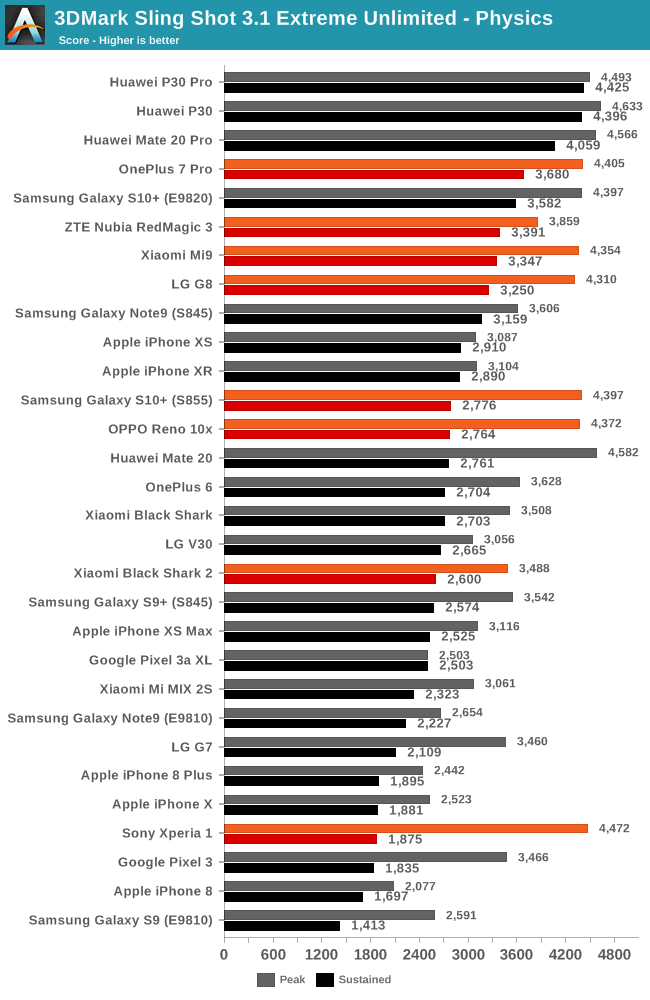
In the 3DMark Physics tests, we’re seeing largely a CPU load whilst the device is thermally constrained by it being heated up by the GPU load. The results we’re seeing here are very spread across the different vendors.
One result that does stand out is the Sony Xperia 1 which has some very bad throttling behaviour on the CPU, reaching only 40% of the peak performance of when the device is cold. The Black Shark 2 is also interesting as it showcases uniquely limited peak performance compared to the other Snapdragon 855 devices, possibly pointing out that Xiaomi is implementing a hard top CPU frequency cap when under GPU load.
The rest of the device vary in their sustained performance results. The best S855 device is the OnePlus 7 Pro, which is only showcasing a 15% degradation.
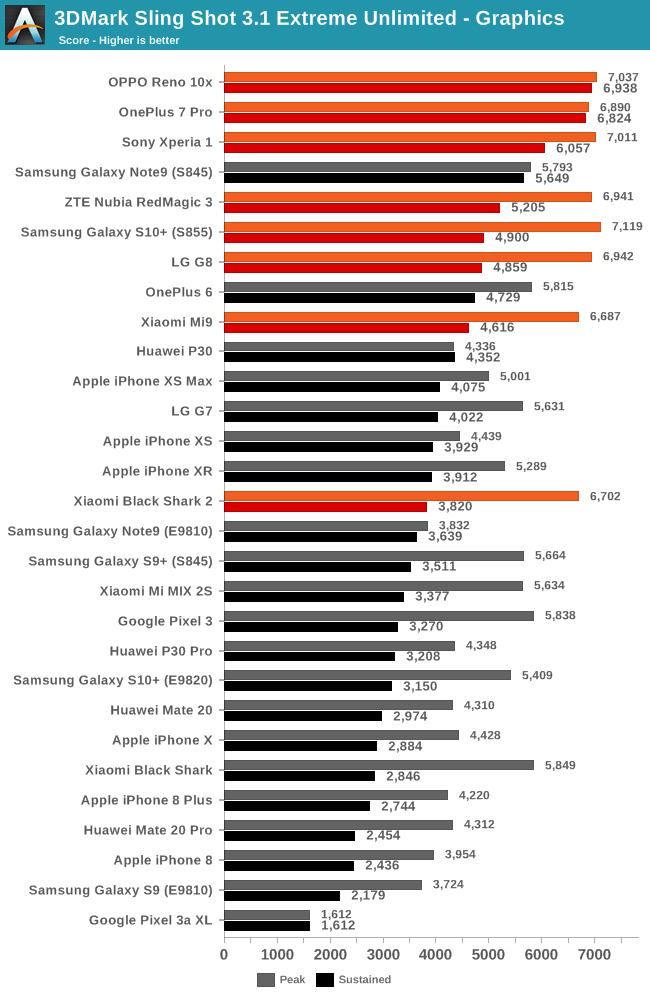
The two top devices are the OPPO Reno 10x, as well as the OnePlus 7 Pro which showcase nearly no throttling at all.
The Xiaomi Black Shark 2 showcases some pretty disappointing results, losing almost 45% of its performance when hot.
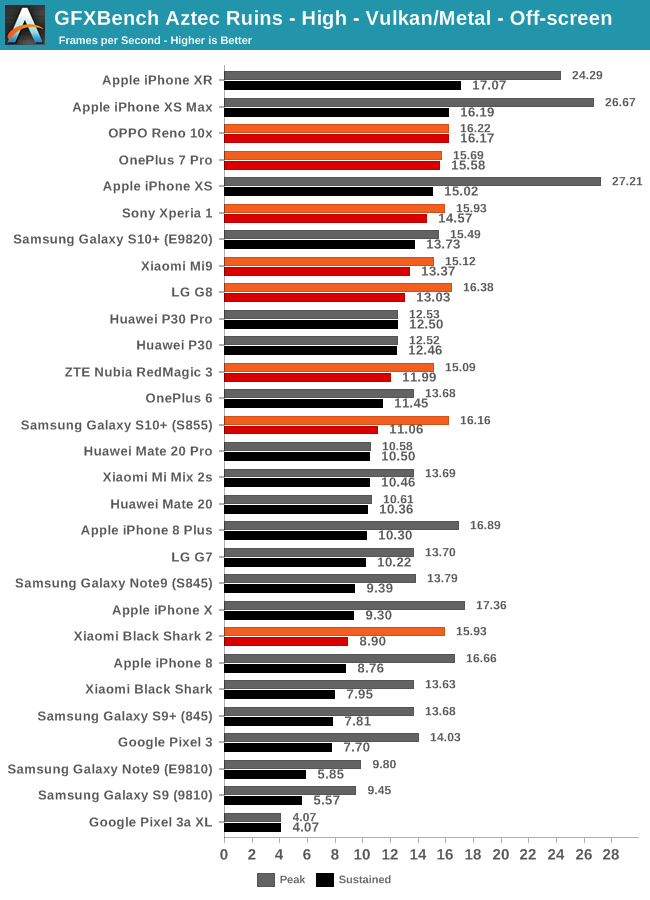
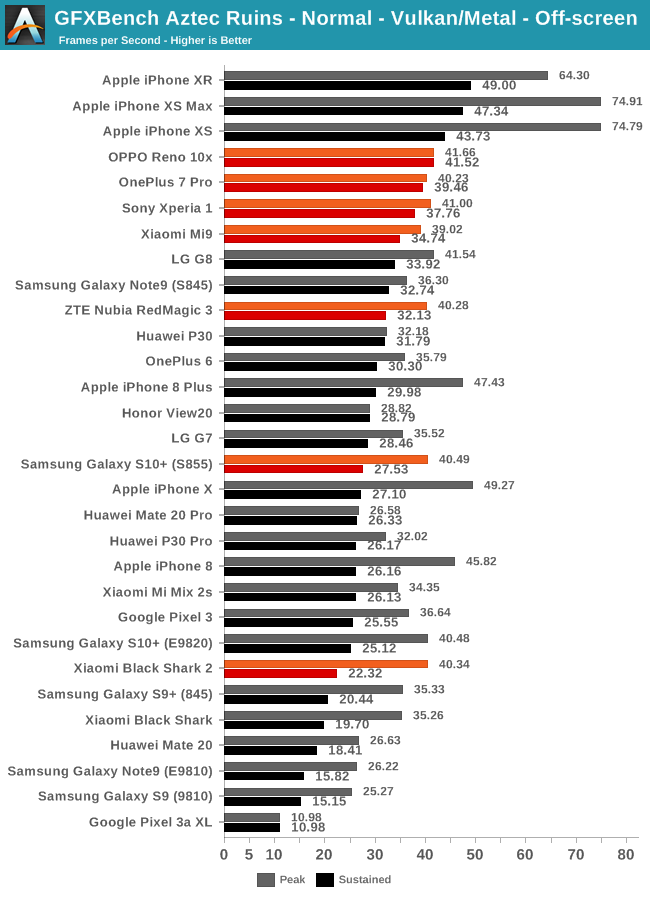
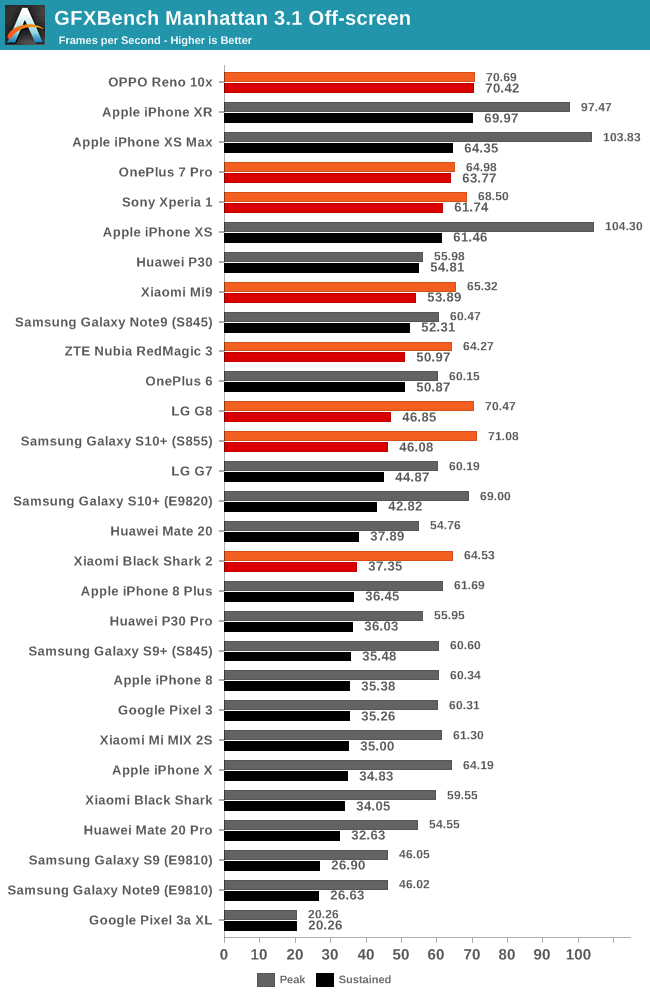
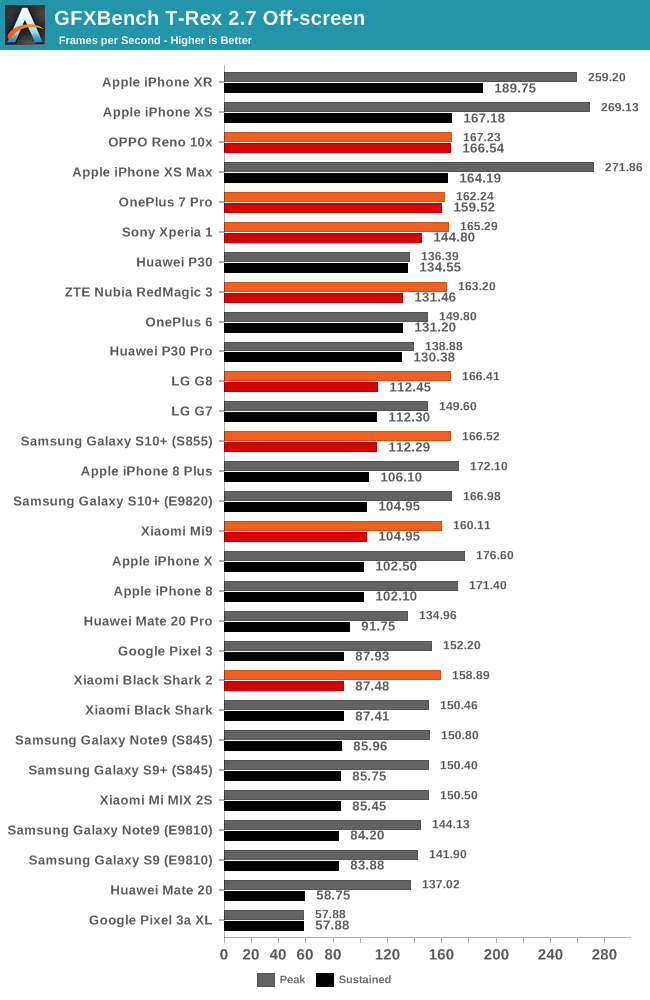
The 3D results continue on over the course of the GFXBench results. The OPPO Reno 10x and OP7Pro are the clear winners here in terms of sustained performance. The Xperia 1 and Mi9 also fare well, although the latter loses its edge in T-Rex which might be a throttling result of a different component such as the DRAM.
The issue with the OPPO Reno 10x and OP7Pro is that both devices get extremely hot. I’ve measured peak skin temperatures on the screen in excess of 50°C. In fact, the OPPO device actually stopped my benchmarking run via device overheating warning which is not something that you want to see in any phone; the hardware should throttle before such a warning is to occur. I’m not sure if this is a driver problem or something that both related vendors choose to deliberately implement, at least it doesn’t seem to be a cheating behaviour as I’m using modified benchmark ID APKs for our regular testing.

I mentioned in the device overview that the ZTE Nubia RedMagic 3 differs from all other phones, virtue of the fact that it’s using an actual fan in its internal design along with actual air intake and exhausts. Unfortunately, I wasn’t able to measure any kind of measurable performance or temperature differences with the fan either on or off. The little unit moves just so little air that it hardly makes any difference. Similarly disappointing was the Black Shark 2, which distinguished itself by offering the worst gaming performance of the lot even though it’s supposed to be a gaming phone, essentially eliminating itself from contention as a viable smartphone option for any kind of buyer.
The rest of the phones see a 20 to 40% degradation in performance from peak. The best device for gaming amongst the Snapdragon 855 crowd was the OnePlus 7 Pro, as it was able to achieve the highest performance figures all without running into issues such as overheating warnings.
Originally published at https://www.anandtech.com/show/14794/snapdragon-855-phone-roundup-searching-for-the-best-implementations (Wayback Machine).