
The NVIDIA GeForce GTX 1650 Review, Feat. Zotac: Fighting Brute Force With Power Efficiency
Final Fantasy XV (DX11)
Upon arriving to PC earlier this, Final Fantasy XV: Windows Edition was given a graphical overhaul as it was ported over from console, fruits of their successful partnership with NVIDIA, with hardly any hint of the troubles during Final Fantasy XV's original production and development.
In preparation for the launch, Square Enix opted to release a standalone benchmark that they have since updated. Using the Final Fantasy XV standalone benchmark gives us a lengthy standardized sequence to utilize OCAT. Upon release, the standalone benchmark received criticism for performance issues and general bugginess, as well as confusing graphical presets and performance measurement by 'score'. In its original iteration, the graphical settings could not be adjusted, leaving the user to the presets that were tied to resolution and hidden settings such as GameWorks features.

Since then, Square Enix has patched the benchmark with custom graphics settings and bugfixes to be more accurate in profiling in-game performance and graphical options, though leaving the 'score' measurement. For our testing, we enable or adjust settings to the 'Highest', 'High', or 'Medium' options except for NVIDIA-specific features and 'Model LOD', the latter of which is left at standard. For High, we also turn off the hi-res assets, while for Medium we also turn off 'Geomapping' (terrain tessellation). Final Fantasy XV also supports HDR, and it will support DLSS at some later date.
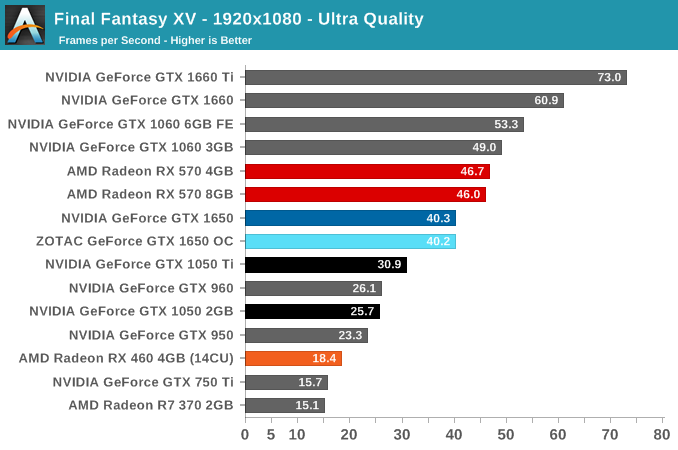
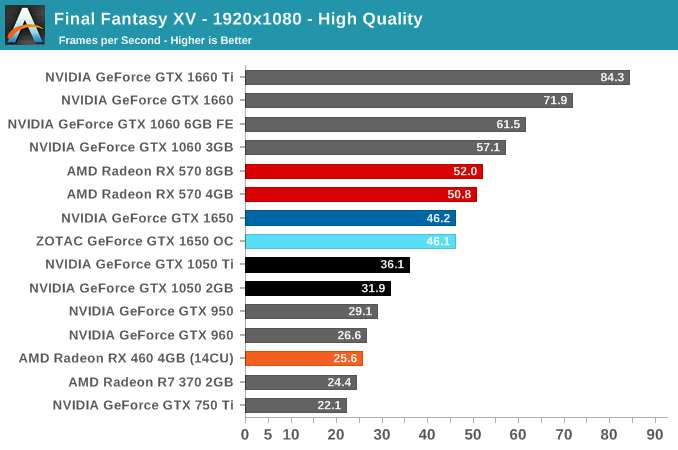
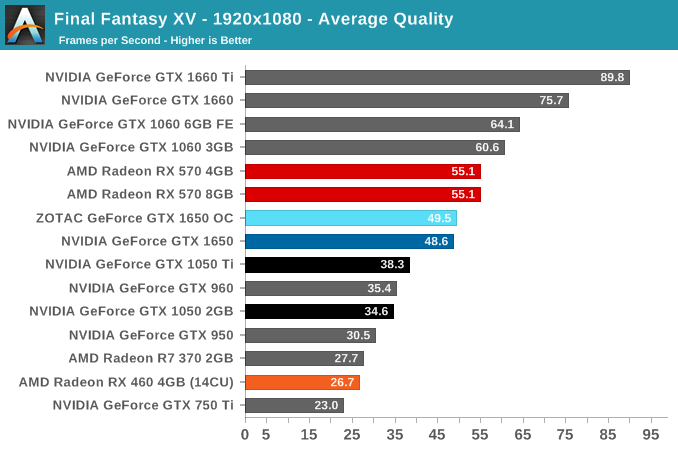
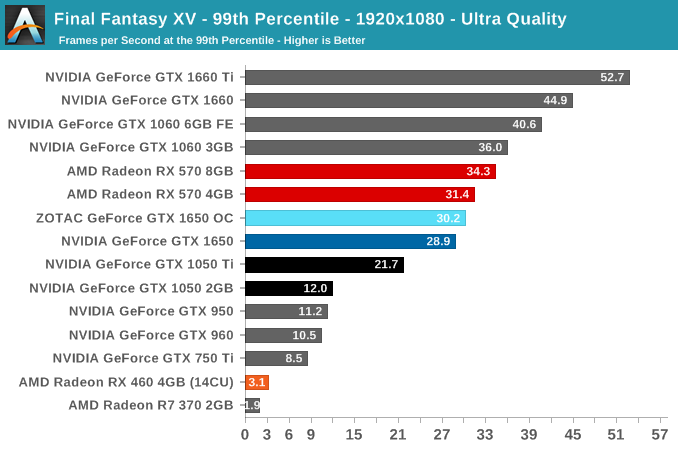
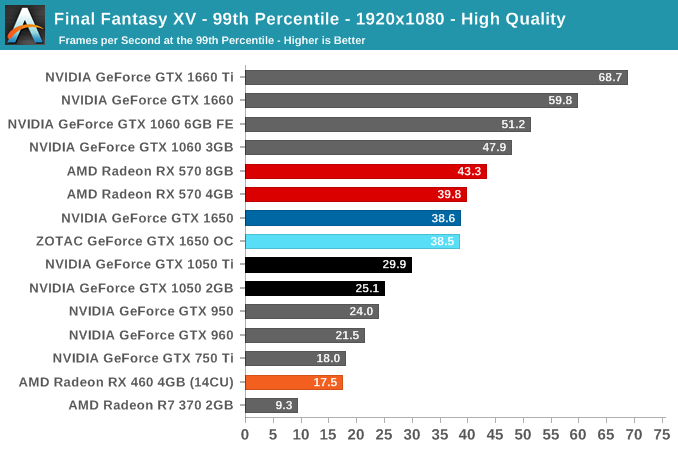
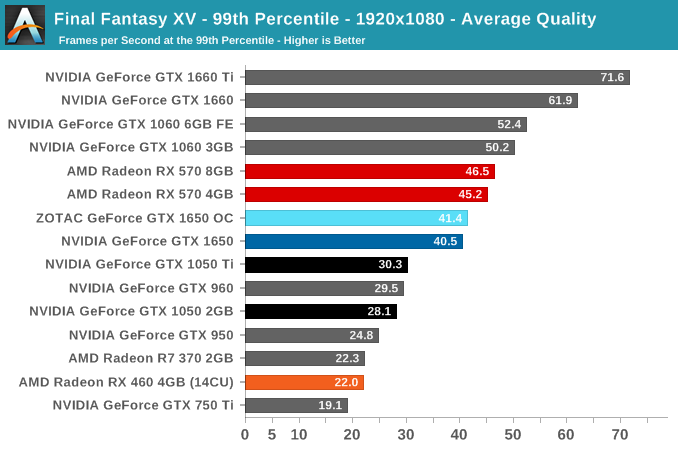
Final Fantasy V is another title that tends to prefer more VRAM, and with ultra settings and high-res textures, all the 2GB cards drop off in their 99th percentiles, reflecting the stuttering experience. The GTX 1650 is almost on par with RX 570 here at the higher settings.
Originally published at https://www.anandtech.com/show/14270/the-nvidia-geforce-gtx-1650-review-feat-zotac (Wayback Machine).