
The GIGABYTE Aorus RGB M.2 SSD Review: Nothing Is Too Small For RGB LEDs
Mixed Random Performance
Our test of mixed random reads and writes covers mixes varying from pure reads to pure writes at 10% increments. Each mix is tested for up to 1 minute or 32GB of data transferred. The test is conducted with a queue depth of 4, and is limited to a 64GB span of the drive. In between each mix, the drive is given idle time of up to one minute so that the overall duty cycle is 50%.
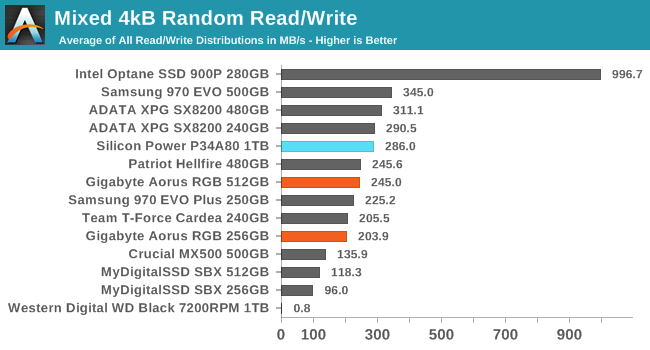
On the mixed random I/O test, the GIGABYTE Aorus RGB SSDs once again come in last place among high-end NVMe SSDs of comparable capacity, but maintain a significant performance advantage over SATA drives or entry-level NVMe drives.
 |
|||||||||
| Power Efficiency in MB/s/W | Average Power in W | ||||||||
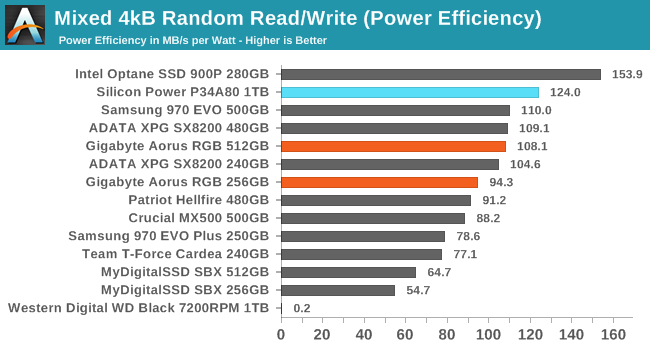
The power efficiency of the Aorus SSDs on the mixed random I/O test is good, with the 512GB model basically tied for first place for that capacity class, and the 256GB model coming in second behind the Silicon Motion-based ADATA SX8200.
 |
|||||||||
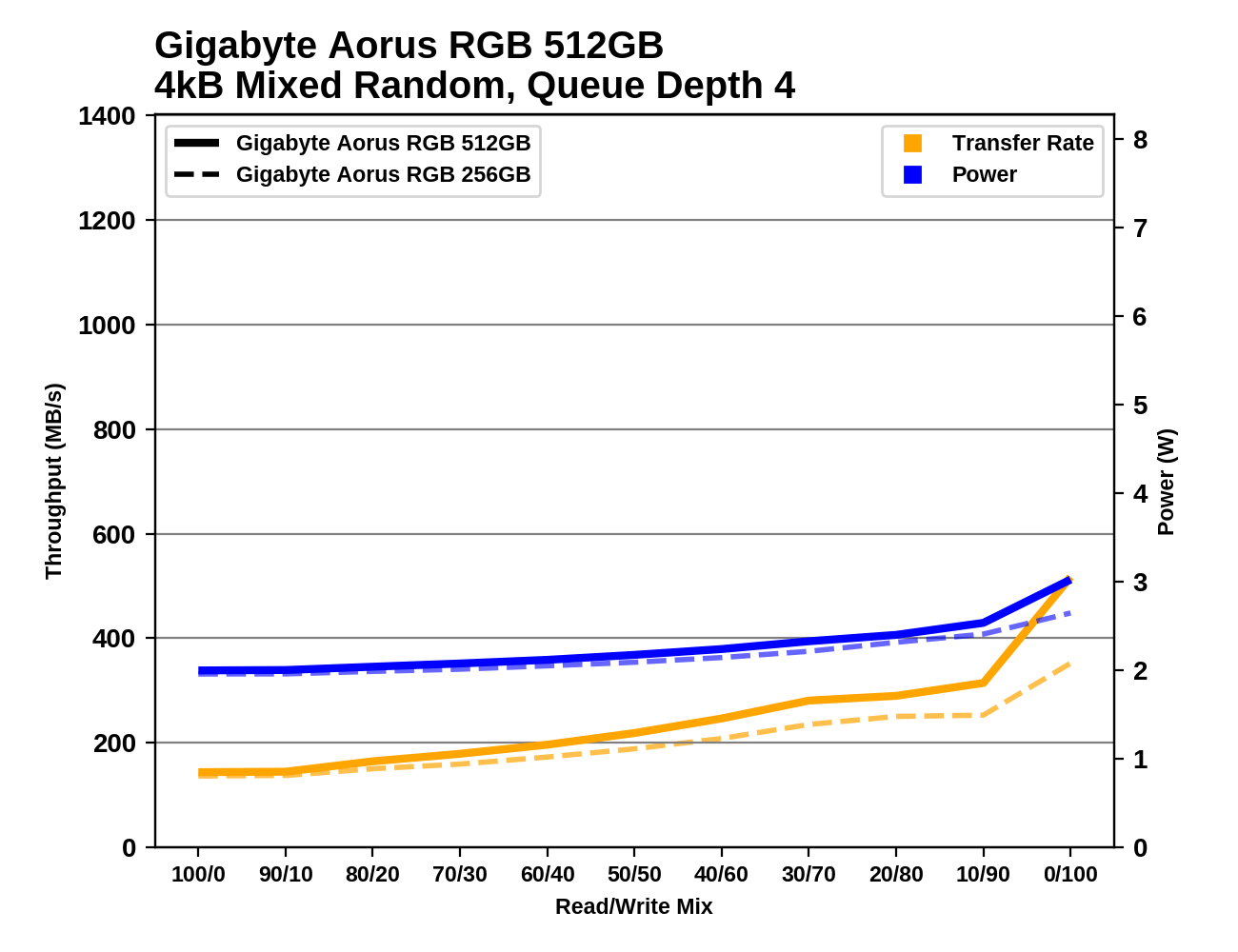
The Aorus SSDs fall behind mostly during the second half of the mixed random I/O test, when the workload shifts to be very write-heavy. Write combining and SLC caching usually allow drives to pick up a lot of speed as the workload approaches pure writes, but the Aorus drives fill their SLC caches and get stuck with relatively low write performance as a result.
Mixed Sequential Performance
Our test of mixed sequential reads and writes differs from the mixed random I/O test by performing 128kB sequential accesses rather than 4kB accesses at random locations, and the sequential test is conducted at queue depth 1. The range of mixes tested is the same, and the timing and limits on data transfers are also the same as above.
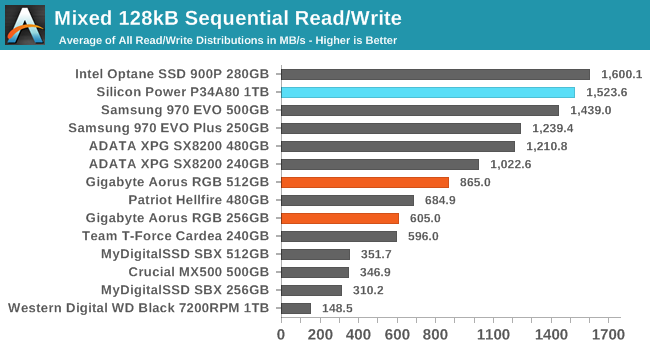
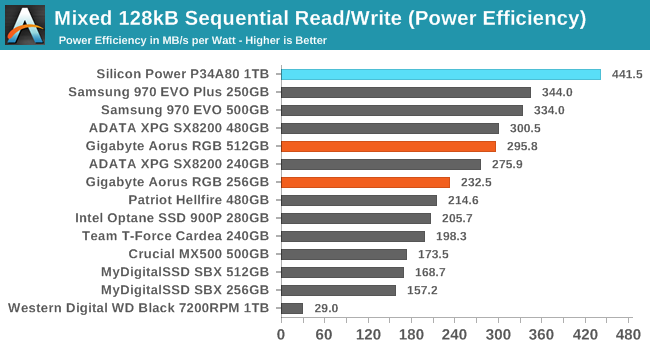
The Aorus and other Phison drives fare poorly on the mixed sequential I/O test, with average speeds that are much slower than the Samsung or ADATA/Silicon Motion competition. Both capacities of the Aorus score worse than either capacity of the ADATA SX8200 or Samsung 970 EVO (Plus).
 |
|||||||||
| Power Efficiency in MB/s/W | Average Power in W | ||||||||
The power efficiency scores for the Aorus SSDs on the mixed sequential I/O test are good, especially for the 512GB model that is basically tied with the ADATA SX8200. The Samsung drives lead for their capacity classes despite having relatively high power draw in absolute terms.
 |
|||||||||
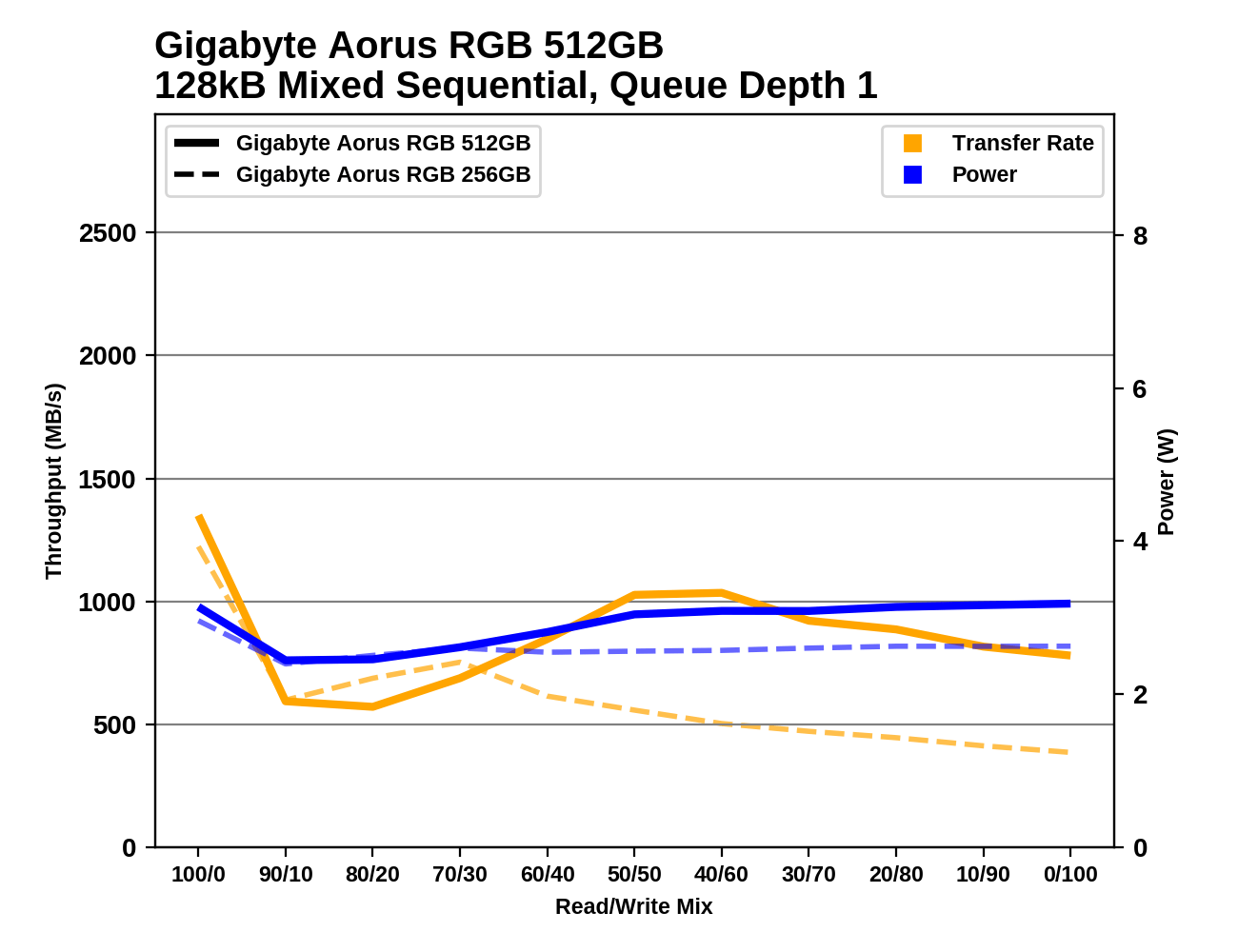
Performance for the Aorus SSDs on the mixed sequential I/O test drops at the beginning when writes are first added to a pure-read workload, but by the middle of the test things have started to settle down as the SLC cahces are staying more or less full and the overall throughput is limited mainly by write speed.
Originally published at https://www.anandtech.com/show/14177/the-gigabyte-aorus-rgb-m2-ssd-review (Wayback Machine).