
The Huawei P30 & P30 Pro Reviews: Photography Enhanced
- Posted in
- Mobile
- Smartphones
- Huawei
- P30
- P30 Pro
GPU Performance
Much like the System Performance section, I’m not expecting any big surprises in the GPU performance section. The Kirin 980 uses a Mali G76MP10 at 720MHz and while the chip isn’t blazing as much as the competition, it still performs adequately well and is a significant upgrade to last year’s Kirin 970.
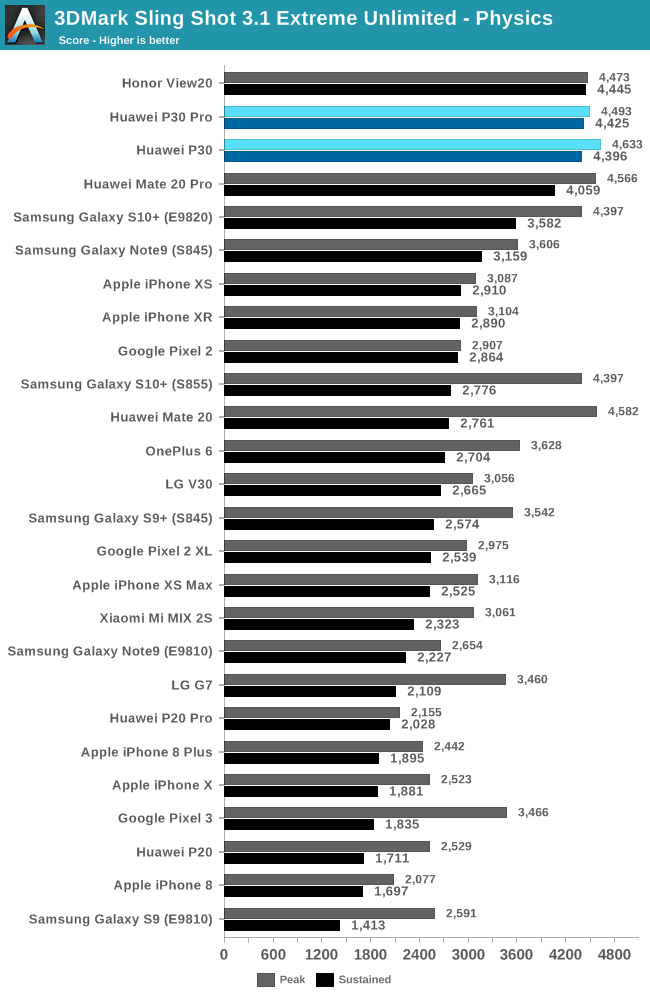
In the 3DMark Sling Shot physics test, the P30s are taking the top spots in terms of performance, both in peak as well as sustained figures. The limitation here lies mainly on the part of the CPU as well as its thermal throttling characteristics. Both the P30 and P30 Pro barely throttle in this regard, at least not in GPU power constrained scenarios.
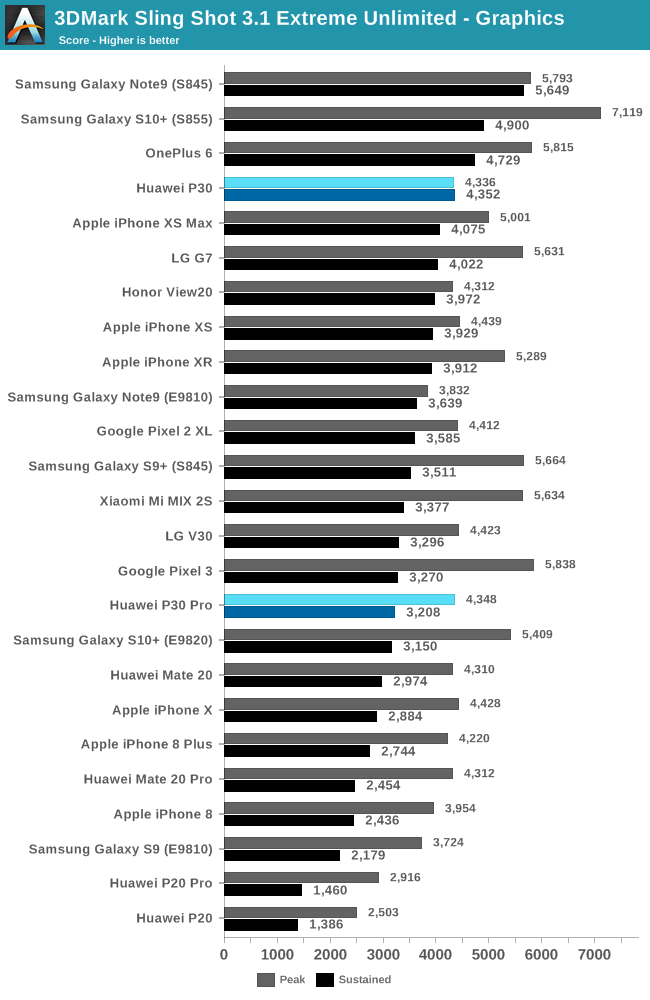
In the graphics test, we see expected results on the P30 Pro, however on the smaller P30 there’s essentially no thermal throttling at all, which is extremely peculiar.

P30 Overheating Warning & App shutdown
Shockingly enough, I didn’t manage to make the P30 throttle at all in any of the tests, as before it could even get to a point of thermal equilibrium, the OS would shut down the application and raise a thermal overheating warning. I don’t know what’s going on with devices nowadays that this keeps happening as I’ve encountered the issue in last year’s Qualcomm Galaxy S9+ with release firmware as well. The last time this happened, it was due to disabling of the thermal throttling when the OS was detecting benchmarking applications, however in our case we’re using altered application IDs. Still even with this the smaller P30 overheated repeatedly. The fact that this is an OS warning means it’s triggered by a different driver than the usual SoC thermal drivers, so something must be off on the current firmware.
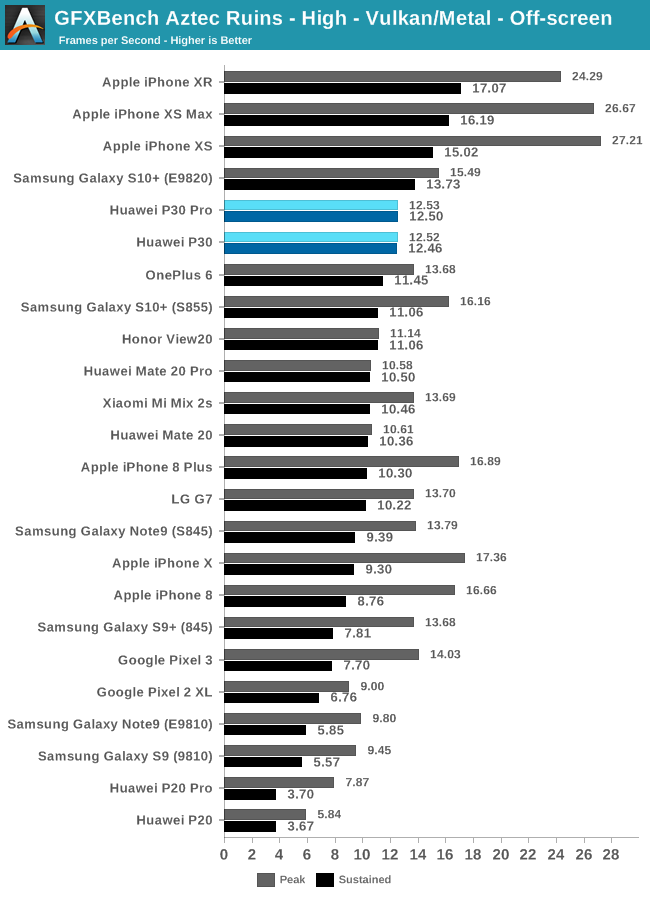
In the GFXBench Vulkan High benchmark we see both P30 and P30 Pro neck-in-neck with quite excellent performance. Again what is interesting here is that both devices perform significantly better than the Mate 20s and the View20 with the same chipset. I explain this through the fact that the P30s come with newer GPU drivers, and Arm must have made more significant improvements in their Vulkan drivers.
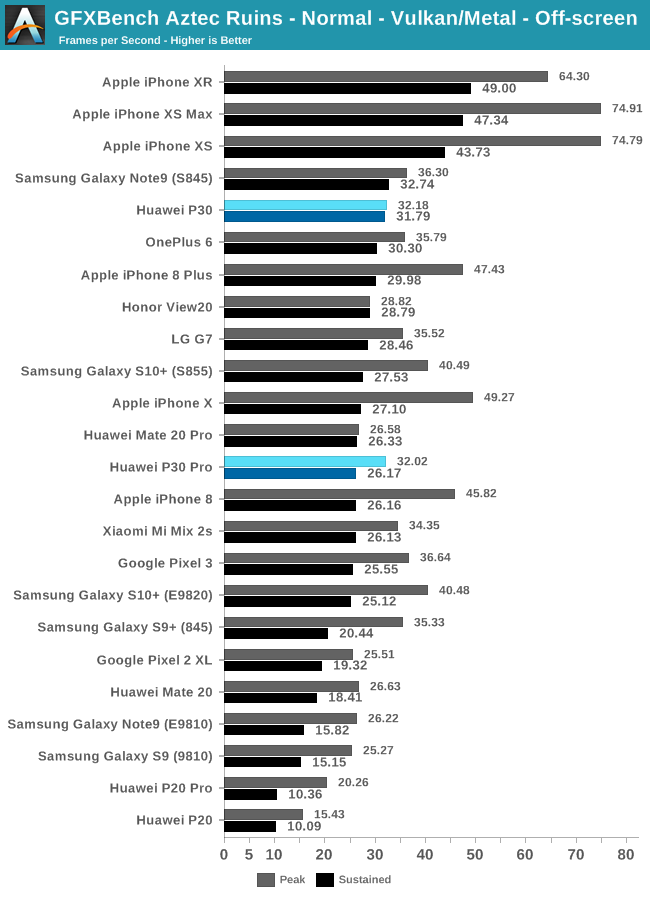
In the Normal variant of the Aztec benchmark, we see the P30 Pro throttle a little more, yet it still manages to showcase much better performance figures than the Mate 20, and also higher peak figures than the Mate 20 Pro & View20. The smaller P30 here posts the best figures, however its sustained performance is so high simply because the device is getting extremely hot. I’ve argued if I should be posting the figures for the P30 at all since if you continue to load the device in this manner it’ll simply crash the application.
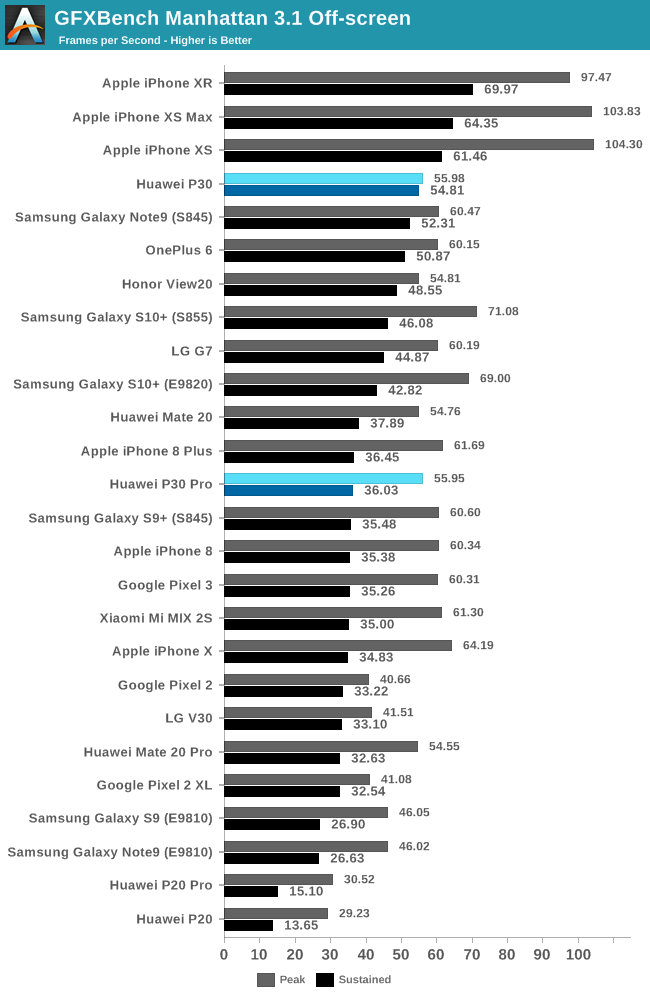
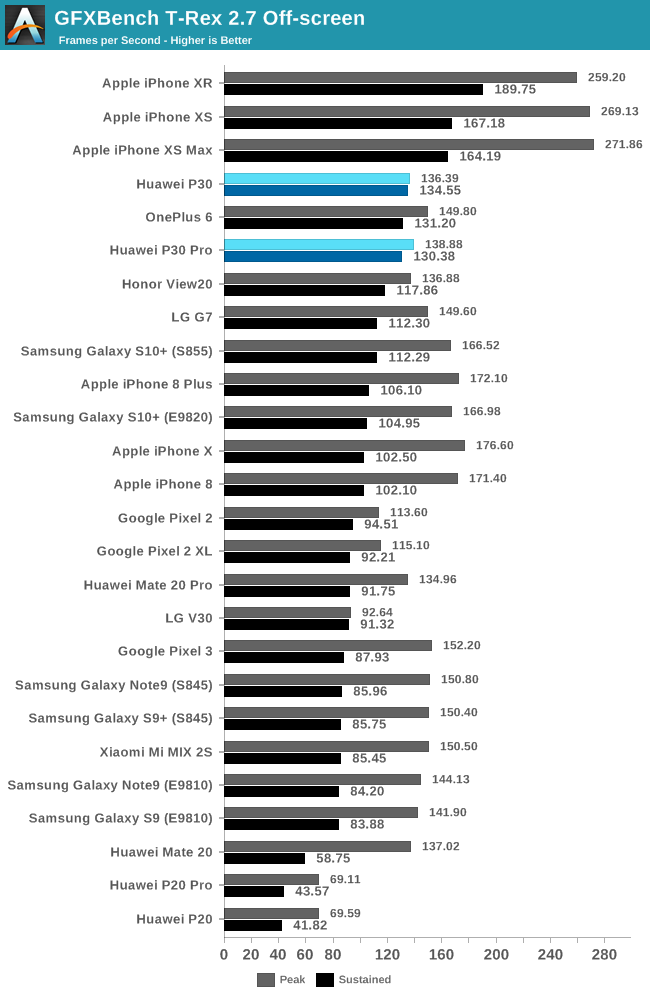
Overall, GPU performance of the P30s is in line with that of last year’s Snapdragon 845 phones, which is still great. Huawei and HiSilicon still trail behind Samsung’s Exynos Mali GPU implementations, although the difference isn’t all that big this generation.
I hope that Huawei figures out the thermal issues on the smaller P30 and issues a firmware update, I’ll be updating the article with the relevant data once this is all sorted out.
Originally published at https://www.anandtech.com/show/14165/the-huawei-p30-p30-pro-reviews-photography-enhanced (Wayback Machine).