
Monarch Hornet Pro: "SFF" meets PCI Express, DDR2
- Posted in
- Systems
Monarch Hornet Pro: Intel D925XBC Motherboard
| Motherboard Specifications | |
| CPU Interface | Socket LGA775 Prescott |
| Chipset | Intel 925X North Bridge (MCH) ICH6R South Bridge |
| CPU Ratios | None |
| Bus Speeds | up to 4% overclocking in 1% increments |
| PCI/PCI-e Speeds | PCI up to 40.00MHz in 3.64MHz increments SATA up to 109.42MHz in 1.32MHz increments |
| Core Voltage | None |
| DRAM Voltage | None |
| AGP Voltage | None |
| Chipset Voltage | None |
| Memory Slots | 4 X 240-pin DDR2 DIMM Slots |
| Expansion Slots | 1 X PCI-e 16x slot 1 X PCI-e 1x slot 2 X PCI (32-bit) slots |
| Onboard SATA/RAID | 4 X SATA150 connectors RAID 0, RAID 1 |
| Onboard IDE | 1 X ATA/100/66 connector (2 devices) |
| Onboard USB 2.0/IEEE-1394 | 8 X USB 2.0 ports (4 rear, 4 internal) 3 X IEEE1394 FireWire (1 rear, 2 internal) |
| Onboard LAN | Intel GbE 10/100/1000 (Marvell PCI Express controller) |
| Onboard Audio | Intel AC'97 8-channel (Realtek ALC880) |
| BIOS Revision | CV92510A.86A.0210 |
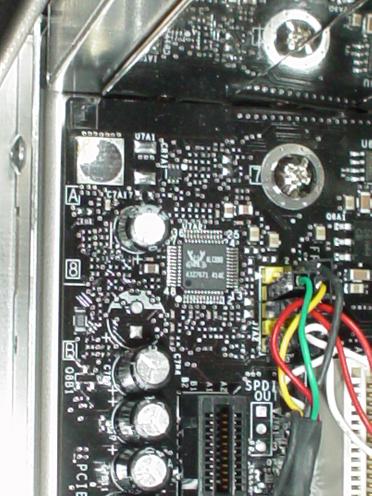
Intel's D925XBC motherboard carries a Realtek ALC880 codec, which in conjunction with the ICH6R South Bridge allows Hornet Pro owners to use up to 8-channel audio configurations. The ALC880 is the first HD Audio codec (developed by Intel) we know of being widely implemented onboard high-end motherboards. This is definitely one of the higher quality codecs around, with support for up to 24-bit/192KHz (sampling rate) audio. While it's still quite difficult to maintain close to interference-free audio in a computer case as small as the Hornet Pro (compared to an ATX tower that is), we did hear some static at higher volumes. Still, the ALC880 is a more than acceptable quality codec for everyday users. Even gamers will be quite pleased with this solution, especially considering the surround sound features it supports, namely Dolby Surround EX originally introduced in Star Wards Episode I: The Phantom Menace.
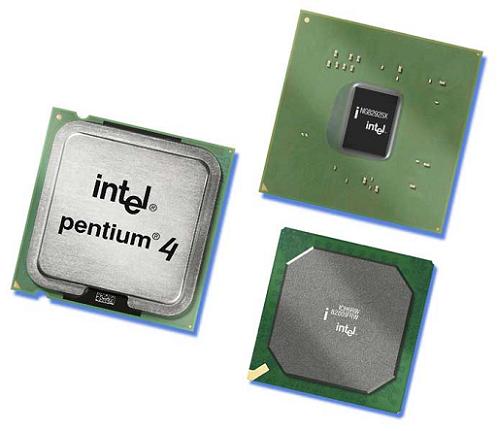
Many enthusiasts consider the chipset the most important part of any computer system. The Hornet Pro's chipset consists of the Intel 925X North Bridge and ICH6R South Bridge. The 925X is Intel's fastest and most advanced North Bridge (also called the "MCH") to date, as is their ICH6R South Bridge. The 925X MCH primarily houses the PCI-e and memory controllers, while the ICH6R controls the storage (SATA, PATA, RAID, etc.), audio, and functionality.
Besides perhaps the platform technology itself (925X, DDR2, PCI-e, etc.), the components that came with our Hornet Pro are the most exciting part of this whole system. Included with our Hornet Pro was a Lite-On 8X dual layer DVD Burner, two Western Digital 74GB 10,000RPM Raptor HDDs (Hard Drive Disks), four 512MB Corsair XMS2 DDR2-533 memory modules, one PCI Express 256MB NVIDIA GeForce 6800 Ultra, and an Intel Pentium 4 550 Prescott processor clocked at 3.4GHz. Except for the fact that Socket 775 platforms are slower on the whole compared to Athlon 64, the rest of this system is right on the bleeding edge of technology and will be thoroughly enjoyed by anyone who decides to purchase it. Just don't be surprised if it costs you more than a few wooden nickels.
One of the reasons it's hard to come to any definitive conclusions about the Monarch Hornet Pro is due to the fact that Intel hasn't released anything faster than a 3.6GHz 800MHz FSB processor for Socket 775 platforms. As we explained in our original Prescott article last month, Prescott doesn't really reach its true potential until beyond 3.6GHz because of its vastly improved architecture over the 0.13-micron Northwood Pentium 4. Therefore, with this type of motherboard socket, you probably aren't going to see significant performance advantages over competitive Athlon 64 processors until around 4GHz or so, maybe higher. And as just reported here on AnandTech recently, it looks as if Intel will delay their introduction of 4GHz processors until the first quarter of next year.
Originally published at https://www.anandtech.com/show/1412 (Wayback Machine).