
The Samsung 983 ZET (Z-NAND) SSD Review: How Fast Can Flash Memory Get?
Conclusion
The Samsung 983 ZET and related Z-NAND drives are meant to deliver higher performance than any other flash-based SSD currently available. Thanks to the innate benefits of SLC NAND and Samsung's further efforts to optimize the resulting Z-NAND for reads and writes, the company has put together what is undoubtedly some of the best-performing NAND we've ever seen. But is this enough to give the company and its Z-NAND-based drives and edge over the competition, both flash and otherwise?
Compared to other flash-based enterprise SSDs, the 983 ZET certainly provides better performance than is otherwise possible for drives of such low capacity. The random read performance is unmatched by even the largest and most powerful TLC-based drives we've tested so far. But Z-NAND offers little advantage for sustained write performance, so the small capacity and low overprovisioning ratio of the 983 ZET leaves it at a disadvantage compared to similarly priced TLC drives. However, even when its throughput is unimpressive, the 983 ZET never fails to provide very low latency and excellent QoS that no other current flash-based SSD can beat.
While the 983 ZET is an excellent performer by the standards of flash-based SSDs, those aren't its primary competition. Rather, Intel's Optane SSDs are, and In almost every way the 983 ZET falls short of the Optane drives that motivated Samsung to develop Z-NAND. Samsung wasn't really aiming quite that high with their Z-SSDs, so the more important question is whether the 983 ZET comes close enough, given that it is about 35% cheaper per GB based on current pricing online. (Volume pricing may differ significantly, but is not generally public information.)
Whether the 983 ZET is worthwhile or preferable to the Optane SSD DC P4800X is highly dependent on the workload. The Optane SSD provides great performance on almost any workload regardless of the mix of reads and writes, and latency is low and consistent. Comparatively, the Samsung 983 ZET's strengths are very narrowly concentrated: it is basically all about the random read performance, and its maximum throughput is significantly higher than the Optane SSD while still being attainable with reasonably low latency and queue depths. Otherwise there are some massive TLC-based enterprise SSDs that also get close to 1M random read IOPS, but only with extremely high queue depths. The 983 ZET also offers better sequential read throughput than the Optane SSD, but there are far cheaper drives that can do the same.
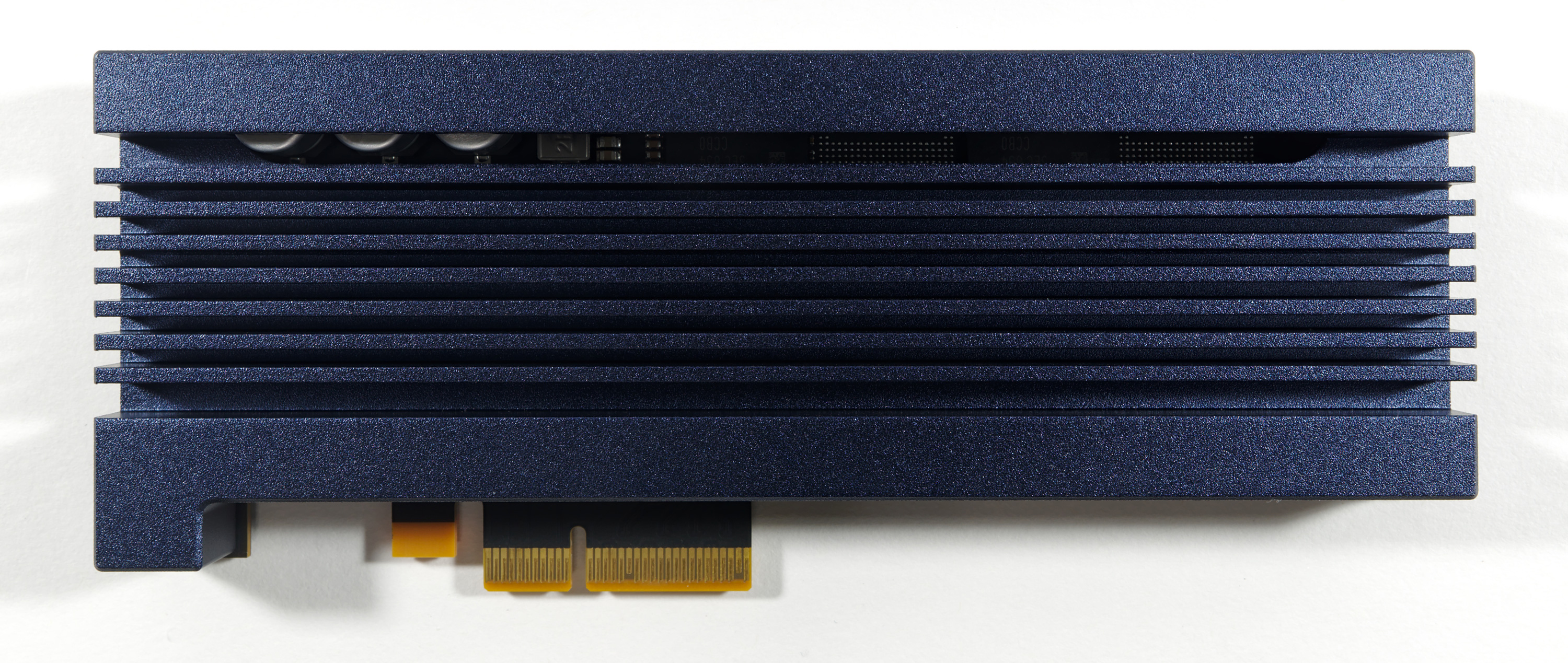
The biggest problem for the 983 ZET is that its excellent performance only holds up for extremely read-intensive workloads; it doesn't take many writes to drag performance down. This is because Z-NAND is still afflicted by the need for wear leveling and complicated flash management with very slow block erase operations. On sustained write workloads, those background processes become the bottleneck. Intel's 3D XPoint memory allows in-place modification of data in fine-grained chunks, which is why its write performance doesn't fall off a cliff when the drive fills up. It would be interesting to see how much this performance gap between Z-NAND and 3D XPoint can be alleviated by overprovisioning, but there's not a lot of room to add to the BOM of the 983 ZET before it ends up matching the price of the Optane SSD DC P4800X.
Power efficiency is usually not a big concern for use cases that call for a premium SSD like the 983 ZET or an Optane SSD, but the Samsung 983 ZET does well here, thanks in part to the Samsung Phoenix controller it shares with Samsung's consumer product line. The Phoenix controller is designed to work within the constraints of a M.2 SSD in a battery-powered system, so it uses far less power than most high-end enterprise-only SSD controllers. The 983 ZET does consistently draw a bit more power than the TLC-based 983 DCT, but both still have competitive power efficiency in general. On the random read workloads where the 983 ZET offers unsurpassed performance, it also has a big power efficiency advantage over everything else, including the Intel Optane SSDs.
In the long run, Samsung is still working to develop their own alternative memory technologies; they've publicly disclosed that they are researching Spin-Torque Magnetoresistive RAM (ST-MRAM) and phase change memories, so Z-NAND may end up being more of an interim technology to fill a gap that will hopefully be better served by a new memory in a few years. But in the meantime, Z-NAND does have a niche to compete in, even if it's a bit narrower than the range of use cases that Intel's Optane SSDs are suitable for.
Originally published at https://www.anandtech.com/show/13951/the-samsung-983-zet-znand-ssd-review (Wayback Machine).