
The AMD Radeon VII Review: An Unexpected Shot At The High-End
Ashes of the Singularity: Escalation (DX12)
A veteran from both our 2016 and 2017 game lists, Ashes of the Singularity: Escalation remains the DirectX 12 trailblazer, with developer Oxide Games tailoring and designing the Nitrous Engine around such low-level APIs. The game makes the most of DX12's key features, from asynchronous compute to multi-threaded work submission and high batch counts. And with full Vulkan support, Ashes provides a good common ground between the forward-looking APIs of today. Its built-in benchmark tool is still one of the most versatile ways of measuring in-game workloads in terms of output data, automation, and analysis; by offering such a tool publicly and as part-and-parcel of the game, it's an example that other developers should take note of.

Settings and methodology remain identical from its usage in the 2016 GPU suite. To note, we are utilizing the original Ashes Extreme graphical preset, which compares to the current one with MSAA dialed down from x4 to x2, as well as adjusting Texture Rank (MipsToRemove in settings.ini).
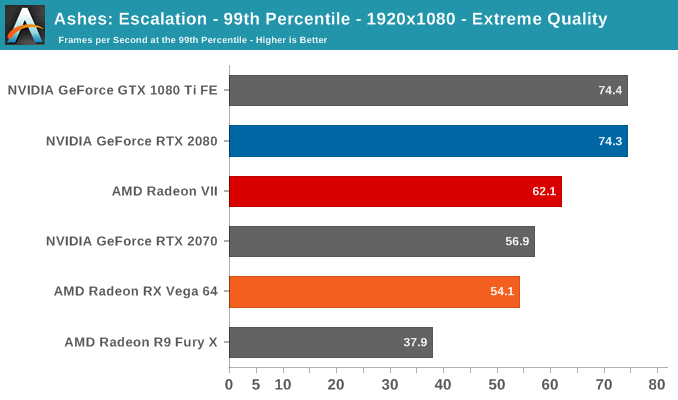
We've updated some of the benchmark automation and data processing steps, so results may vary at the 1080p mark compared to previous data.
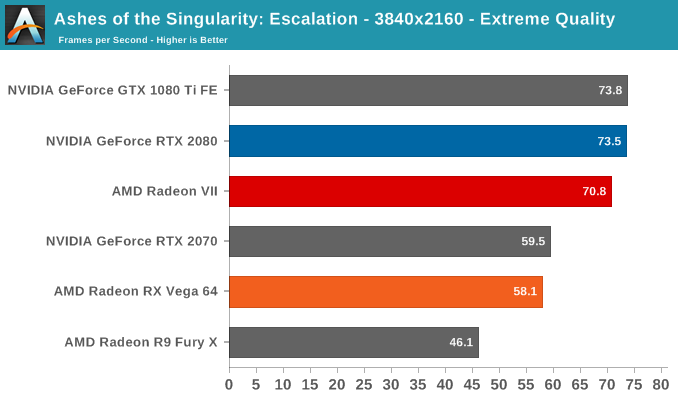
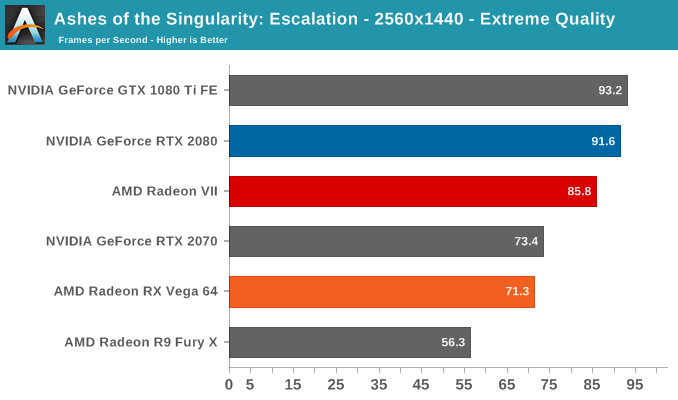
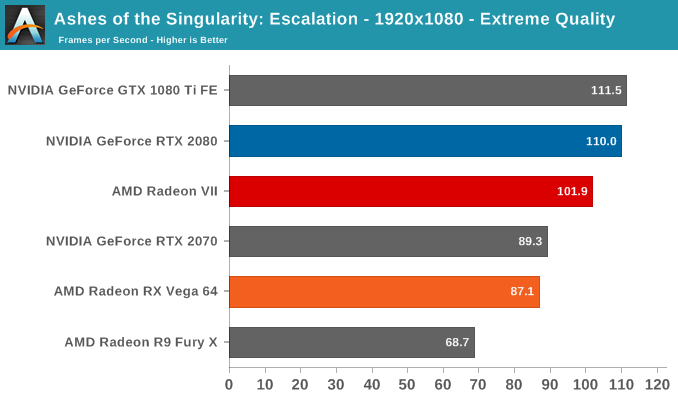
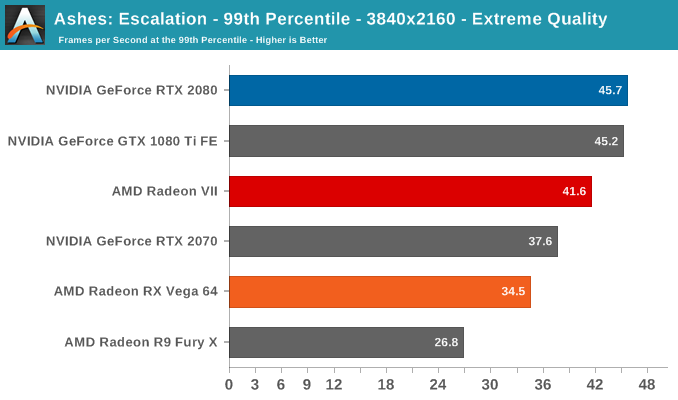
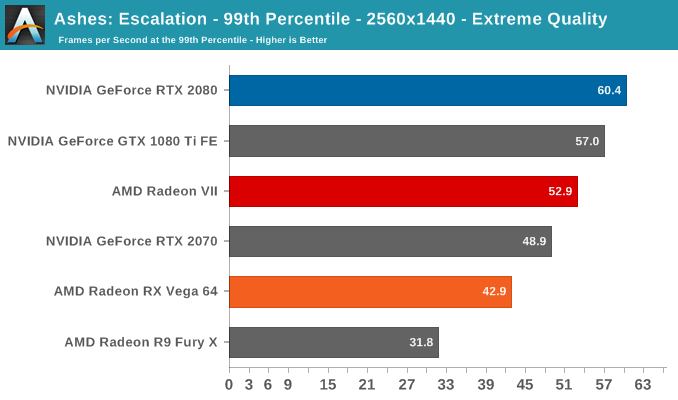
For the Radeon VII, the intended goal was to equal or trade blows with the RTX 2080. The situation in Ashes: Escalation is still in line with that intention at 4K, where despite trailing the GTX 1080 Ti FE/RTX 2080 duo is comfortably ahead of the RTX 2070 and RX Vega 64. The lead begins to dwindle at lower resolutions, but the Radeon VII can still claim a 20% speedup at 1440p over the RX Vega 64.
Originally published at https://www.anandtech.com/show/13923/the-amd-radeon-vii-review (Wayback Machine).