
The Team Group Delta RGB SSD Review: Lite Performance, Light Drive
Mixed Random Performance
Our test of mixed random reads and writes covers mixes varying from pure reads to pure writes at 10% increments. Each mix is tested for up to 1 minute or 32GB of data transferred. The test is conducted with a queue depth of 4, and is limited to a 64GB span of the drive. In between each mix, the drive is given idle time of up to one minute so that the overall duty cycle is 50%.
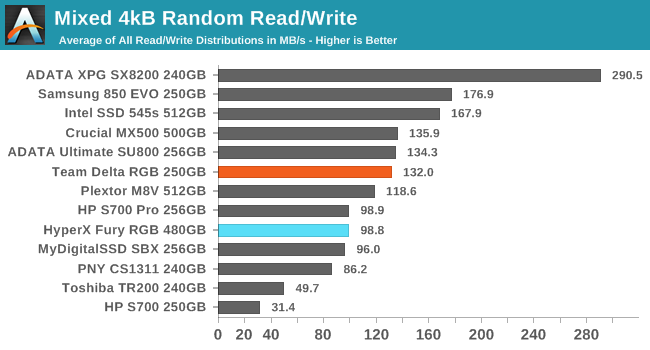
The mixed random read/write performance of the Team Delta RGB is nothing special, but even some of the larger drives with newer NAND are no faster so the Delta's performance isn't a disappointment. The Samsung 850 EVO leads among SATA drives at 35% faster overall than the Delta RGB, and the ADATA SX8200 NVMe SSD is more than twice as fast.
 |
|||||||||
| Power Efficiency in MB/s/W | Average Power in W | ||||||||
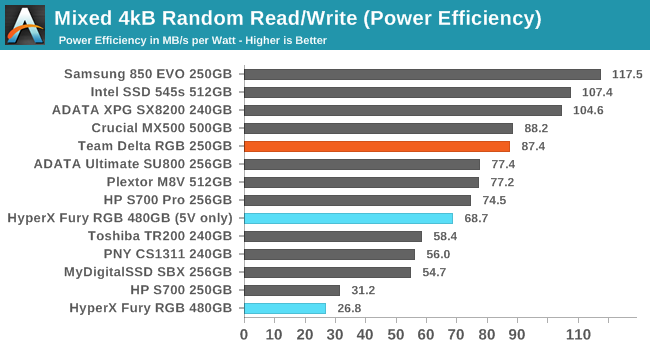
Most of the SATA drives in this batch have fairly similar power consumption during this test, so the power efficiency scores largely mirror the performance rankings. However, the Delta RGB does have a clear efficiency advantage over the other two drives with the same controller and NAND.
 |
|||||||||
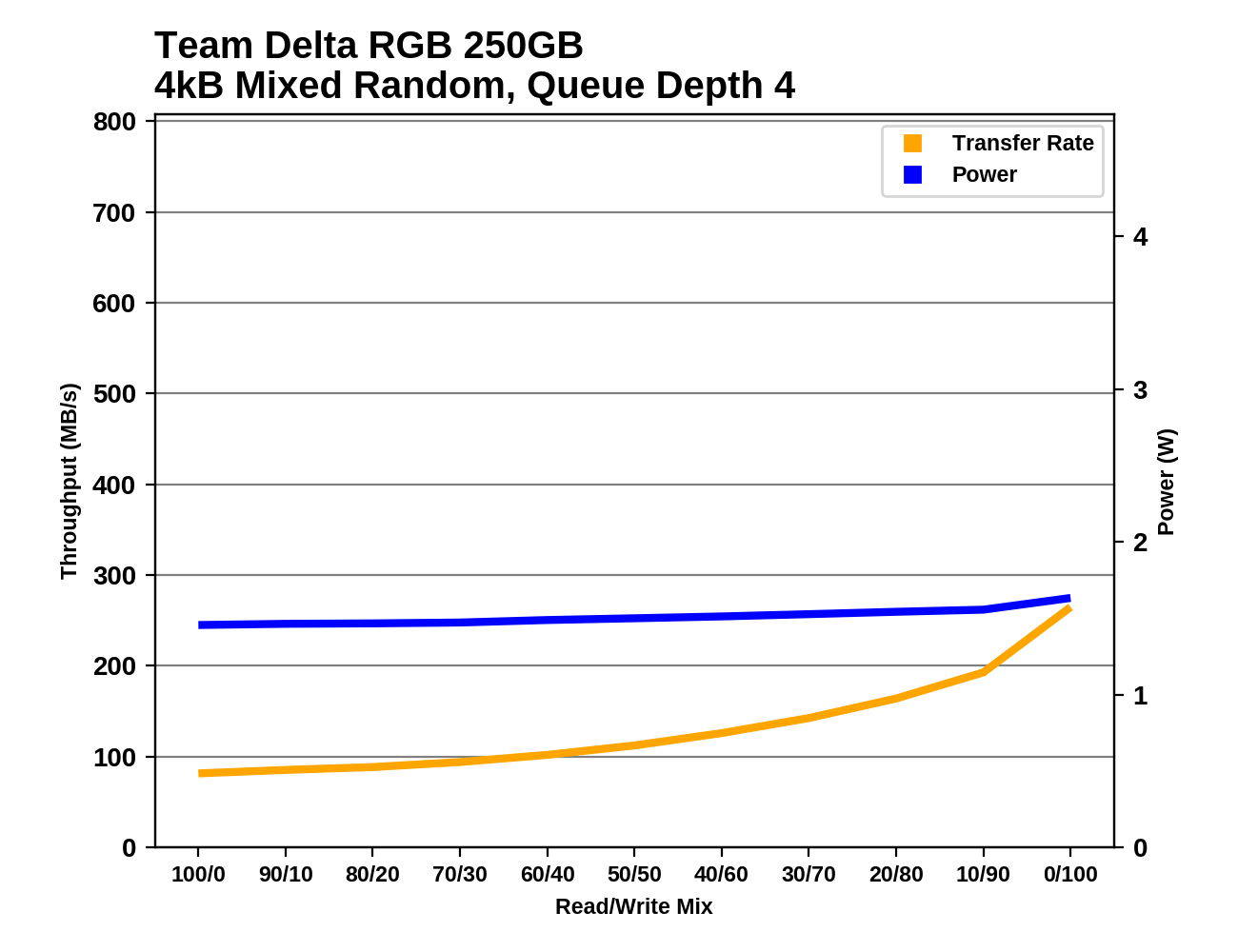
The Delta RGB starts off the test with unimpressive random read performance but as more writes are added to the workload performance steadily increases. Power consumption is nearly constant across the whole test.
Mixed Sequential Performance
Our test of mixed sequential reads and writes differs from the mixed random I/O test by performing 128kB sequential accesses rather than 4kB accesses at random locations, and the sequential test is conducted at queue depth 1. The range of mixes tested is the same, and the timing and limits on data transfers are also the same as above.
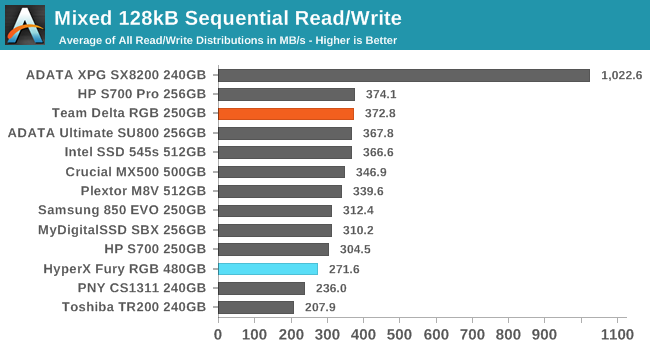
The Team Delta RGB is essentially tied for best performance among small SATA SSDs on the mixed sequential I/O test. The other two drives with the same SM2258 controller and Micron 32L 3D TLC score very similarly. The ADATA SX8200 high-end NVMe drive is almost three times as fast, while the entry-level NVMe MyDigitalSSD SBX is slower than most of the mainstream SATA SSDs.
 |
|||||||||
| Power Efficiency in MB/s/W | Average Power in W | ||||||||
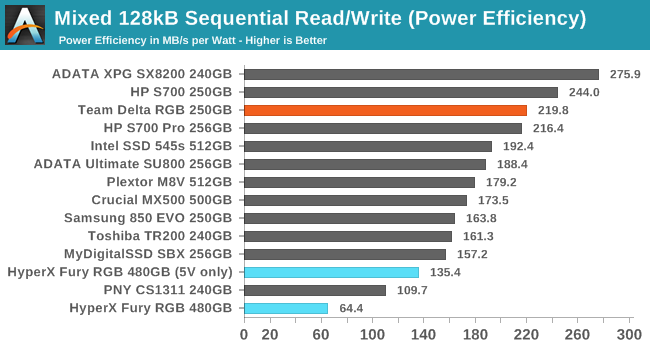
The power efficiency of the Delta RGB on the mixed sequential I/O test is quite good, but the DRAMless HP S700 and the high-end NVMe ADATA SX8200 beat the Delta RGB for two very different reasons: the S700 uses much less power, and the SX8200 is far faster.
 |
|||||||||
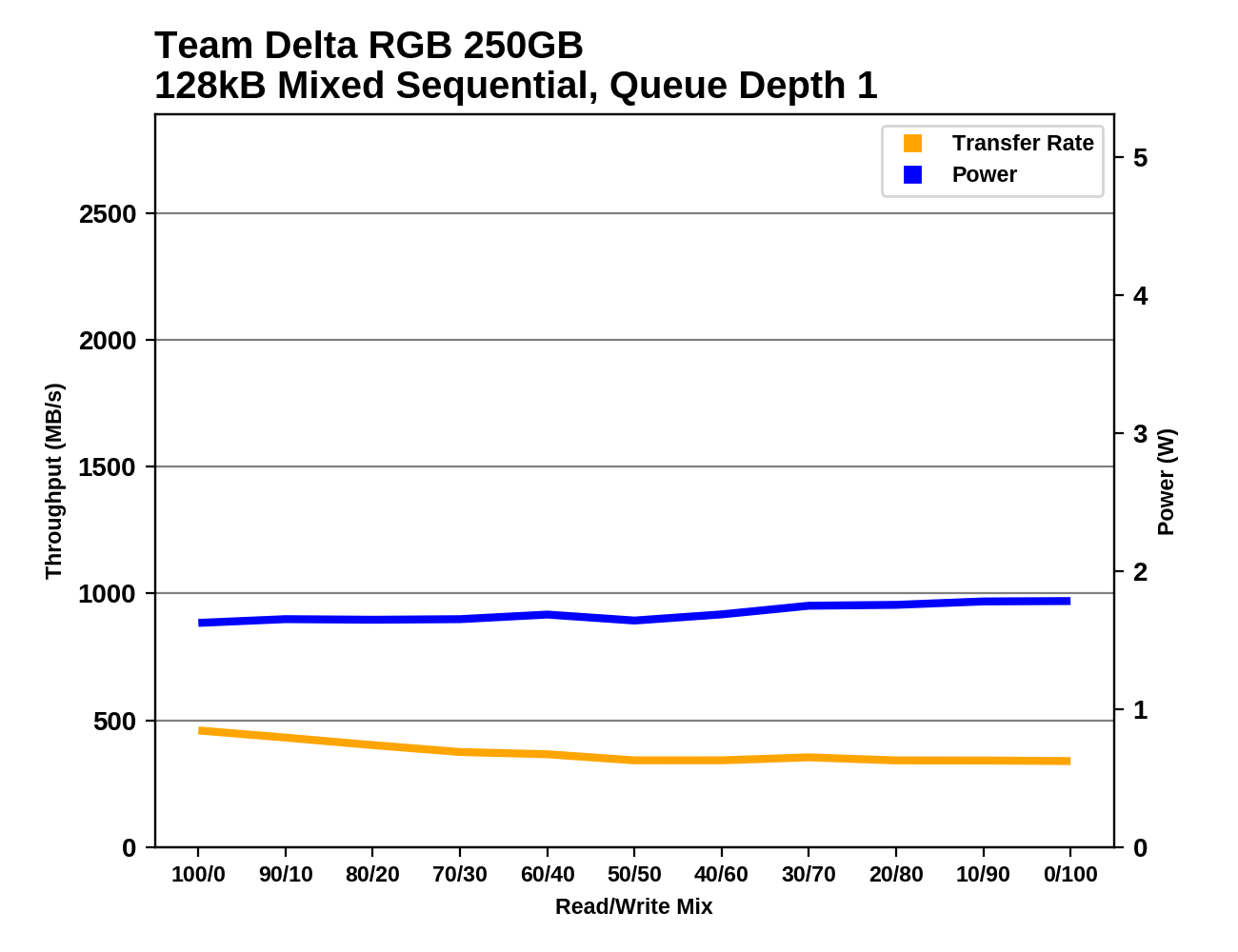
The performance of the Delta RGB during the mixed sequential I/O test is fairly steady save for a very gradual decline in performance as the workload becomes more write-heavy. This trend is matched by slight increases in power consumption.
Originally published at https://www.anandtech.com/show/13374/the-team-group-delta-rgb-ssd-review (Wayback Machine).