
The Intel SSD 660p SSD Review: QLC NAND Arrives For Consumer SSDs
AnandTech Storage Bench - Light
Our Light storage test has relatively more sequential accesses and lower queue depths than The Destroyer or the Heavy test, and it's by far the shortest test overall. It's based largely on applications that aren't highly dependent on storage performance, so this is a test more of application launch times and file load times. This test can be seen as the sum of all the little delays in daily usage, but with the idle times trimmed to 25ms it takes less than half an hour to run. Details of the Light test can be found here. As with the ATSB Heavy test, this test is run with the drive both freshly erased and empty, and after filling the drive with sequential writes.
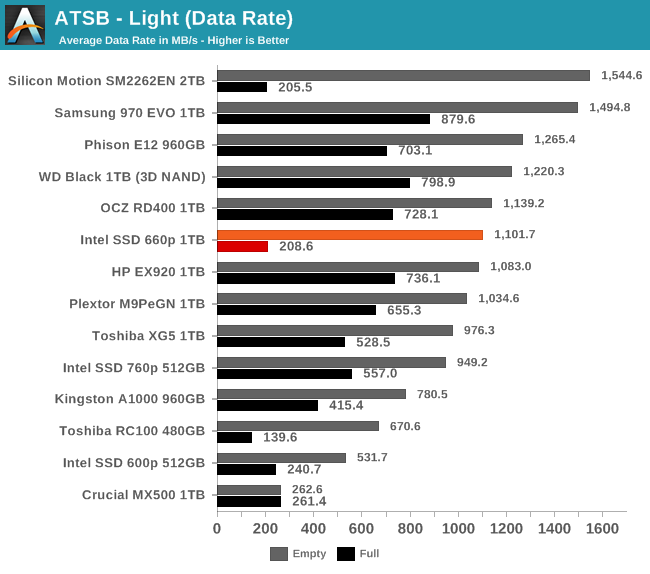
As with the Heavy test, the SLC cache of the Intel SSD 660p is extremely beneficial and brings the average data rate of the 660p up into high-end NVMe territory. When the drive is full and the SLC cache has been reduced to its minimum size, performance suffers and drops below the Crucial MX500 mainstream SATA drive but not all the way down to the level of the Toshiba RC100 DRAMless NVMe SSD.
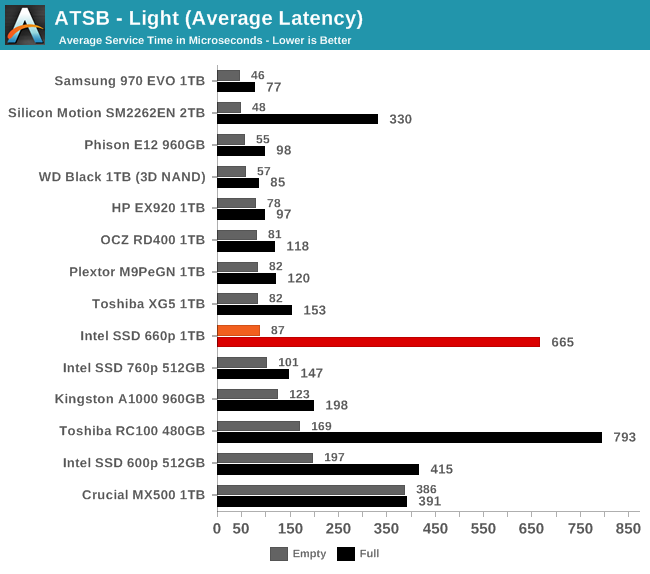
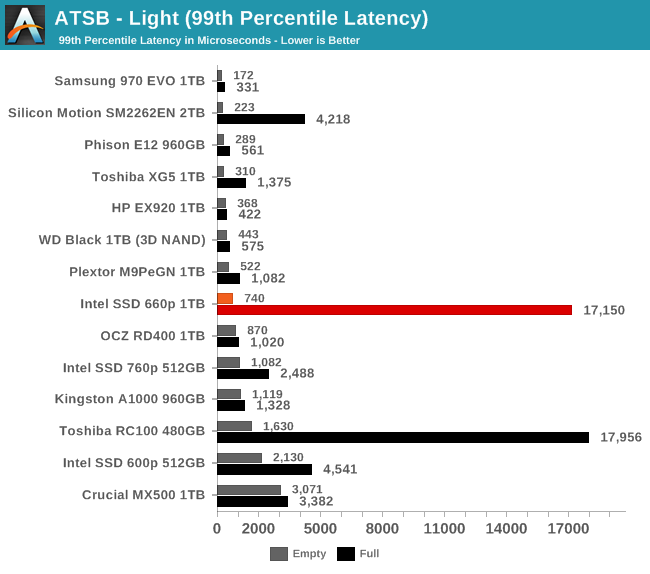
The best-case latency scores from a freshly-erased 660p are acceptable for a high-end NVMe SSD and excellent for an entry-level drive. In the worst case of a full drive, the average latency is far higher but still low enough that the drive won't actually feel much slower. The 99th percentile latency climbs very high by SSD standards, but is still barely up into the average latency range of hard drives.
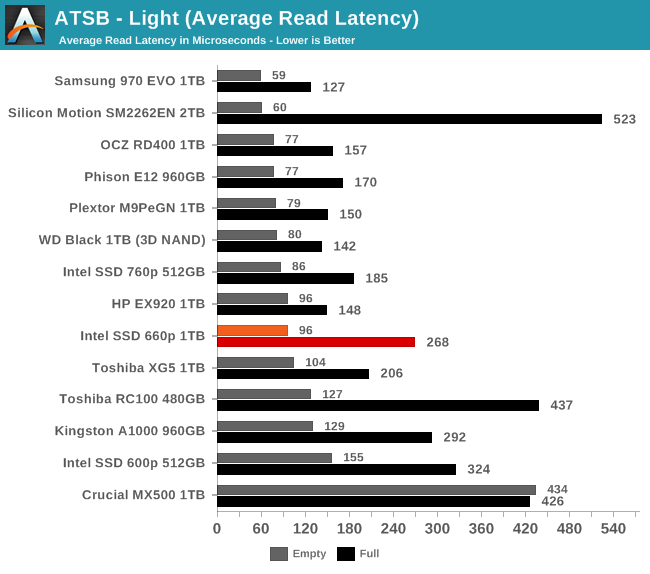
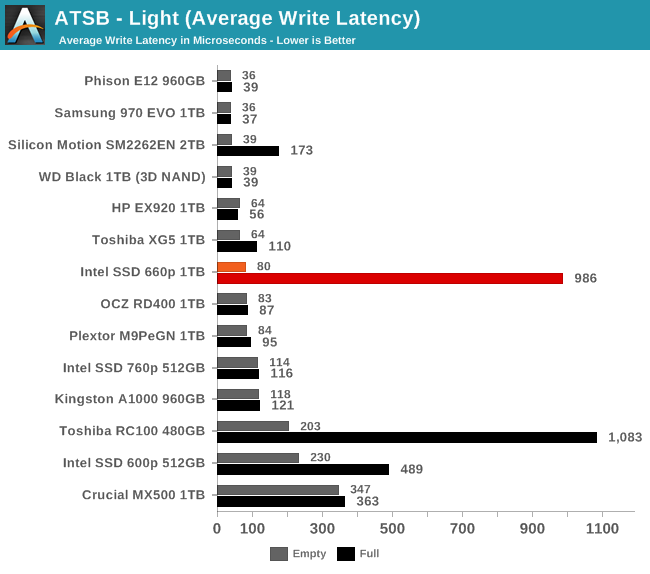
On the Light test, the average read latency of the 660p stays comfortably below that of SATA drives even for the worst-case full drive test run, and only the average write latency shows a serious problem from filling up the whole drive and not giving it enough time to empty the now-reduced SLC cache.
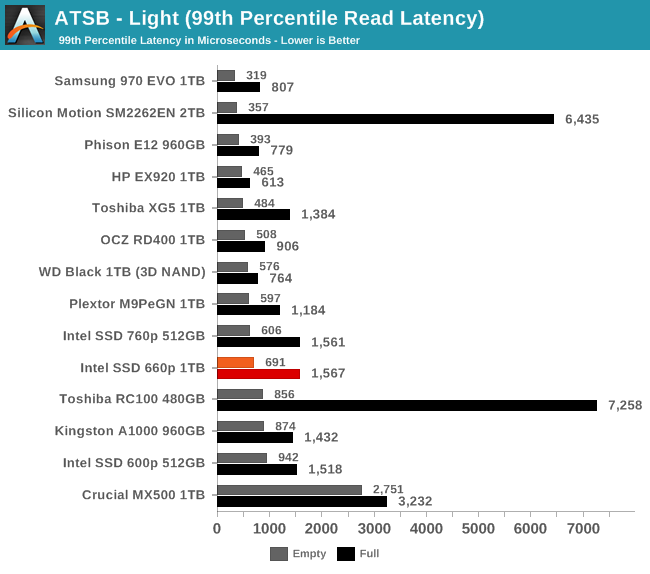
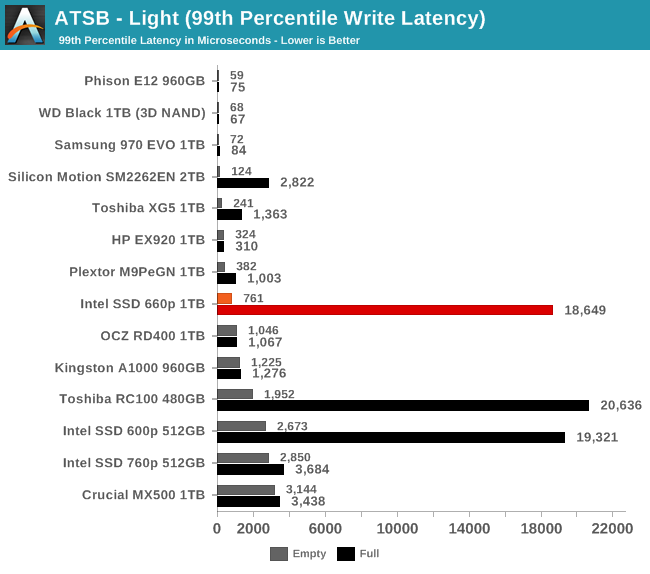
The full-drive 99th percentile write latency of the 660p on the Light test is almost as bad as the 600p or the Toshiba RC100. Otherwise, the 660p doesn't have any worrying QoS problems on this test and users won't notice serious pauses from the drive.
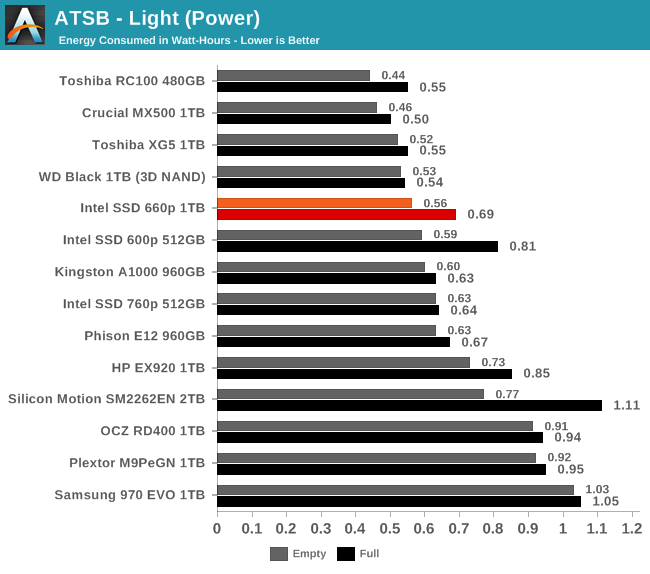
The energy usage of the 660p on the Light test is below most other NVMe drives when the test is run on an empty drive, and even with the extra background work and longer test duration of the full-drive test run the 660p is only a little less efficient than the average for this bunch of NVMe SSDs.
Originally published at https://www.anandtech.com/show/13078/the-intel-ssd-660p-ssd-review-qlc-nand-arrives (Wayback Machine).