
NVIDIA GeForce 6800 Ultra: The Next Step Forward
- Posted in
- GPUs
Anisotropic, Trilinear, and Antialiasing
There was a great deal of controversy last year over some of the "optimizations" NVIDIA included in some of their drivers. We have
NVIDIA's new driver defaults to the same adaptive anisotropic filtering and trilinear filtering optimizations they are currently using in the 50 series drivers, but users are now able to disable these features. Trilinear filtering optimizations can be turned off (doing full trilinear all the time), and a new "High Quality" rendering mode turns off adaptive anisotropic filtering. What this means is that if someone wants (or needs) to have accurate trilinear and anisotropic filtering they can. The disabling of trilinear optimizations is currently available in the 56.72
Unfortunately, it seems like NVIDIA will be switching to a method of calculating anisotropic filtering based on a weighted Manhattan distance calculation. We appreciated the fact that NVIDIA's previous implementation of anisotropic filtering employed a Euclidean distance calculation which is less sensitive to the orientation of a surface than a weighted Manhattan calculation.
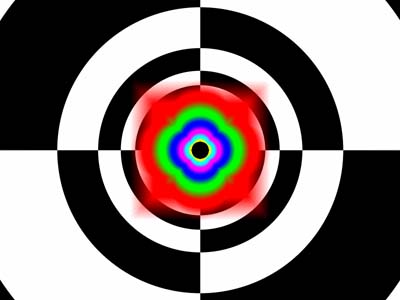
This is how NVIDIA used to do Anisotropic filtering
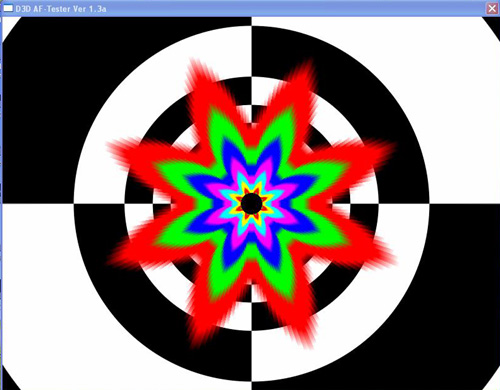
This is Anisotropic under the 60.72 driver.
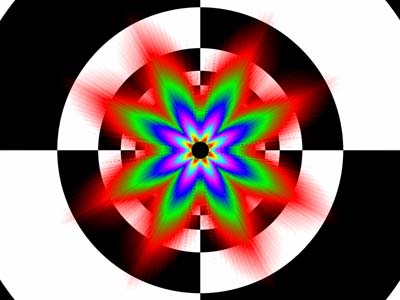
This is how ATI does Anisotropic Filtering.
The advantage is that NVIDIA now has a lower impact when enabling anisotropic filtering, and we will also be doing a more apples to apples comparison when it comes to anisotropic filtering (ATI also makes use of a weighted Manhattan scheme for distance calculations). In games where angled, textured, surfaces rotate around the z-axis (the axis that comes "out" of the monitor) in a 3d world, both ATI and NVIDIA will show the same fluctuations in anisotropic rendering quality. We would have liked to see ATI alter their implementation rather than NVIDIA, but there is something to be said for both companies doing the same thing.
We had a little time to play with the D3D AF Tester that we used in last years image quality article. We can confirm that turning off the trilinear filtering optimizations results in full trilinear being performed all the time. Previously, neither ATI nor NVIDIA did this much trilinear filtering, but check out the screenshots.
Trilinear optimizations enabled.
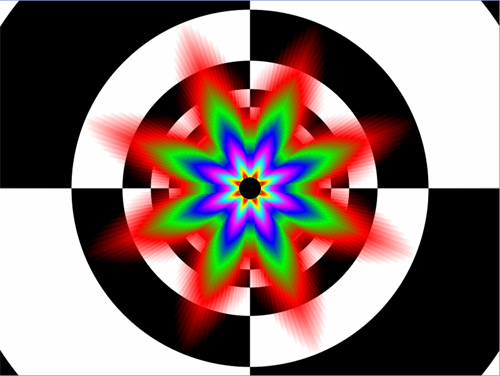
Trilinear optimizations disabled.
When comparing "Quality" mode to "High Quality" mode we didn't observe any difference in the anisotropic rendering fidelity. Of course, this is still a beta driver, so everything might not be doing what it's supposed to be doing yet. We'll definitely keep on checking this as the driver matures. For now, take a look.
Quality Mode.
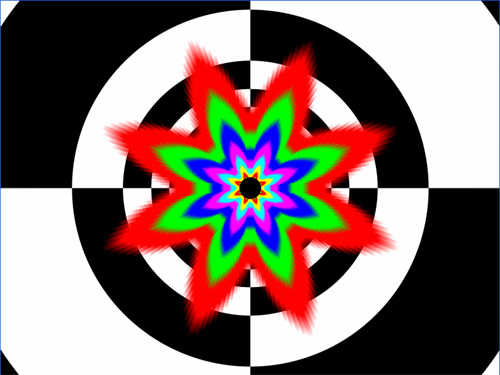
High Quailty Mode.
On a very positive note, NVIDIA has finally adopted a rotated grid antialiasing scheme. Here we can take a glimpse at what the new method does for their rendering quailty in Jedi Knight: Jedi Academy.

Jedi Knight without AA

Jedi Knight with 4x AA
Its nice to finally see such smooth near vertical and horizontal lines from a graphics company other than ATI. Of course, ATI does have yet to throw its offering into the ring, and it is very possible that they've raised their own bar for filtering quality.
Originally published at https://www.anandtech.com/show/1293 (Wayback Machine).