
The Intel Optane Memory M10 (64GB) Review: Optane Caching Refreshed
Mixed Random Performance
Our test of mixed random reads and writes covers mixes varying from pure reads to pure writes at 10% increments. Each mix is tested for up to 1 minute or 32GB of data transferred. The test is conducted with a queue depth of 4, and is limited to a 64GB span of the drive. In between each mix, the drive is given idle time of up to one minute so that the overall duty cycle is 50%.
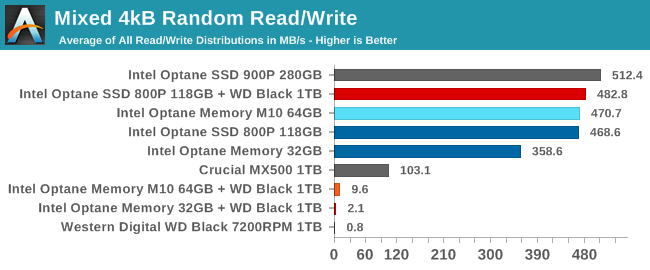
Unsurprisingly, the mixed random I/O test produces crap performance from the hard drive and the two cache configurations where the cache is too small for this test. The 118GB Optane SSD 800P is more cache than this test needs, and it performs almost as well as the Optane SSD 900P.
 |
|||||||||
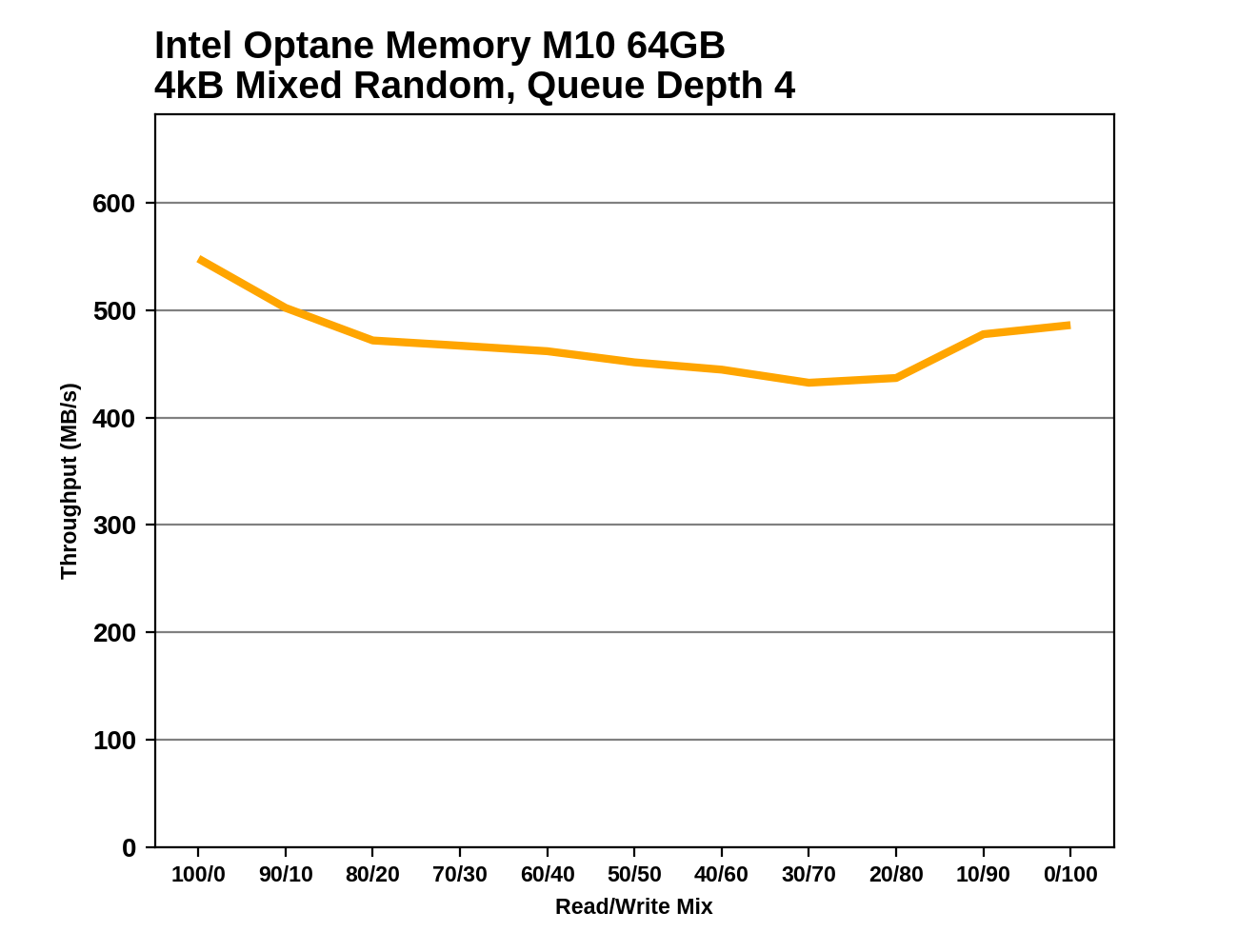
When used as a cache for this test, the largest Optane SSD 800P shows slightly different performance characteristics than when it is treated as a standalone drive, but in either case it is a strong performer across the board. The smaller Optane drives aren't large enough to cache the entire working set of this test and can't do much to improve performance over the hard drive.
Mixed Sequential Performance
Our test of mixed sequential reads and writes differs from the mixed random I/O test by performing 128kB sequential accesses rather than 4kB accesses at random locations, and the sequential test is conducted at queue depth 1. The range of mixes tested is the same, and the timing and limits on data transfers are also the same as above.
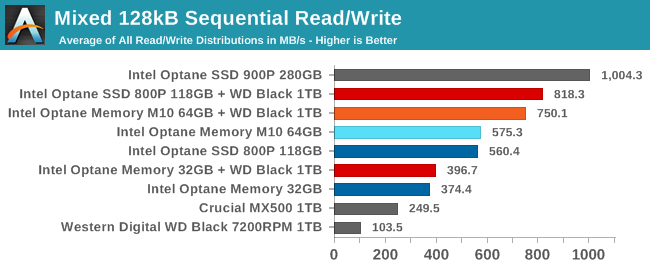
All of the Optane configurations easily outperform the SATA drives on the mixed sequential I/O test. The 64GB and 118GB modules are tied when tested as standalone drives and close when tested as cache devices, and the cache performance is 30-40% faster than the standalone SSD performance. The 32GB module is substantially slower and performance is much closer between caching and standalone SSD use.
 |
|||||||||
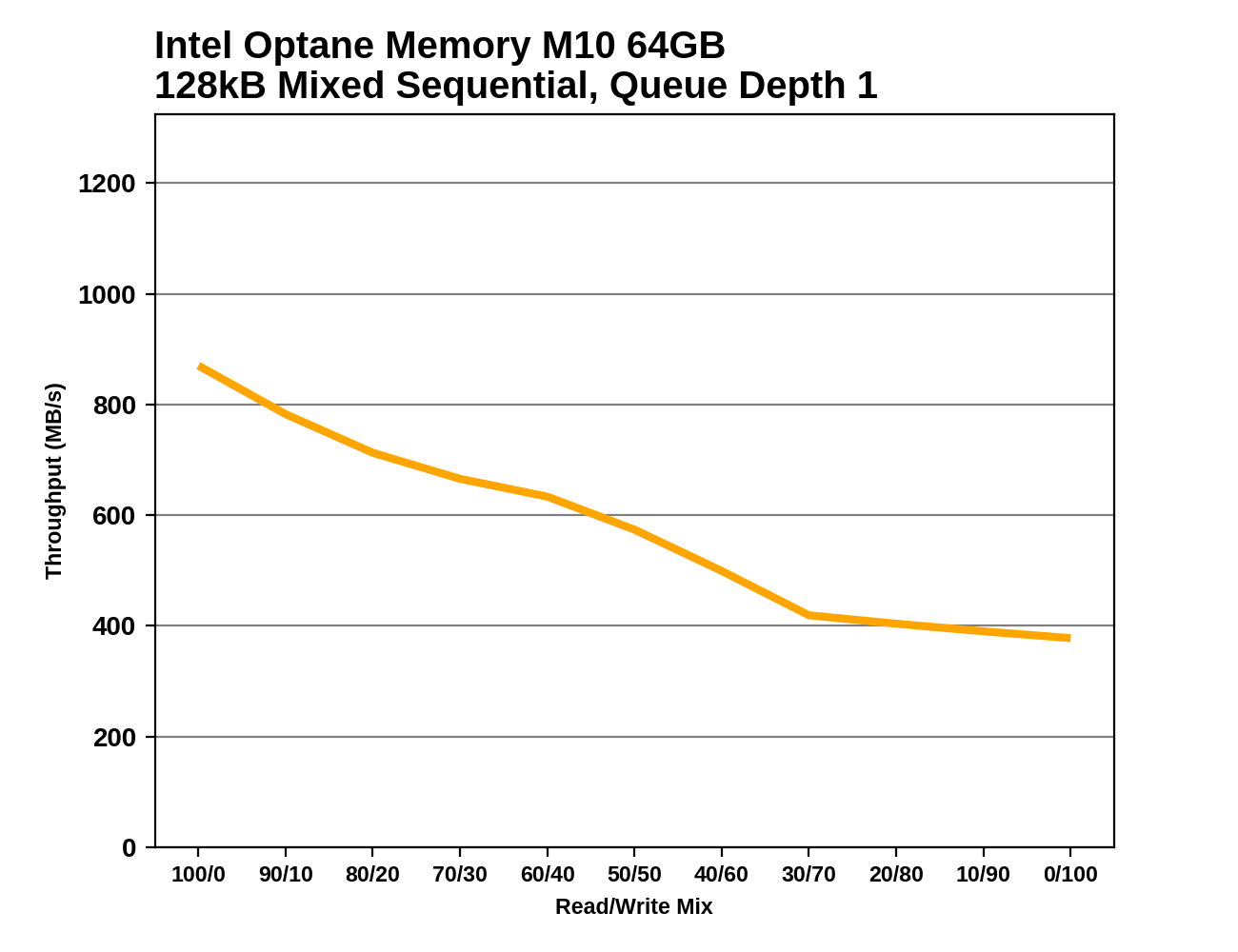
The performance improvements in the caching configurations over the standalone drive configurations generally apply throughout the mixed sequential test. The main exception is in the early phases of the test with the 32GB cache, where cache performance falls far short of the standalone drive performance. Once the proportion of reads has dropped to 70%, the cache configuration comes out ahead.
Originally published at https://www.anandtech.com/show/12748/the-intel-optane-memory-m10-64gb-review-optane-caching-refreshed (Wayback Machine).