
The GIGABYTE H370N WiFi Review: Mini-ITX with HDMI 2.0 and 802.11ac Wave 2
Gaming Performance
Ashes of the Singularity
Ashes of the Singularity is a Real Time Strategy game developed by Oxide Games and Stardock Entertainment. The original AoTS was released back in March of 2016 while the standalone expansion pack, Escalation, was released in November of 2016 adding more structures, maps, and units. We use this specific benchmark as it relies on both a good GPU as well as on the CPU in order to get the most frames per second. This balance is able to better display any system differences in gaming as opposed to a more GPU heavy title where the CPU and system don't matter quite as much. We use the default "Crazy" in-game settings using the DX11 rendering path in both 1080p and 4K UHD resolutions. The benchmark is run four times and the results averaged then plugged into the graph.

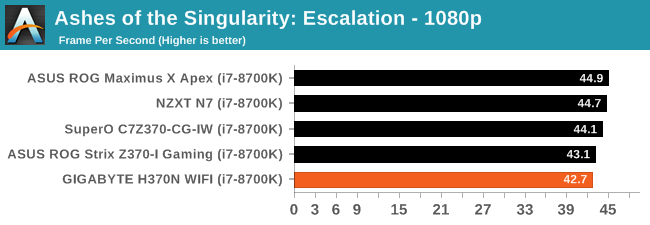
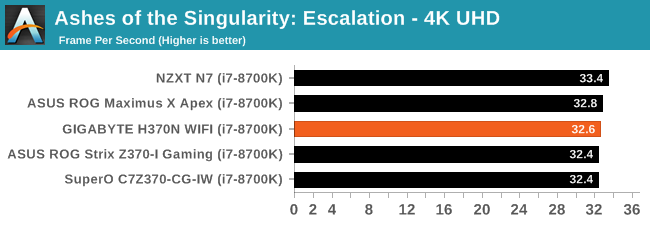
For the AOTSe results, in 1080p the GIGABYTE board ran with an average of 42.7 FPS which was at the bottom of a pretty tight group, a couple percent behind the Apex leading the pack. 4K UHD results placed the board right in the middle of the pack. Nothing is out of place here.
Rise of the Tomb Raider
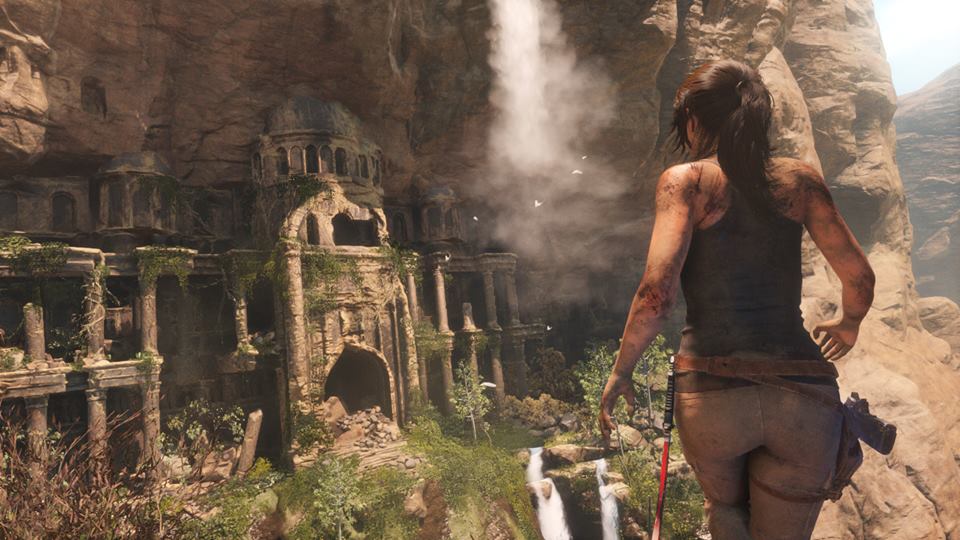
Rise of the Tomb Raider is a third-person action-adventure game that features similar gameplay found in 2013's Tomb Raider. Players control Lara Croft through various environments, battling enemies, and completing puzzle platforming sections, while using improvised weapons and gadgets in order to progress through the story.
One of the unique aspects of this benchmark is that it’s actually the average of 3 sub-benchmarks that fly through different environments, which keeps the benchmark from being too weighted towards a GPU’s performance characteristics under any one scene.
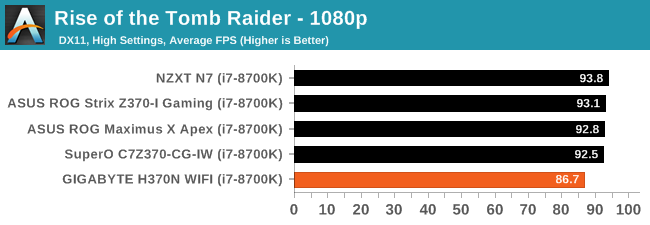
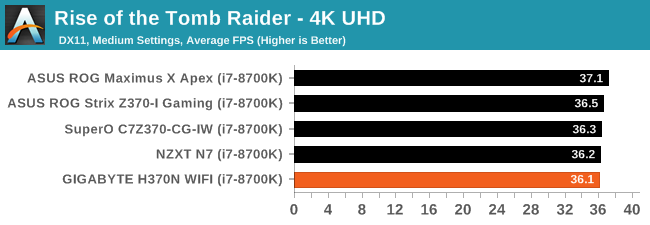
Rise of the Tomb Raider results for the have the GIGABYTE H370N coming in a bit slower than the rest of the results at 86.7. This is a few FPS behind the group. Moving up to the 4K UHD resolution where subsystems outside of the video card hold less weight, the system pulls right back up to the group within 1 FPS of the pack.
Originally published at https://www.anandtech.com/show/12634/gigabyte-h370n-wifi-review (Wayback Machine).