
The Samsung 860 PRO (512GB And 4TB) SSD Review: Replacing A Legend
AnandTech Storage Bench - Heavy
Our Heavy storage benchmark is proportionally more write-heavy than The Destroyer, but much shorter overall. The total writes in the Heavy test aren't enough to fill the drive, so performance never drops down to steady state. This test is far more representative of a power user's day to day usage, and is heavily influenced by the drive's peak performance. The Heavy workload test details can be found here. This test is run twice, once on a freshly erased drive and once after filling the drive with sequential writes.
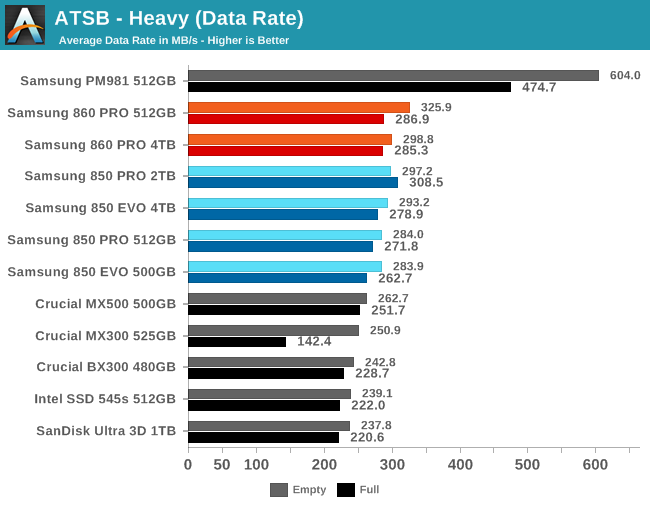
As with The Destroyer, Samsung's SATA SSDs were still on top before the Samsung 860 PRO arrived. The 860 PRO brings only modest improvements to the average data rates on the Heavy test, and the 512GB models is slightly faster than the 4TB model. The only real outlier here is the Crucial MX300, for its poor performance when the drive is full.
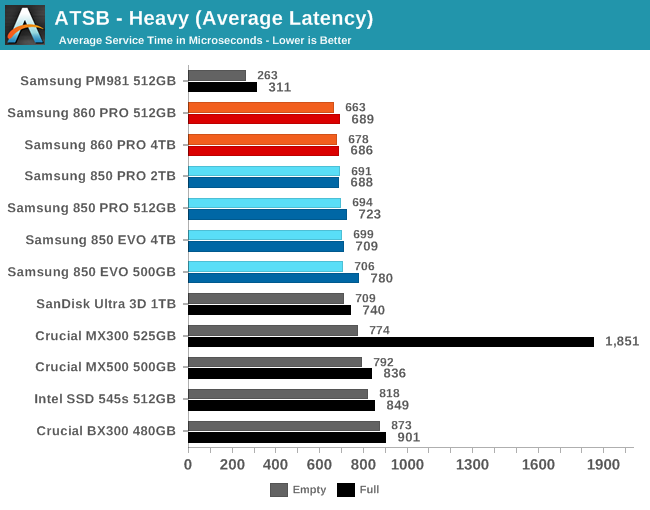
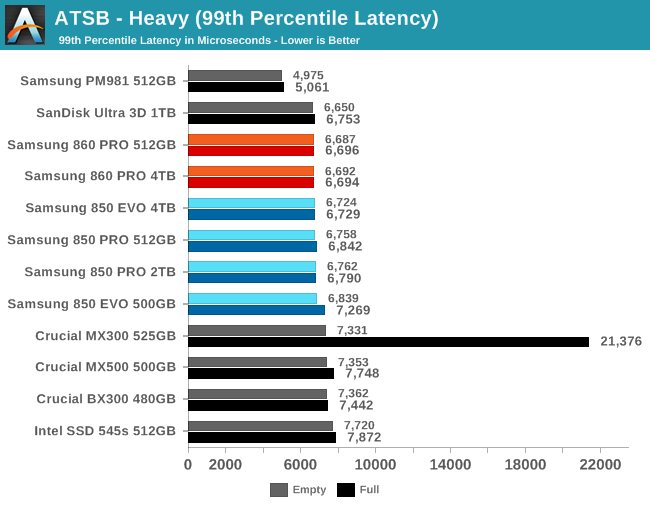
The Samsung MLC SSDs and the SanDisk Ultra 3D offer the best average and 99th percentile scores among the SATA drives, but even the current models from Intel and Crucial are close enough to be indistinguishable without benchmarking tools.
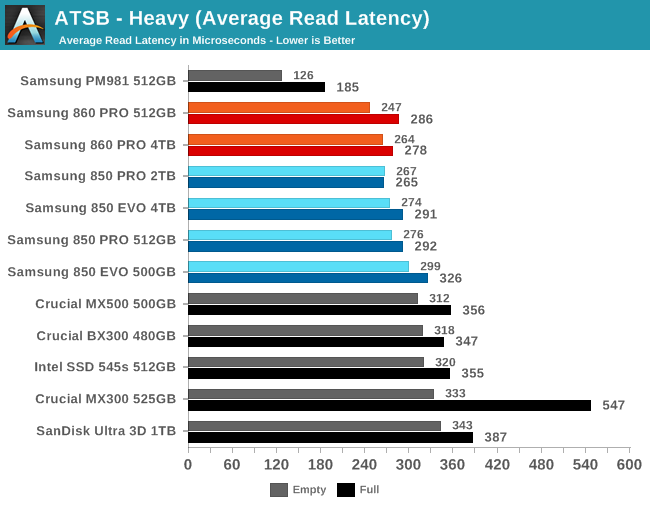
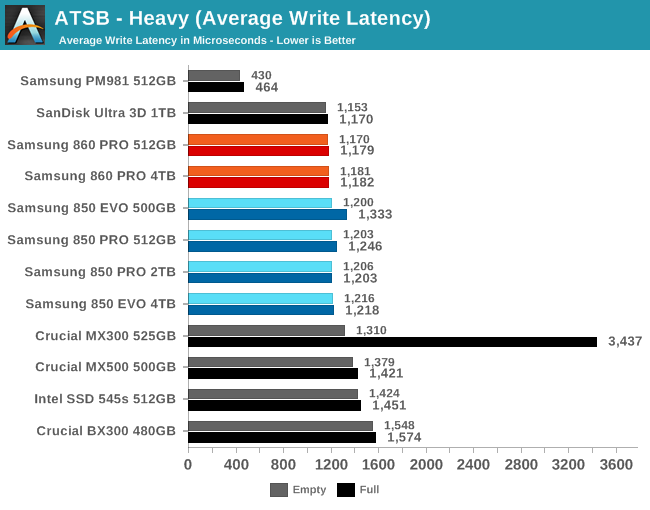
Most of the drives show small differences in average read latency between the full and empty drive test runs, but it's the write latencies that account for the bulk of the delays experienced during this test. The Samsung 860 PROs are among the several drives that show virtually no difference in average write latency when the drive is full.
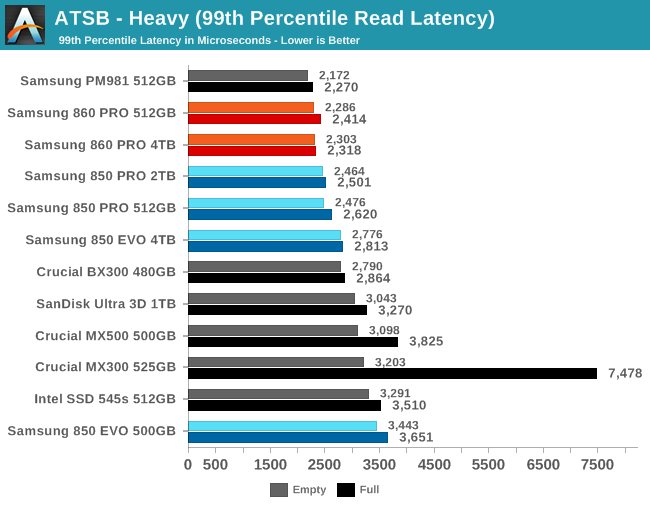
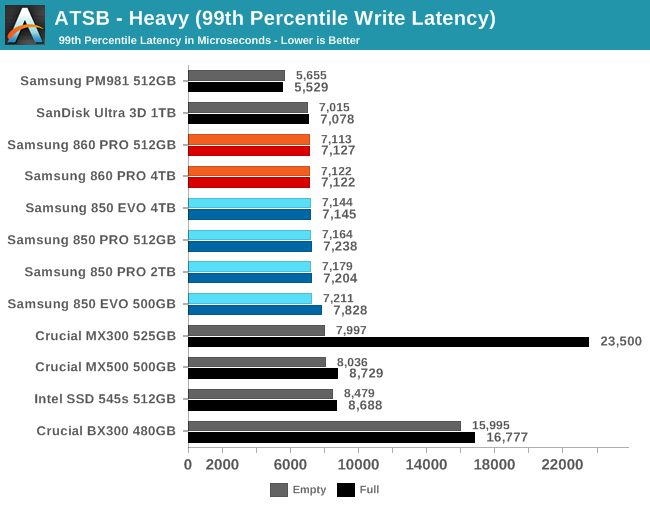
The 99th percentile read and write latency scores show that most of these SATA SSDs are equally competent at keeping latency under control. As usual, the Crucial MX300's full drive results stand out as particularly bad, and the BX300 is revealed to have a problem with high latency writes whether or not it is full.
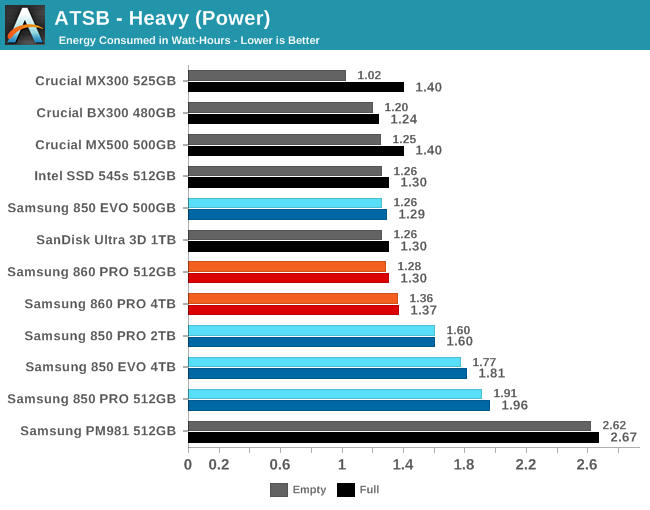
The 860 PRO mostly eliminates the gap in power efficiency relative to the modern competitors. The 4TB model requires slightly more power than the 512GB, but is still a substantial improvement over the multi-TB 850s.
Originally published at https://www.anandtech.com/show/12348/the-samsung-860-pro-512gb-and-4tb-ssd-review (Wayback Machine).