
The Toshiba TR200 3D NAND SSD Review: One Step Forward, One Step Back
Conclusion
Toshiba's 3D NAND has been a long time coming. The first generation BiCS 3D NAND never hit the market, and the second generation had a limited release last year in a few niche products. This third generation design with 64 layers is finally ready for the broader market, and both the 256Gb and 512Gb parts are in mass production. The first SSD Toshiba shipped with BiCS 3 3D NAND was the XG5 NVMe SSD for OEMs, and it was a great way to start things off. The Toshiba TR200 brings that same 3D NAND to retail SSD market, but the impact is very different. The Toshiba TR200 is an entry-level budget SATA SSD, and the performance reflects that on virtually every test. It's slower than its predecessors and slower than the entry-level SSDs from many other major brands.
With that said, it's not all bad news: the Toshiba TR200 is very power efficient, and its performance and power consumption don't get much worse when the drive is full. The Toshiba TR200 has higher than normal latency across the board, but unlike many budget SSDs, the TR200 is pretty good about keeping latency from shooting through the roof when it's subjected to a heavy sustained workload. Only the heaviest of write-intensive workloads will cause the TR200's latency to occasionally spike to be many times higher than normal for a budget SATA SSD, and even then the read latency doesn't get too bad. Power draw rarely exceeds 1W, even during synthetic benchmarks.
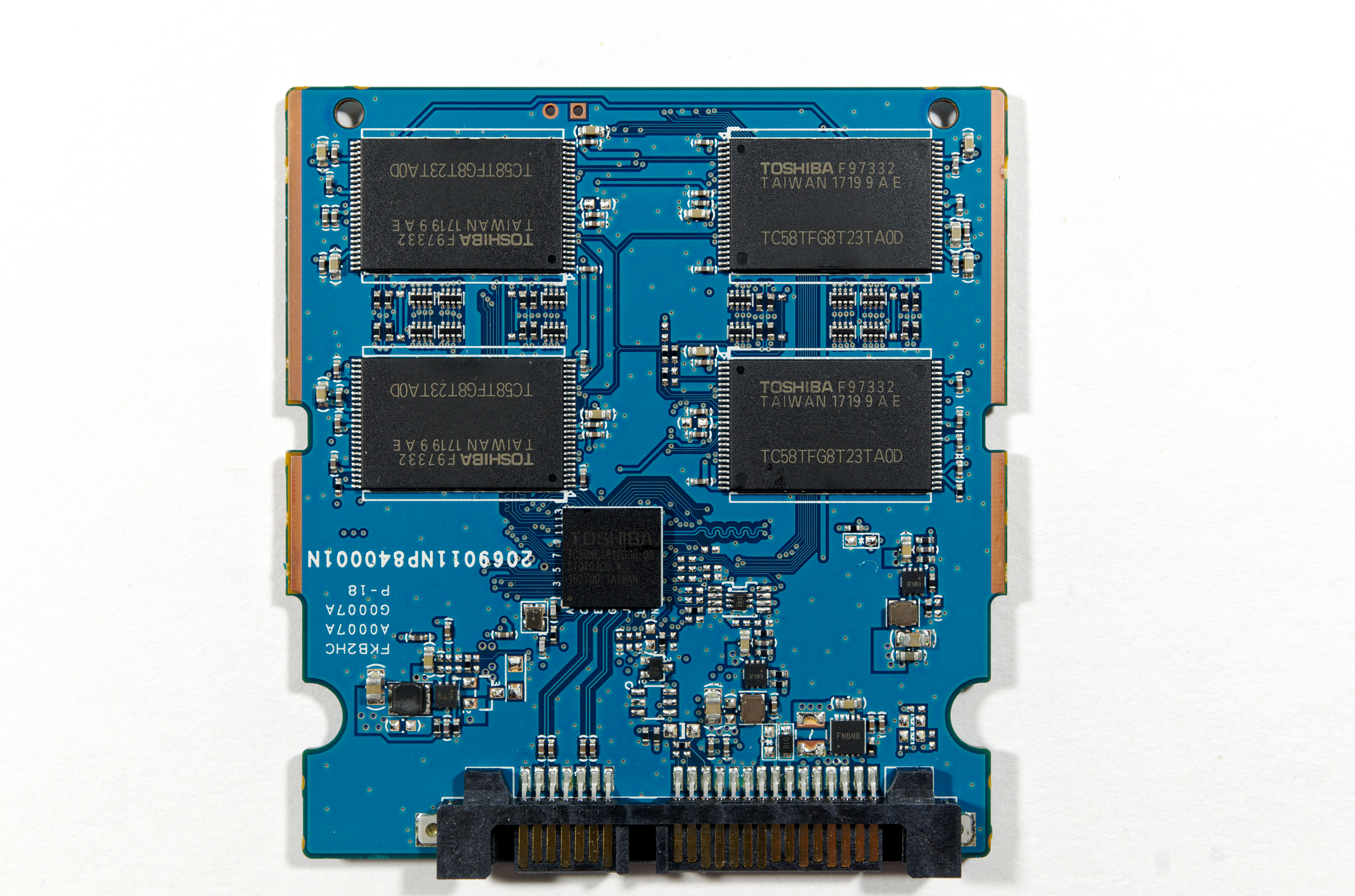
Given how NAND flash prices have been driven up over the past year by an industry-wide shortage, it's no surprise that Toshiba has switched their entry-level product over to a DRAMless controller to keep costs under control. Toshiba has shown before that they are willing to participate in a race to the bottom: the original Trion 100 was one of the products that led the transition from MLC to TLC, sacrificing performance to reach new levels of affordability.
| SATA SSD Price Comparison | |||
| 240-275GB | 480-525GB | 960-1050GB | |
| Toshiba TR200 (MSRP) | $89.99 (37¢/GB) | $149.99 (31¢/GB) | $289.99 (30¢/GB) |
| ADATA SU800 | $89.99 (35¢/GB) | $158.65 (31¢/GB) | $274.99 (27¢/GB) |
| Crucial BX300 | $89.99 (38¢/GB) | $149.99 (31¢/GB) | |
| Crucial MX300 | $92.99 (34¢/GB) | $149.99 (29¢/GB) | $279.99 (27¢/GB) |
| Intel SSD 545s | $99.99 (39¢/GB) | $179.99 (35¢/GB) | |
| Samsung 850 EVO | $99.95 (40¢/GB) | $159.99 (32¢/GB) | $327.99 (33¢/GB) |
| SanDisk Ultra 3D | $99.99 (40¢/GB) | $164.99 (33¢/GB) | $284.99 (29¢/GB) |
| WD Blue 3D NAND | $98.39 (38¢/GB) | $164.65 (33¢/GB) | $299.99 (30¢/GB) |
At its initial MSRP, the TR200 isn't setting any records and isn't even the cheapest SATA SSD from a major brand. However, the arrival of Toshiba's 3D NAND in mass market quantities should start alleviating the NAND flash shortage and allow prices to start creeping downward over the next several months. The TR200 will probably drop a bit below MSRP once the novelty wears off and supplies are plentiful, and from there I expect Toshiba to adjust pricing to keep up with any overall industry shifts.
The cheapest SSDs from major brands currently go for at least 27 ¢/GB, while the TR200's MSRP starts at 30 ¢/GB. It probably needs to get down to around 25 ¢/GB to be a good deal. I'd like to see that happen for the holiday sales this winter, but I don't see that as likely. The manufacturers don't want to drop prices any sooner than they need to, and 64L 3D NAND still isn't quite plentiful from any of the manufacturers. There's hope that the situation will be much improved in the first half of next year, and the TR200 is an important step on that path.
But until Toshiba can bring the TR200 prices way down, it's making their 3D NAND look bad. Toshiba should hurry up and deliver a retail counterpart to the XG5 as the successor to the OCZ RD400. And for the consumer SATA market, they should seriously reconsider leaving the TR200 and VX500 as the only options until BiCS4 is ready. The last-generation controllers used in the TR150 and VX500 may not be ready for 3D NAND, but the consumers are, and the TR200 isn't enough to satisfy the demand. Going into 2018, Toshiba needs a higher-performing SATA SSD that goes up to 2TB.
Originally published at https://www.anandtech.com/show/11868/the-toshiba-tr200-3d-nand-ssd-review (Wayback Machine).