
The Toshiba TR200 3D NAND SSD Review: One Step Forward, One Step Back
AnandTech Storage Bench - Light
Our Light storage test has relatively more sequential accesses and lower queue depths than The Destroyer or the Heavy test, and it's by far the shortest test overall. It's based largely on applications that aren't highly dependent on storage performance, so this is a test more of application launch times and file load times. This test can be seen as the sum of all the little delays in daily usage, but with the idle times trimmed to 25ms it takes less than half an hour to run. Details of the Light test can be found here. As with the ATSB Heavy test, this test is run with the drive both freshly erased and empty, and after filling the drive with sequential writes.
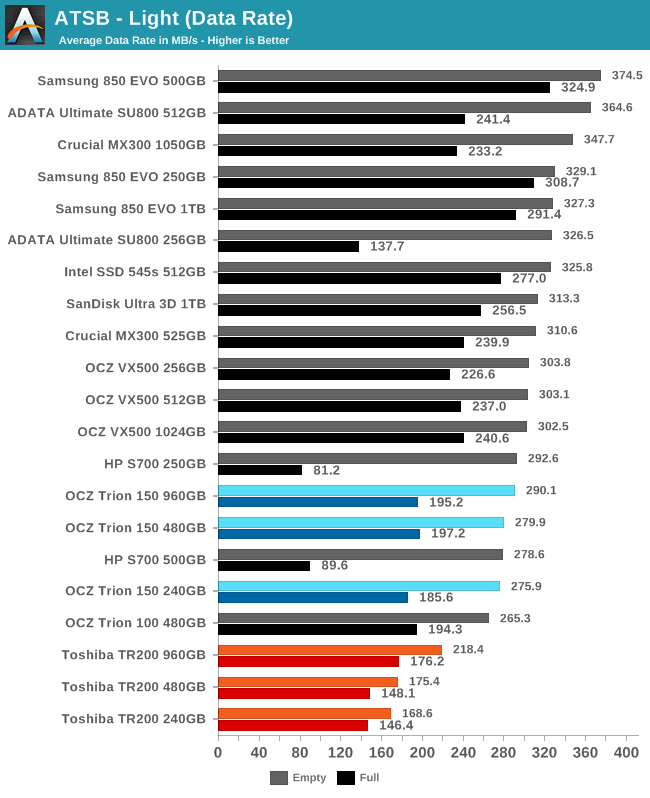
The short duration and low write volume of our Light test don't help the Toshiba TR200 look any better than it did on the harder ATSB tests. The average data rates from the TR200s when the test is run on an empty drive are slower than most other SSDs when completely full. The HP S700 still does worse when full, as does the 256GB ADATA SU800. The Samsung 850 EVO is about twice as fast overall on the Light test.
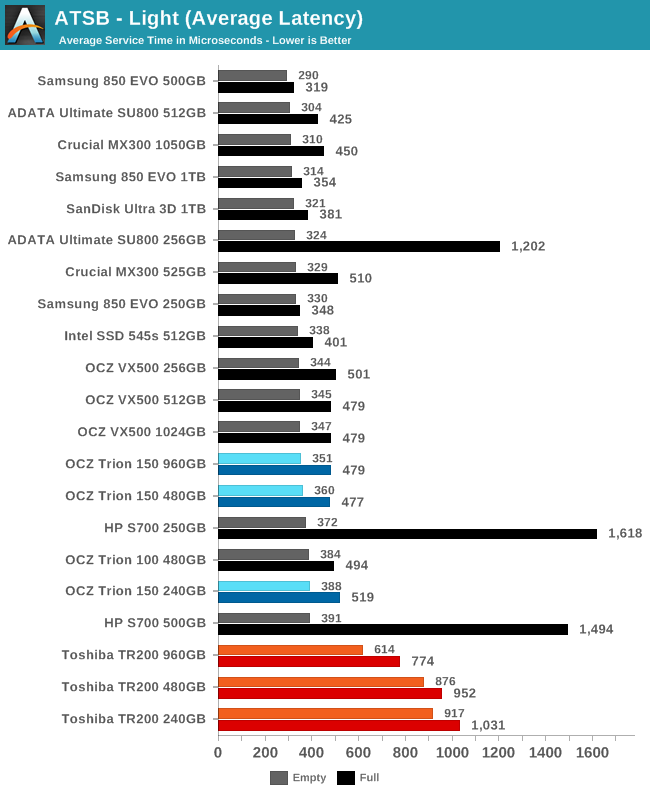
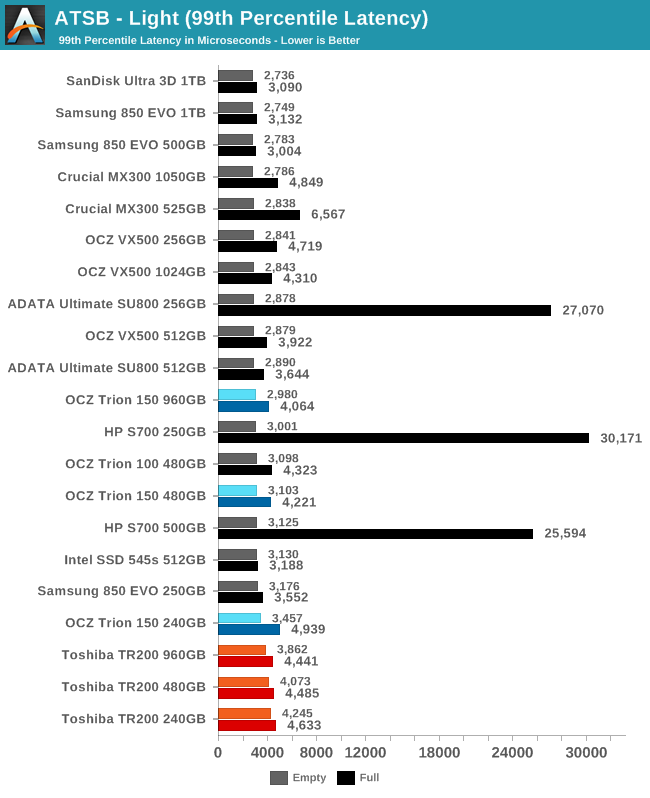
The average latency of the TR200s on the Light test falls well outside the normally narrow range. A few other drives have exceptionally high latency when the test is run on a full drive, but otherwise nothing comes close to the TR200. By contrast, the 99th percentile latency of the TR200 is only modestly worse than other low-end drives, and the TR200 doesn't get massively worse when it is full.
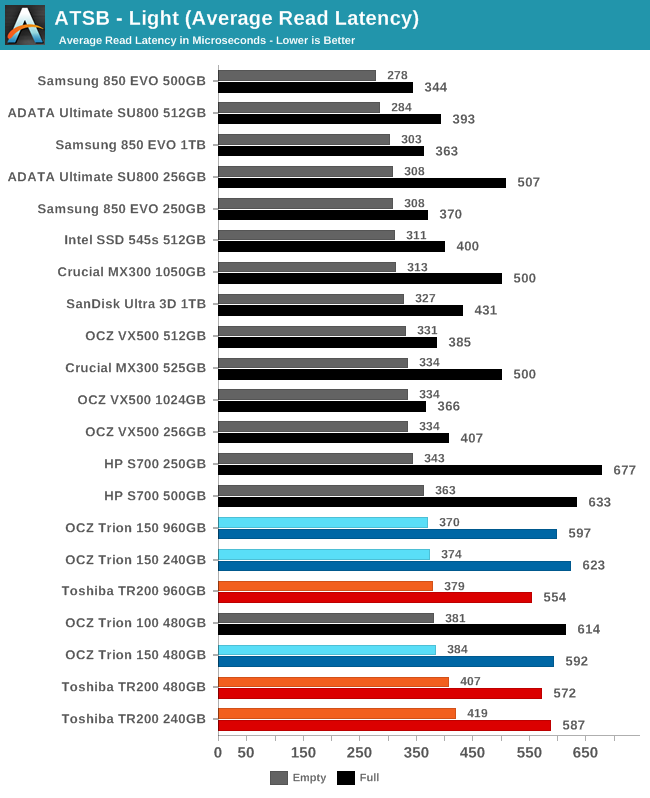
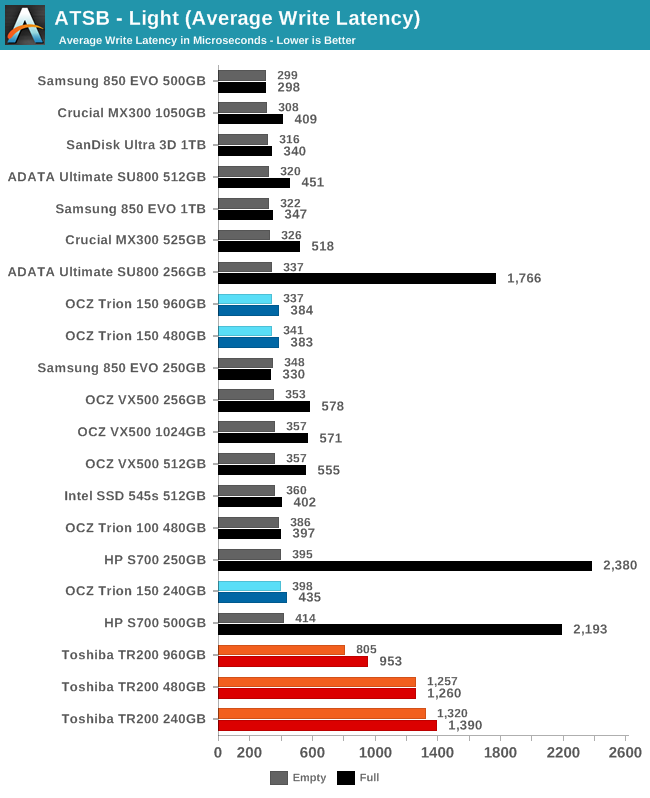
The TR200 has some of the highest average read latency scores on the Light test, but it's not a serious outlier at any capacity. The average write latency is where the TR200's problems lie, as even the fastest 960GB model has twice the write latency of the next slowest drive.
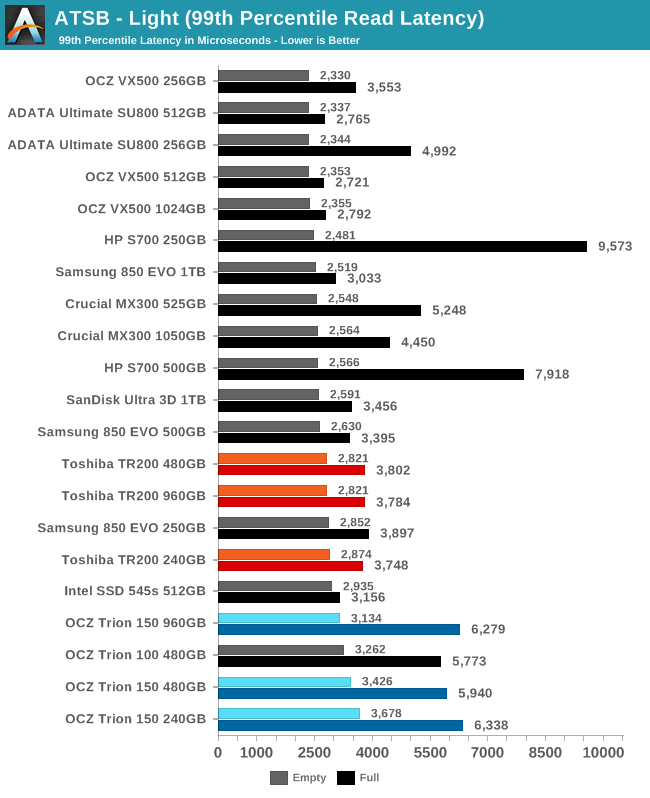
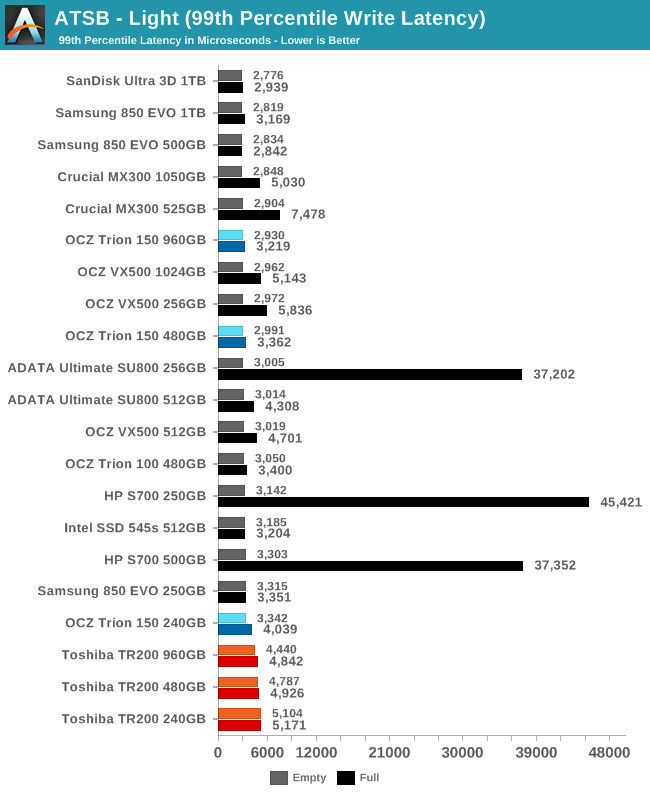
The 99th percentile read latency scores of the TR200 are a modest improvement over its predecessors, and in line with contemporary competitors. The 99th percentile write latency is worse than the TR150 but not high enough to be a problem on this light workload.
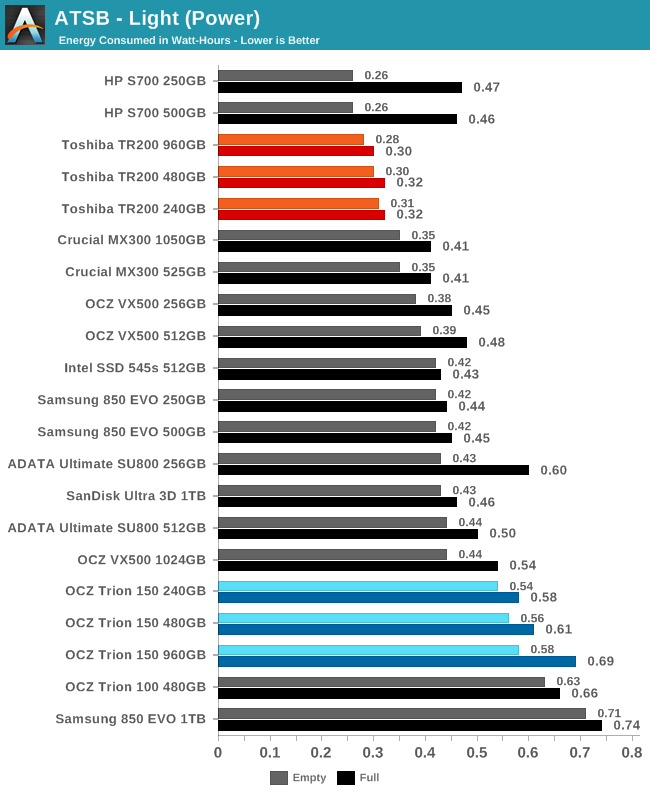
The DRAMless SSDs are again the most energy-efficient despite their lower overall performance. The TR200 loses to the HP S700 when the test is run on an empty drive, but the TR200 takes a clear lead when the drives are full, using less than three quarters the energy of the next most efficient SATA drive.
Originally published at https://www.anandtech.com/show/11868/the-toshiba-tr200-3d-nand-ssd-review (Wayback Machine).