
The ASRock X299 Taichi Motherboard Review
Conclusion
The Taichi is priced at $290 on Newegg, which places the Taichi near the ASUS Prime X299-A ($296), the MSI Tomahawk AC ($290) and the EVGA X299 Micro ($290).
The Taichi, compared to the Fatal1ty X299 Professional Gaming i9 we recently reviewed, is aimed at consumers looking to save a bit of money who doesn't need some high-end features. For example, 10-gigabit ethernet doesn't make its way to the Taichi, however, it does have two Intel GbE NICs in the I219V and I211AT. The Taichi does carry over the 13-phase power delivery, three M.2 slots, and PCIe configuration from the high-end board. Unless you need a specific feature or color scheme, users are not missing out on much between the two motherboards.
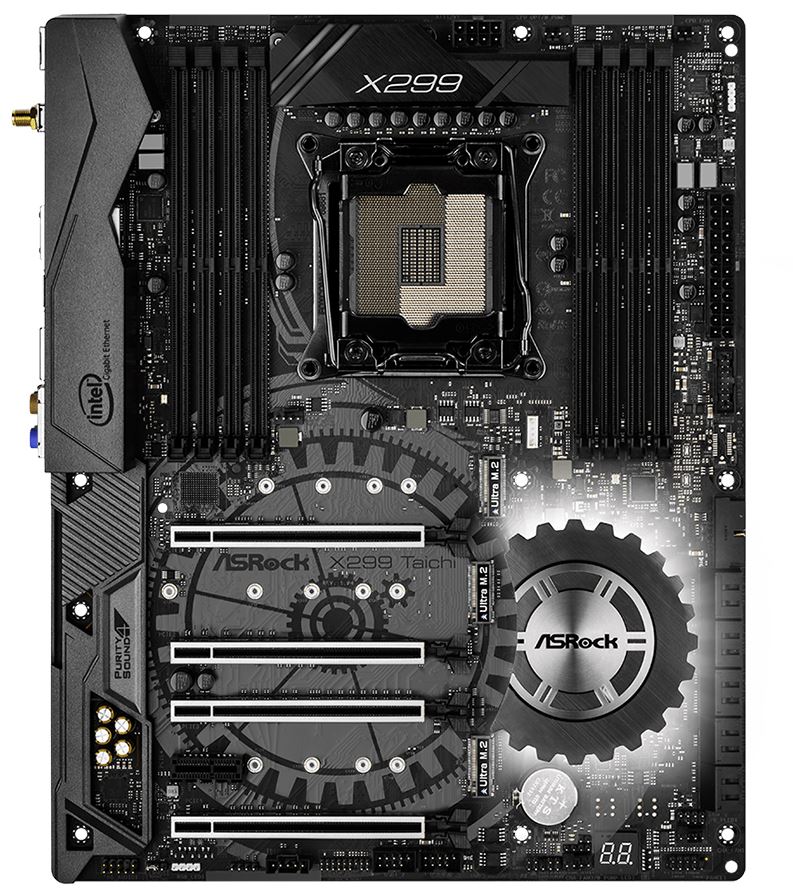
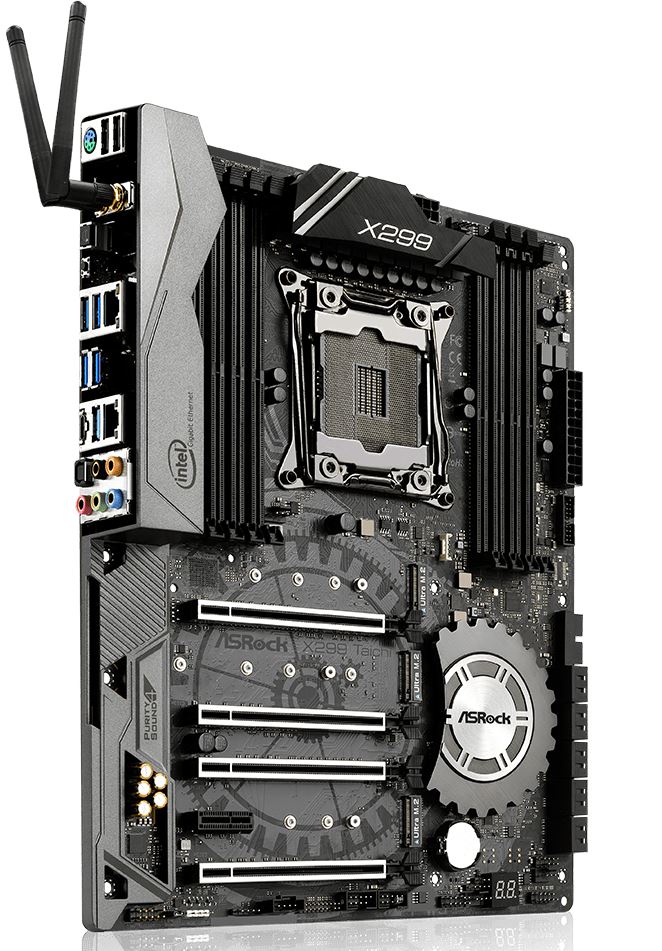
The Taichi has three M.2 slots for PCIe or SATA based storage devices, as well as 10 SATA ports. An item to note on this is ASMedia controlled SATA ports do not support RAID. It is also worth keeping an eye on what PCIe slots are functional and what is disabled when using certain CPUs, especially those with lesser PCIe lanes). For example, on the Taichi, the first M.2 slot can always keep its bandwidth, however, the two M.2 slots revert to SATA based drives when a 16-lane Kaby Lake-X CPU is used.
Gaming is still a primary use on most motherboards and though 'Gaming' isn't in the Taichi's name, it keeps the same PCIe slot spacing, configuration, and slot protection as the Gaming i9, making the setup ideal for multi-GPU configurations. The latest Realtek ALC1220 codec is used, with PCB separation, Nichicon filters caps, and a high-impedance headphone jack with auto-detect but no direct EMI shield. RGB LED integration is included on the board, but for those who really prefer a light show, there are onboard headers for additional lighting. As it stands, the only LEDs reside under the chipset.
In regards to overclocking, we saw what the Gaming i9 and the Taichi were no different - they both topped out at the same voltage and the same BIOS settings, giving the same results. Both the BIOS and the A-Tuning software have enough options for an overclocker to reach the ambient limits of most CPUs.
To be frank, just about the only real standout features are the memory support at DDR4-4400 and the power delivery. Otherwise, the Taichi is a reasonable base for an X299 motherboard: PCIe slots with good spacing (albeit confusing connectivity), Realtek's best onboard audio, dual Intel NICs, integrated WiFi, three M.2 slots and 10 SATA ports. These are all positives but can be lost in the sea of X299 boards with similar feature sets differing in SATA port count or M.2 slot arrangement. With that, it all comes down to looks, a subjective measure by all accounts, software, bundles, and price.
Originally published at https://www.anandtech.com/show/11823/asrock-x299-taichi-motherboard-review-skylake-x (Wayback Machine).