
Inside Elitegroup Computer Systems: From Taipei to Shen Zhen
- Posted in
- Motherboards
Biloda PCB: OS Testing and Lithography

Click to enlarge.
Finally, the drilled boards are scrubbed. Up until now, this is the first time we've seen male workers in the factory. In case you are interested in knowing what is on the shirt of the man on the left, it says, "Have a working good time." I emailed Anand if we could get polo shirts with that motto on it, but I did not get a response.
The majority of the small drill holes are filled with the particular solder or copper through chemical lithography. The motherboard circuitry itself is "printed" right on the board using large machines that somewhat resemble Xerox copiers. A negative image of the circuitry is placed over the board, and then a chemical process removes the exposed top layer not covered by the negative. A resulting circuit is produced. Workers flip the board and repeat the process to create a double-sided circuit board.

Click to enlarge.
Now this thing is starting to look more like (two) motherboards! After the board is done printing, it immediately goes across the hall to the OS testing room. The QA on the motherboard line really picks up at this point. These large machines take the motherboards and press a matching circuit design on the top and bottom. A current is passed through and the monitor tells the worker whether or not all electrical paths are correct.
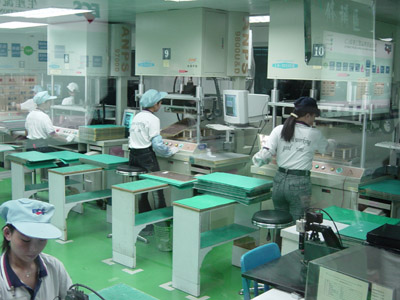
The next (immediate) room contained the print facilities. Although I can't exactly describe what this guy is doing, I believe the process is somewhat similar to silk screening. This particular red dye is being applied over some PC Chips motherboards. One thing that struck us as odd is that there has been a surprising amount of manual labor up to this point. Considering the extremely cheap cost of workforce, it certainly must be cheaper and more effective to use manual labor in a high volatile sector like the motherboard industry. ECS was very proud to let us know that tooling a motherboard into full production only takes seven days from receiving the CAD/CAM layout from ECS Taipei. Certainly an impressive fact, although it's quite obvious that the only changes that are really needed (besides loading the software in the drilling machines) are with the manual laborers.
In any case, the factory itself does seem safe extremely considering all of the manual labor around. No doubt the monthly safety record is written in English as well as Chinese so that nosy American reporters will take a picture of it.

Click to enlarge.
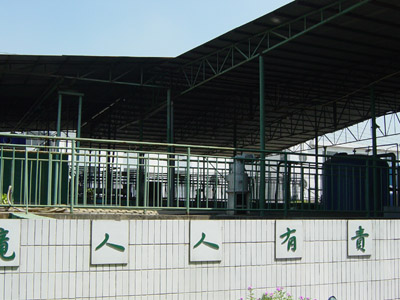
Finally, as we left Biloda, we got one scenic shot of the onsite water treatment facility. All of those plastics, oxides and dyes need to be treated before they are dumped back into the ocean. Regardless of the fact that no one else within a 30 mile radius seemed to care at all about any sort of pollution control, Biloda does a very good job of providing adequate environment awareness. In fact, our tour guide went into a 20 - 30 minute analysis of it; but, we really want to see what's going to happen to these motherboards, so let's skip that part for now.
Originally published at https://www.anandtech.com/show/1171 (Wayback Machine).