
The Seasonic PRIME Titanium PSU (650W, 750W, 850W) Review: Mythical Performance
- Posted in
- Cases/Cooling/PSUs
- Seasonic
- PSUs
- 750W
- 850W
- 650W
- Modular
- 80Plus Titanium
- SSR-650TD
- SSR-750TD
- SSR-850TD
Cold Test Results
For the testing of PSUs, we are using high precision electronic loads with a maximum power draw of 2700 Watts, a Rigol DS5042M 40 MHz oscilloscope, an Extech 380803 power analyzer, two high precision UNI-T UT-325 digital thermometers, an Extech HD600 SPL meter, a self-designed hotbox and various other bits and parts. For a thorough explanation of our testing methodology and more details on our equipment, please refer to our How We Test PSUs - 2014 Pipeline post.
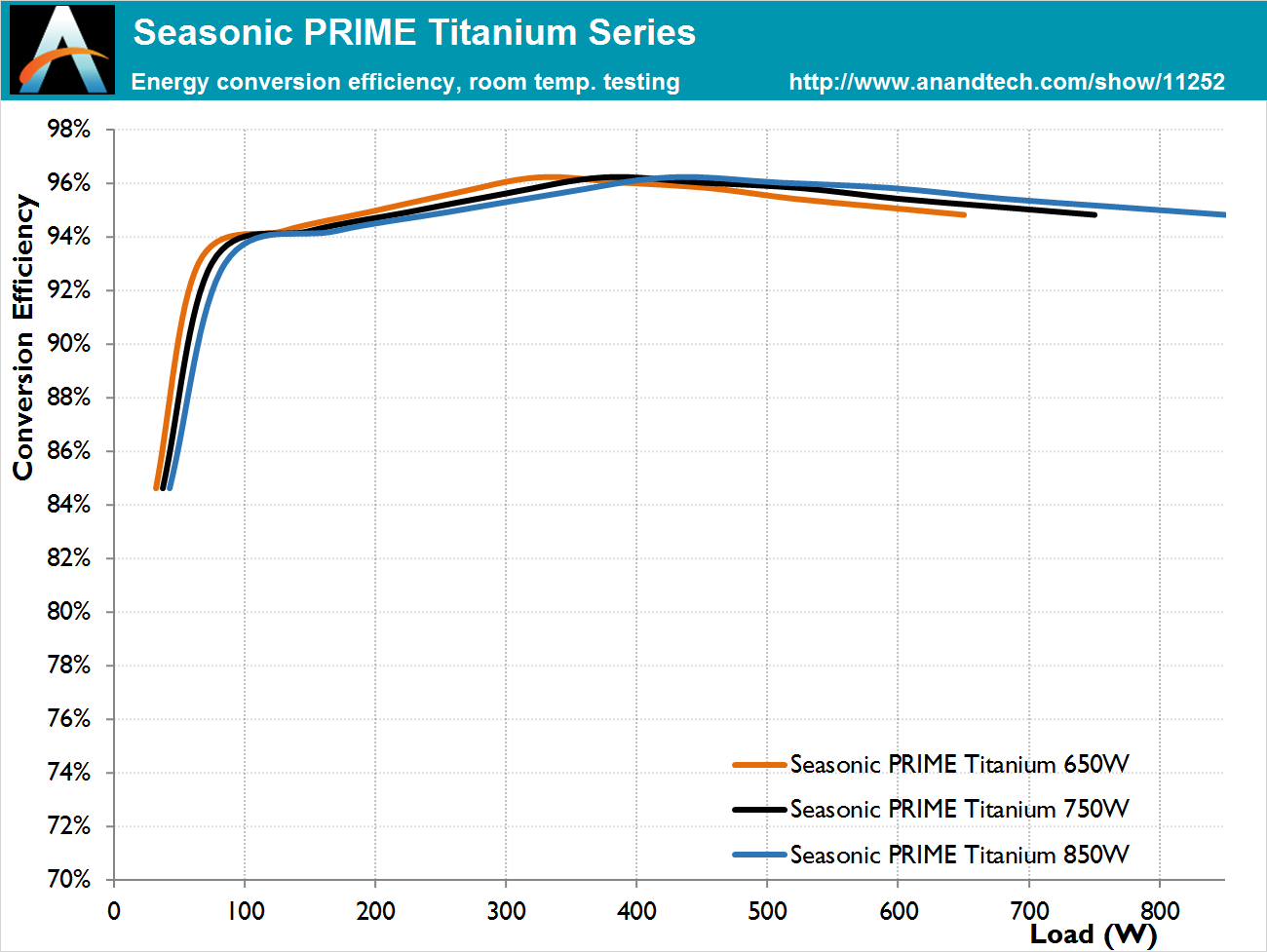
| Seasonic PRIME Titanium Efficiency (~25ºC Ambient Temperature Testing) |
||||
| % | Titanium Requirements (230AC) |
650TD | 750TD | 850TD |
| 10 | 90% | 93.1% | 93.2% | 92.9% |
| 20 | 94% | 94.2% | 94.2% | 94.1% |
| 50 | 96% | 96.3% | 96.2% | 96.1% |
| 100 | 91% | 94.8% | 94.8% | 94.8% |

We usually expect to see an 80Plus Titanium certified unit to borderline pass or even fail the certification requirements during our testing. This is because we are supplying 230V AC to the unit and most models have been optimized for an 110V AC input, as the certification requirements are significantly lower and makes it slightly easier for the designer to meet them. Seasonic positively surprised us because all three of the new PRIME Titanium units are extremely efficient, easily meeting the stricter 80Plus Titanium performance requirements with an input voltage of 230V AC. The top efficiency of all three units is ~96.2% when operating at 50% capacity, with a nominal load range (20%-100%) efficiency average of 95.1% (650W model) to 95.3% (750W/850W models). The low load efficiency with the PRIME Titanium PSUs operating at 10% capacity is above 84.5%, which is much higher than the peak efficiency many low-cost PSUs can hope to achieve. Still, the efficiency of the units once they reach 20% capacity is so high that the thermal losses actually seem to drop instead of increasing.

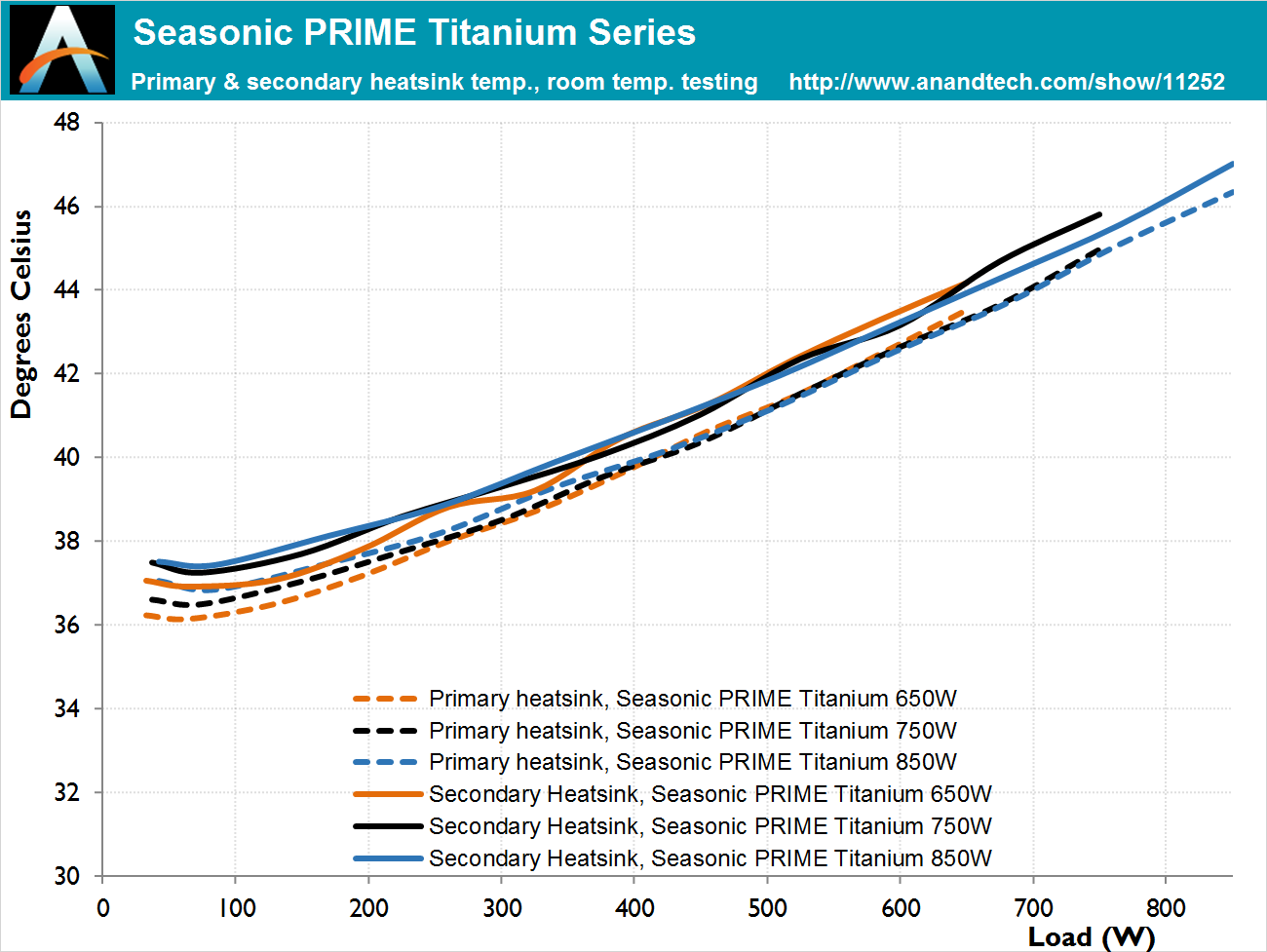
Please note that we had the hybrid fan mode disabled during our testing in order to showcase the low load noise levels with the fan turned on. With the hybrid mode turned on, the fan starts when the load reaches about 20-25% of the unit’s rated capacity.
The internal operating temperatures of the Seasonic PRIME Titanium are very low, which is to be expected with such an efficient design. The cooling fan initially appears to have a “ladder” behavior, increasing its speed in steps in relation to the load, but the thermal control circuit is actually linear. When the units are operating in an ambient temperature environment, the speed increases are just very small in relation to the fan’s operating range, which appears as a step-like behavior on a chart. The fan of any of the three units did not even reach 50% of its rated speed at maximum load under these operating conditions, operating way below its optimal range and barely reaching audible sound pressure level figures.
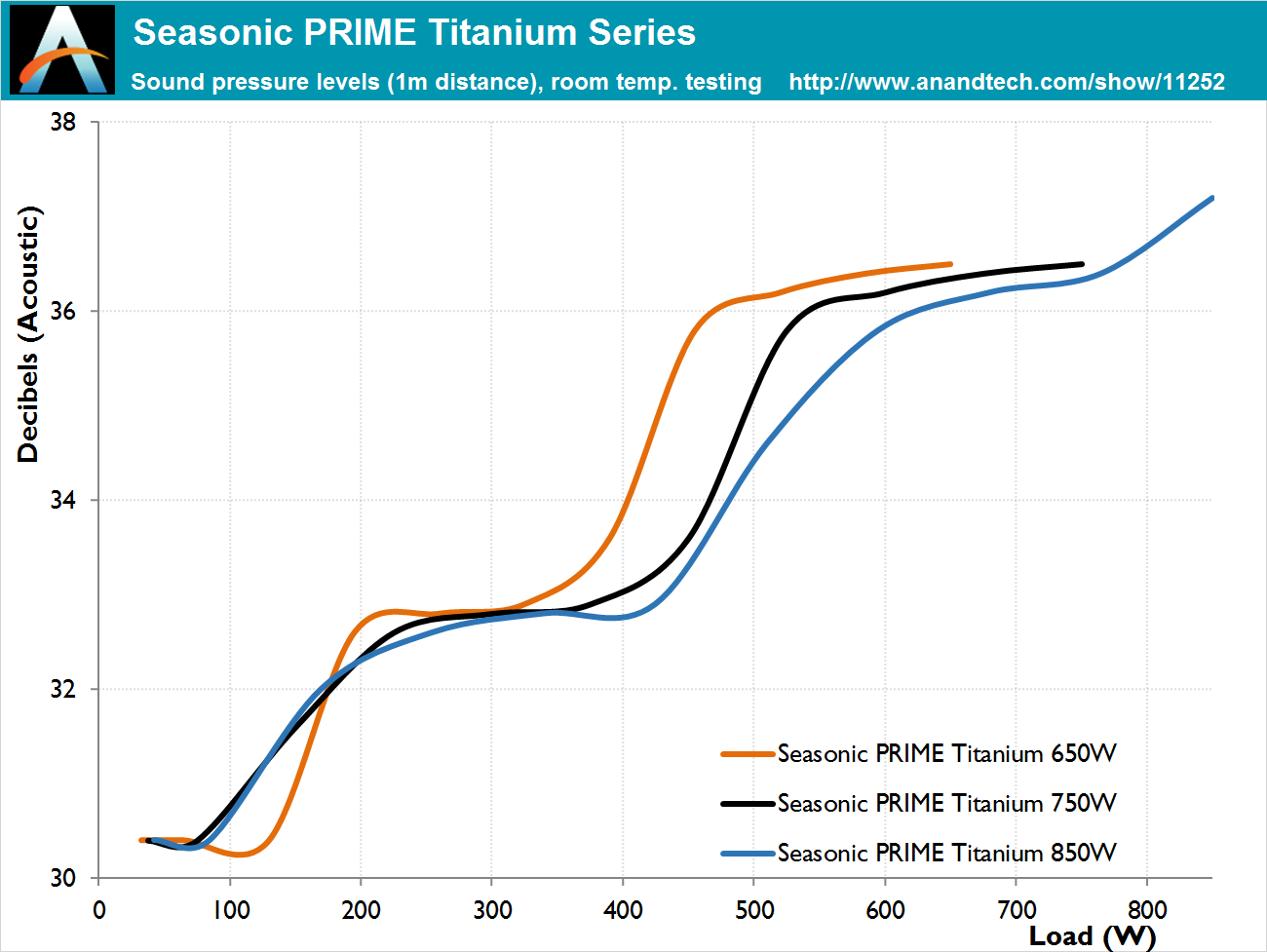
The hybrid fan mode is the only thing that does not make much sense with these three units. If the setting is set to off, the fan will start as soon as the PSU is powered on regardless of the load, but will still retain its minimum possible rotational speed until the thermal control circuit decides that it needs to spin faster. The fans of the PRIME Titanium units are inaudible when running at such low speeds. If the setting is turned on, the fans will start before the point they become audible with the setting turned off, meaning that there is no practical difference at low loads whether the fan is spinning or not. Considering that the fans of the units are inaudible when spinning at their minimum speed, it might be wise to keep the hybrid mode turned off. Lower operating temperatures can only increase the longevity of a PSU, even one as good as this one.
Originally published at https://www.anandtech.com/show/11252/the-seasonic-prime-titanium-power-supply-review (Wayback Machine).