
The AMD Zen and Ryzen 7 Review: A Deep Dive on 1800X, 1700X and 1700
The Ryzen Die
Throughout the time leading up to the launch of Ryzen, AMD reaffirmed its commitment to at least +40% IPC improvement over Excavator. This was specifically listed as a goal relating to performance, at an equivalent energy per cycle, resulting in a 40% increase in efficiency. At the Tech Day, AMD listed an overall 2.7x (or 270%) performance per watt improvement, split into the following:
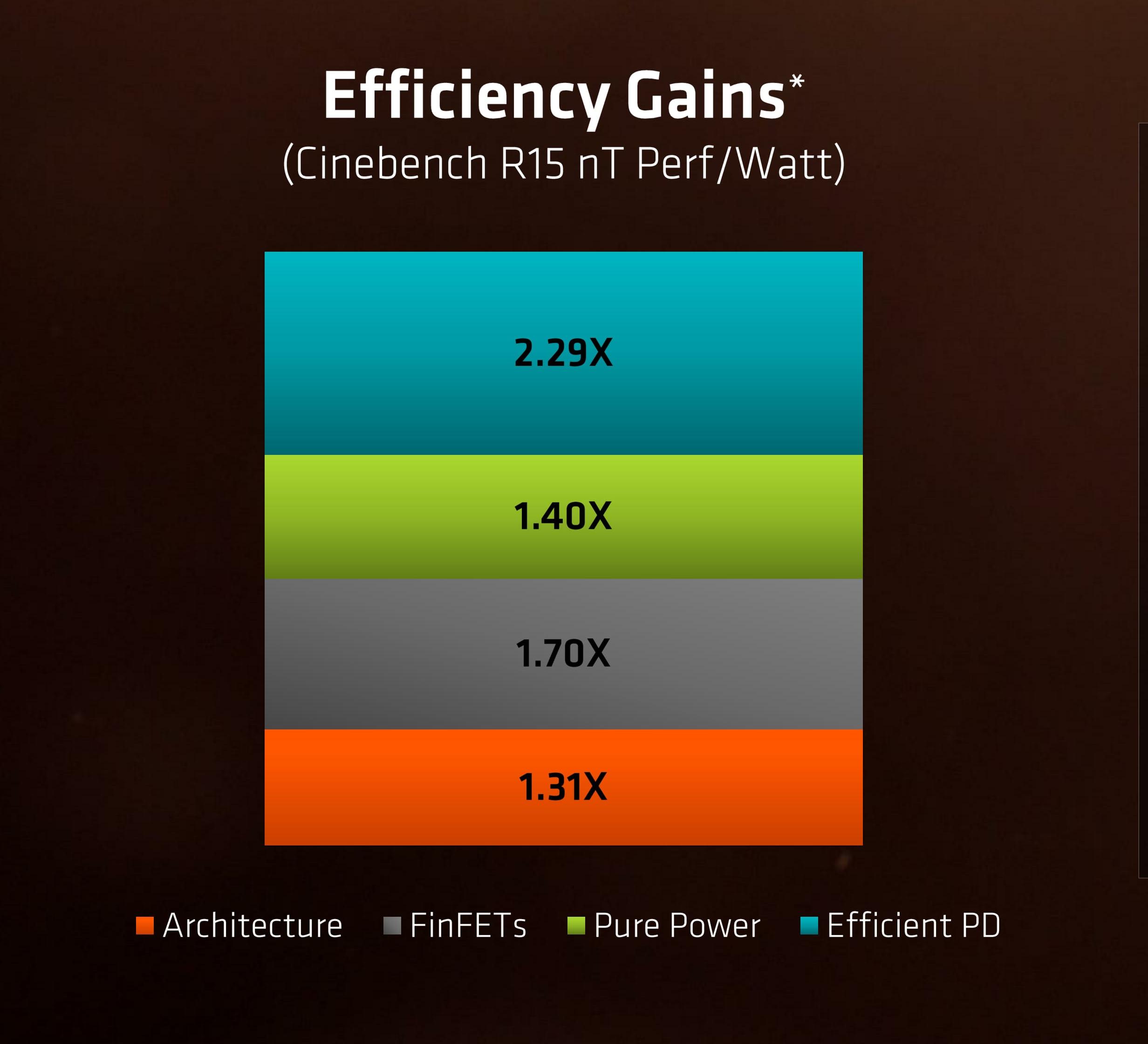
Obviously a number of benefits come from moving the 28nm TSMC process to GloFo’s 14nm FinFET process which is used via a Samsung license. Both the smaller node and FinFET improvements have been well documented so we won’t go over them here, but AMD is stating that Zen is much more than this as a direct improvement to immediate performance, not just efficiency. While Zen is initially a high-performance x86 core at heart, it is designed to scale all the way from notebooks to supercomputers, or from where the Cat cores (such as Jaguar and Puma) were all the way up to the old Opterons and beyond, all with at least +40% IPC.
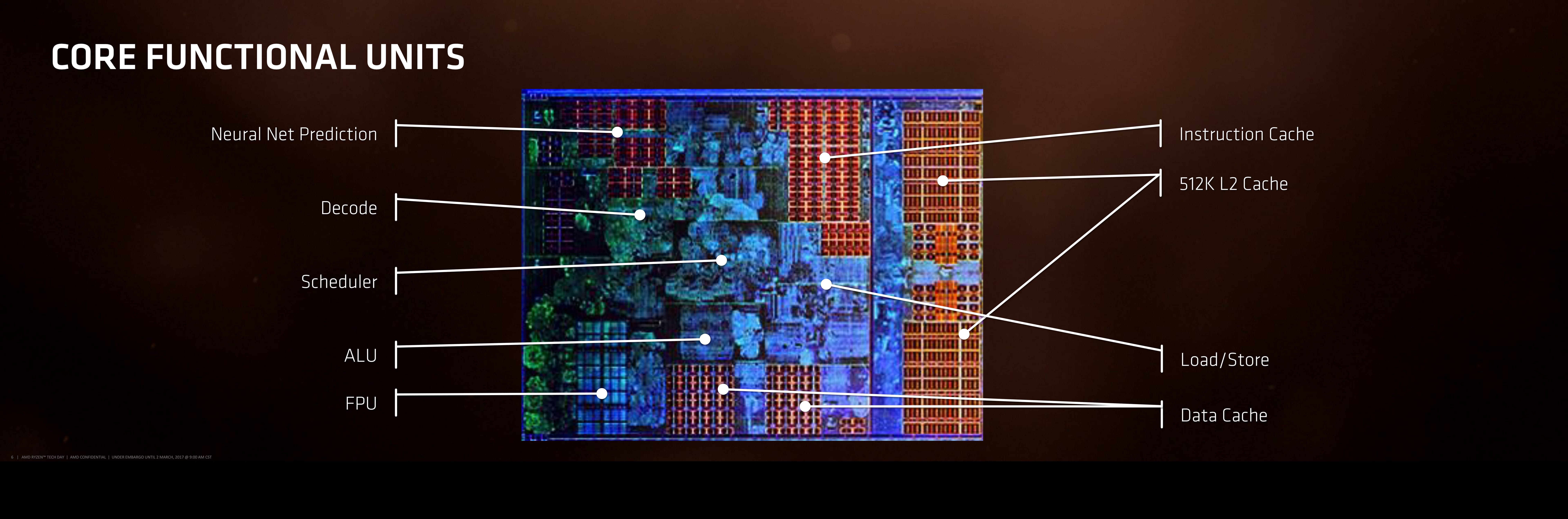
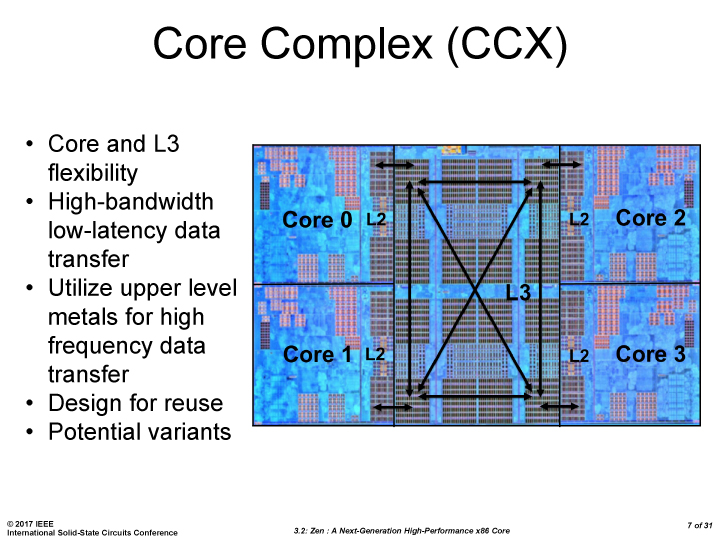
The first immediate image out of the presentation is the CPU Complex (a CCX), which shows the Zen core design as a four-CPU cluster with caches. This shows the L2/L3 cache breakdown, and also confirms 2MB of L3 per core with 8 MB of L3 per CCX. It also states that the L3 is mostly inclusive of the L2 cache, which stems from the L3 cache as a victim cache for L2 data. AMD is stating that the protocols involved in the L3 cache design allow each core to access the L3 of each other core with an average (but range) of latencies.
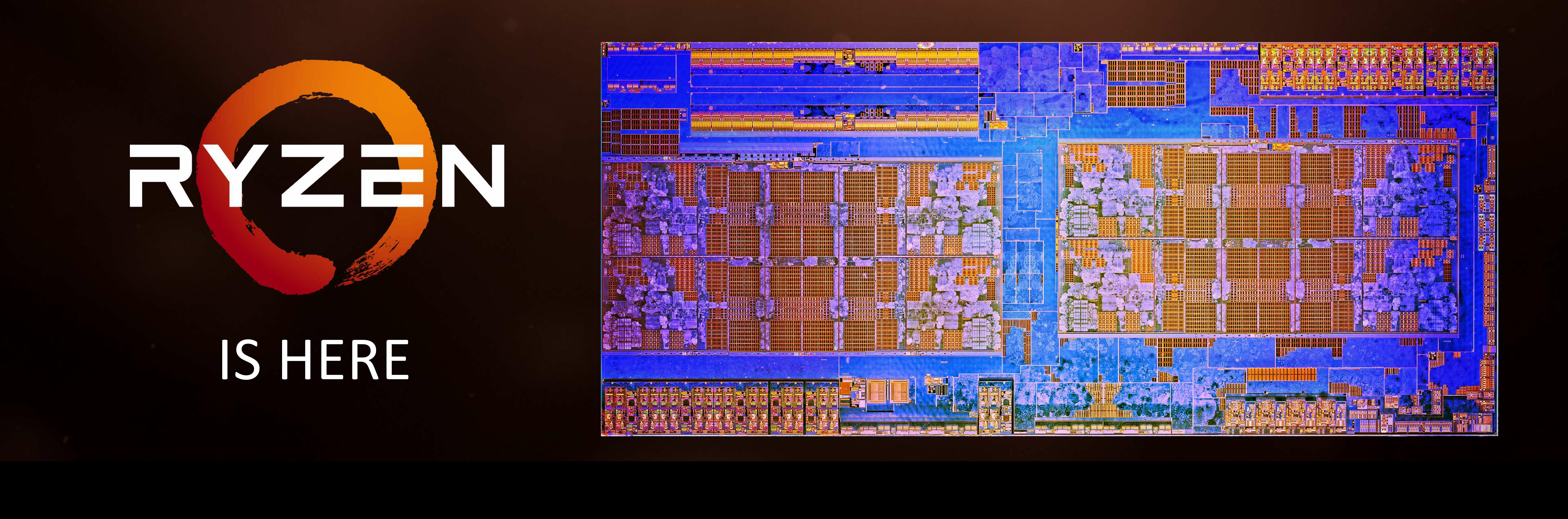
Over the next few pages, we’ll go through the slides. They detail more information about the application of Simultaneous Multithreading (SMT), New Instructions, the size of various queues and buffers, the back-end of the design, the front-end of the design, fetch, decode, execute, load/store and retire segments.
Originally published at https://www.anandtech.com/show/11170/the-amd-zen-and-ryzen-7-review-a-deep-dive-on-1800x-1700x-and-1700 (Wayback Machine).