
865PE/875P Motherboard Roundup June 2003 - Part 1: 20-way Shootout
- Posted in
- Motherboards
Soyo P4I875P DRAGON 2
|
Motherboard Specifications |
|
|
CPU
Interface
|
Socket-478
|
|
Chipset
|
Intel
82875P MCH (North Bridge)
Intel 82801ER ICH5R (South Bridge) |
|
Bus
Speeds
|
up
to 503MHz (in 1MHz increments)
|
|
Core
Voltages Supported
|
up
to 1.600V (in 0.0250V increments)
|
|
I/O
Voltages Supported
|
N/A
|
|
DRAM
Voltages Supported
|
up
to 2.90V (in 0.1V increments)
|
|
Memory Slots
|
4 184-pin
DDR DIMM Slots
|
|
Expansion Slots
|
1 AGP
8X Slot
5 PCI Slots |
|
Onboard IDE RAID
|
HighPoint
HPT372 controller (RAID 0, 1, 0 + 1)
|
|
Onboard USB 2.0/IEEE-1394
|
Eight
USB 2.0 ports supported through South Bridge
VIA VT6306 IEEE-1394 FireWire controller (up to 3 ports available) |
|
Onboard LAN
|
Intel
PRO/1000CT Gigabit LAN (CSA bus)
|
|
Onboard Audio
|
C-Media
CMI8738
|
|
Onboard Serial ATA
|
Two
SATA connectors via ICH5R (RAID 0 & RAID 1 only)
Two SATA connectors via SI3112A controller (RAID 0, 1, & 0 + 1) |
|
BIOS
Revision
|
6/03/2003
|
Soyo's P4I875P motherboard just oozes with an intriguing assortment of features. Let's take a look at them…
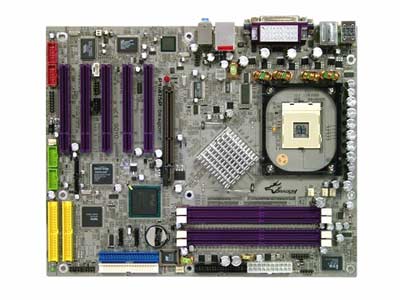
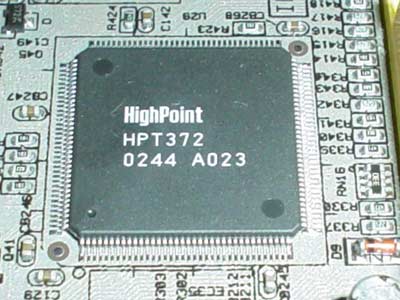
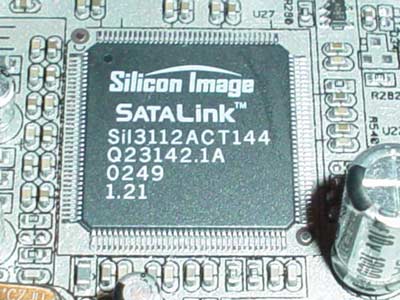
The HighPoint HPT372 controller is a nice touch to the P4I875P's Serial ATA support. The HPT372 is capable of supporting four disk drives total, so no ATAPI capability for those expecting such a feature. A nice perk is hot swap capability, meaning you do not have to power down your system to install or uninstall hard drives from the HPT372 connectors. As always we see that the ICH5R South Bridge controls two SATA connectors, but in the P4I875P's case there are an additional two SATA connectors powered by the Silicon Image SI3112A controller. Including the Primary and Secondary IDE connectors the P4I875P is capable of supporting as many as twelve different SATA/IDE drives. This might seem excessive to some but you would be surprised how many enthusiasts would be able to take full advantage of these types of features, especially if they're avid RAID users.
The addition of IEEE 1394 FireWire is always something noteworthy. A two-port FireWire bracket comes with the P4I875P's bundle of accessories, and allows you to connect to two red onboard FireWire headers. The addition of a two-port bracket is a big plus because users won't have to spend time and money going out to purchase one of these brackets. A nice touch is the addition of a rear IEEE 1394 FireWire port as well as the four rear USB 2.0 ports. This type of I/O configuration is definitely an excellent combination of serial technologies.
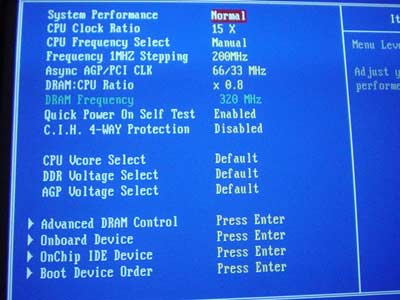
Soyo brings some good BIOS features to the table with their P4I875P. Among these features include a VDIMM adjustable up to 2.9V, VAGP up to 1.8V, and a FSB up to 503MHz. All in all a very good feature set and almost one of the most overclocker-friendly BIOS setups we've reviewed here today if it hadn't been for the low 1.60V Vcore ceiling.
Some of the negatives aspects of this motherboard include its messy BIOS layout. Memory timing options that are almost always found in the Advanced Chipset Features section are located in a not-so ordinary place. Enabling or disabling onboard components usually occurs within the Integrated Features section, but in the P4I875P's case most of the onboard components are located in the Soyo Combo section. This wouldn't be bad at all if Soyo simply omitted the Integrated Features section altogether, but they decided not to for some odd reason. In terms of layout the P4I875P's positioning of the Primary and Secondary IDE connectors is awkward because it is located below the midsection of the PCB, where it'll take very long IDE cables to reach the highest bays of a full-sized ATX case. Mid tower cases won't have this problem however.
Originally published at https://www.anandtech.com/show/1114 (Wayback Machine).