
Previewing Silicon Motion SM2260 NVMe Controller With 3D MLC NAND (512GB)
Random Read Performance
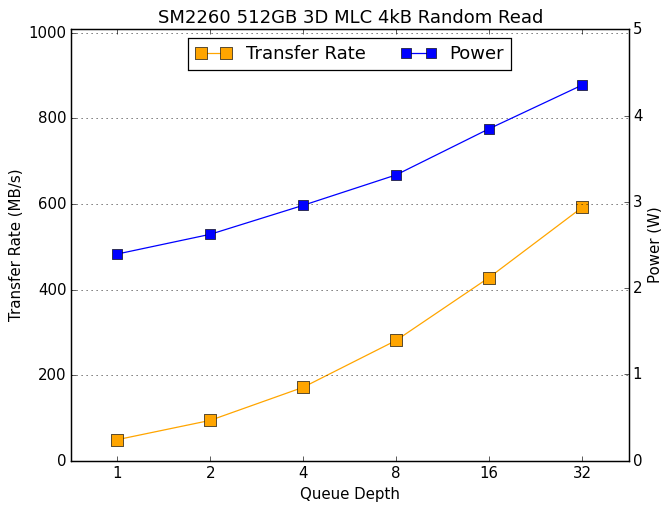
The random read test requests 4kB blocks and tests queue depths ranging from 1 to 32. The queue depth is doubled every three minutes, for a total test duration of 18 minutes. The test spans the entire drive, which is filled before the test starts. The primary score we report is an average of performances at queue depths 1, 2 and 4, as client usage typically consists mostly of low queue depth operations.
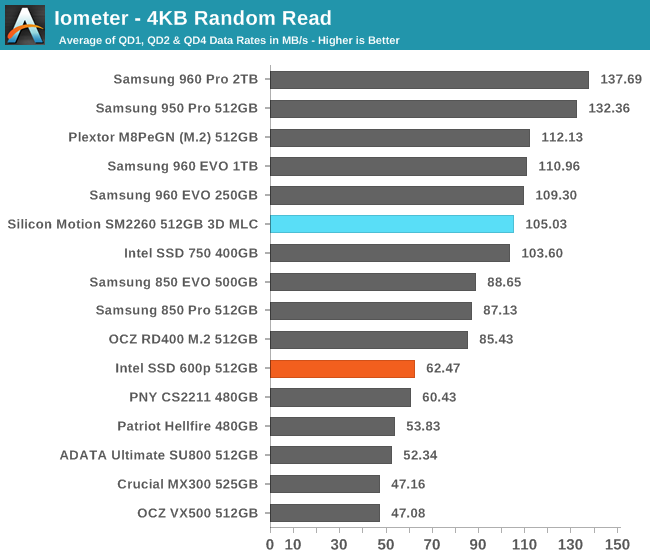
The SM2260 sample delivers random read performance that is on par with most of its competitors, both vetter than any SATA SSD and notably better than the Patriot Hellfire, OCZ RD400 and Intel SSD 600p NVMe SSDs.
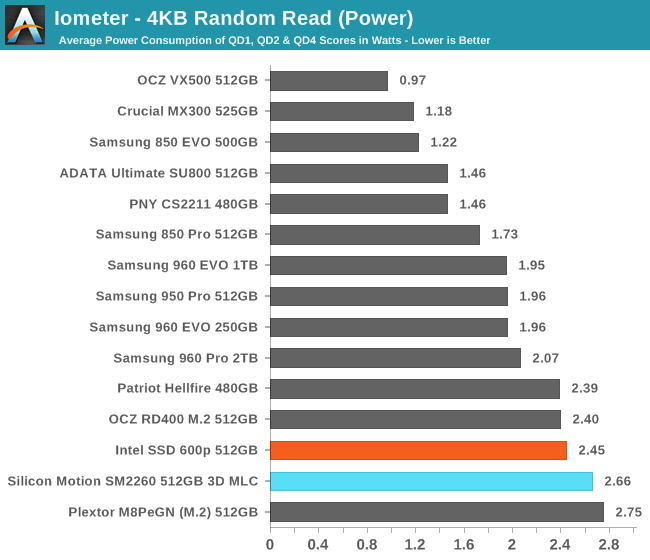
The SM2260 sample delivers random read performance that is on par with most of its competitors, both vetter than any SATA SSD and notably better than the Patriot Hellfire, OCZ RD400 and Intel SSD 600p NVMe SSDs.
 |
|||||||||
The SM2260 scales to much higher performance at higher queue depths than the Patriot Hellfire, but doesn't hit quit as high a peak as the rest of the MLC NVMe SSDs, some of which are also near full speed at QD16.
Random Write Performance
The random write test writes 4kB blocks and tests queue depths ranging from 1 to 32. The queue depth is doubled every three minutes, for a total test duration of 18 minutes. The test is limited to a 16GB portion of the drive, and the drive is empty save for the 16GB test file. The primary score we report is an average of performances at queue depths 1, 2 and 4, as client usage typically consists mostly of low queue depth operations.
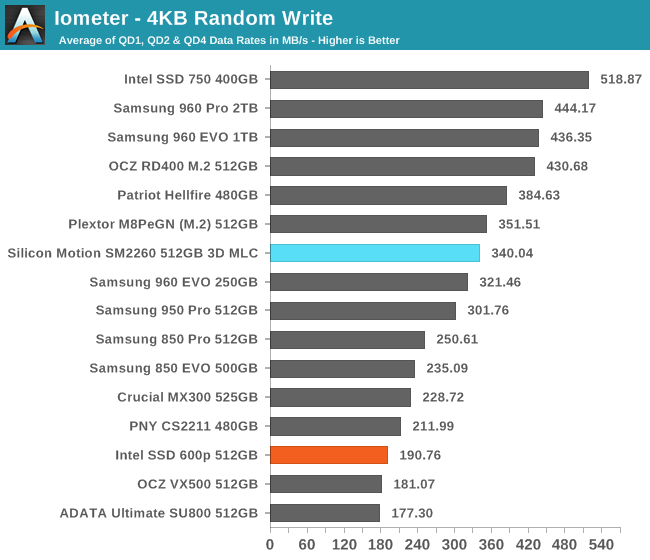
The SM2260 sample delivers better random write performance than Samsung's 950 PRO, but it can't match the more recent MLC-based NVMe SSDs.
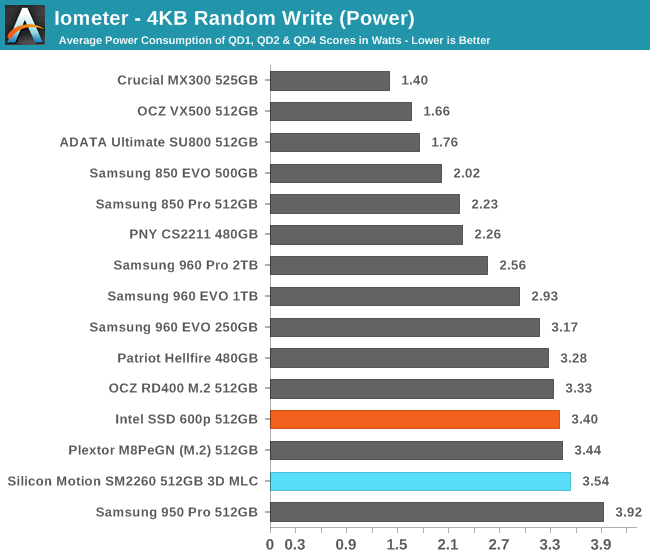
The SM2260 also beats the Samsung 950 PRO on power consumption and efficiency, but against the more recent competition it fares poorly.
 |
|||||||||
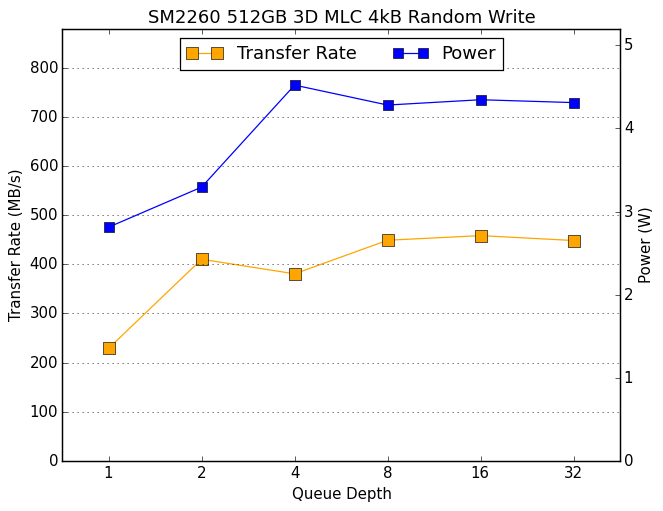
Performance scaling for the SM2260 is rough as it runs out of SLC cache and potentially begins to thermally throttle as the test progresses to higher queue depths. Its average of around 450 MB/s during the second half is substantially less than what most of its closest competitors manage even when they are thermally limited.
Originally published at https://www.anandtech.com/show/11130/previewing-silicon-motion-sm2260-nvme-controller-with-3d-mlc-nand-512gb (Wayback Machine).