
Intel Centrino/Pentium-M Notebook Roundup: Dell, FIC and IBM Examined
- Posted in
- Laptops
IBM T40p - Under the Hood
The IBM ThinkPad T40p is a slightly different beast than the T40, as the specifications show. Apart from the higher resolution display (SXGA+ vs XGA) and larger capacity battery discussed earlier the T40p comes standard with a faster processor (1.6GHz vs 1.5GHz), a higher performance video part (ATI Mobility FireGL 9000 vs ATI Mobility Radeon 7500), more memory (512MB vs 256MB), and Bluetooth.
The processor and mounting solution in the T40p is the same as that in the T40 with the exception of the speed. The T40p processor runs at 100MHz faster than the processor in the T40. The chipset also remains the same with the chips mounted in exactly the same positions.


The heatsink and fan solution used in the T40p is slightly different than the one used in the T40. The T40p's heatsink contains a total of three heat pipes, with one extending further out on the heatsink surface than the other two. What this is used to cool we will discuss in a moment, but for now note that this is the only difference in the cooling solution used in the T40p. The fan remains the same as does the remainder of the heatsink. This means that, like the T40's cooling solution, the T40p's fan remains off for the most part and is near silent even while running.
The flip side of the heatsink shows that the CPU surface is still bonded to the heatsink via thermal grease. It also shows that there is a thermal pad over the heatsink extension.


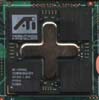
The extra portion of the heatsink is used to cool, you guessed it, the Mobility FireGL 9000 video chip. Since the Mobility FireGL 9000 is pin compatible with the Mobility Radeon 7500, IBM is not forced to rework the entire motherboard to accommodate a higher performance video part (a quality ATI likes to call FLEXFIT). IBM also did not have to turn to a replaceable video card solution like the one used in the Dell unit because the NV28M is not compatible with other NVIDIA products. The result is a high performance video chip in a thin and light notebook; something almost unheard of to date.
The Mobility FireGL 9000 is the workstation equivalent of the
The memory on chip Mobility Radeon 9000 will likely find its way into thin and light notebooks. Next year ATI predicts that we will see a Mobility Radeon 9000 S64 running in a thin and light notebook with a Banias processor under the hood. If this proves to be the case, mobile gaming will enter a place it has never been before: in the thin and light segment.
The chip runs at a 250MHz core clock speed and 200MHz DDR (400MHz effective)
memory clock speed which puts it at the exact same speed at the
Another distinguishing factor of the T40p is the amount of memory it ships with: 512MB to be exact. The memory is located all on one SODIMM slot, leaving the user accessible expansion slot free for future upgrades.


The only item on the T40p that makes the unit not a Centrino notebook like
the T40 but a Pentium M solution is the wireless card that IBM decided to go
with. The T40p makes use of a Philips


Another thing which sets the T40p apart from the T40 is its Bluetooth capabilities. The T40p uses an Actiontec BMDC200 combination 56kbps modem and Bluetooth transmitter/receiver. It is amazing to see that Bluetooth solutions have shrunk in size enough to make them fit on the same expansion card as a 56kbps modem. An antenna connection comes off the bottom of the modem/Bluetooth card and runs up into the LCD border.


The remainder of logic components on the top of the motherboard remain the same, including the AC'97 codec, Super I/O controller, and Gigabit ethernet controller used in the T40.

Also the same is the back of the motherboard.

As is the hard drive used.

Originally published at https://www.anandtech.com/show/1084 (Wayback Machine).