
The Lenovo ThinkPad X1 Yoga Review: OLED and LCD Tested
GPU Performance
Once again, since this is likely the last Skylake Ultrabook to be tested here, it’s also likely our last look at Intel’s HD 520 GPU. It’s been a nice improvement over Broadwell, even though the elusive Iris version has not made it’s way here. With 24 EUs in the GT2 GPU, it ends up being reasonable for low end games, and Intel seems to be promoting integrated GPU performance with more effort recently.
The X1 Yoga was run through the standard GPU suite, with a few synthetic tests, as well as Dota 2 for a low end game that can be played on an iGPU.
3DMark
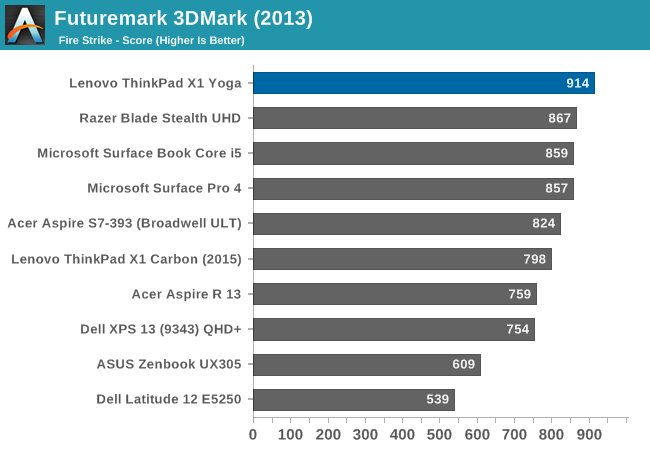
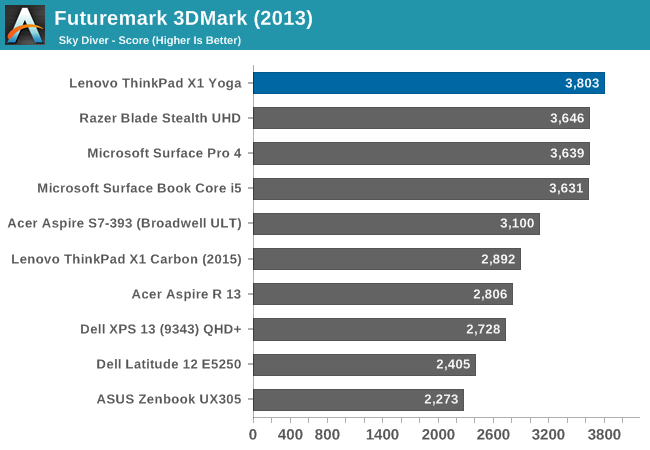
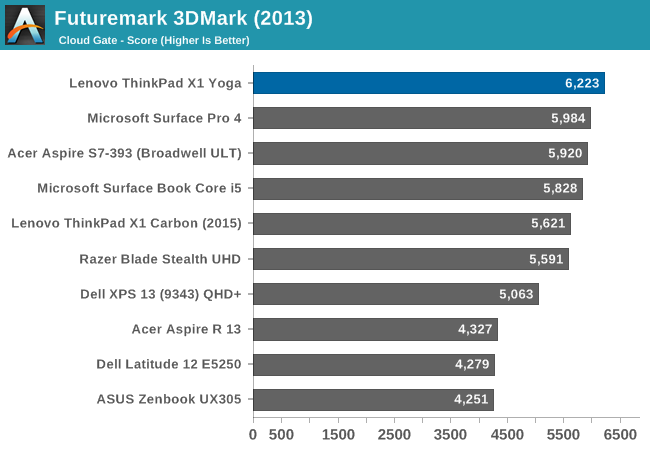
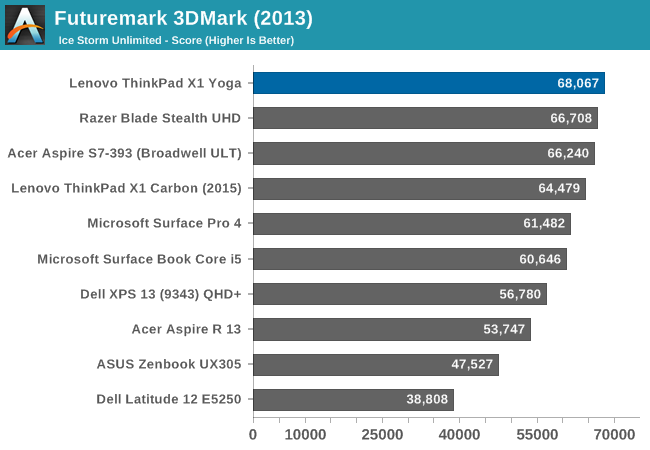
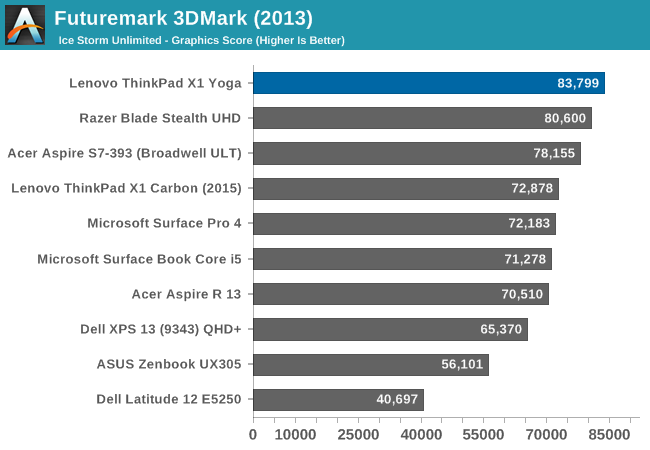
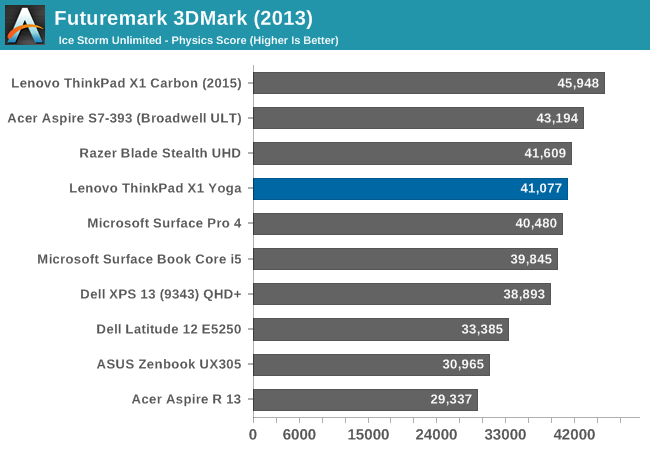
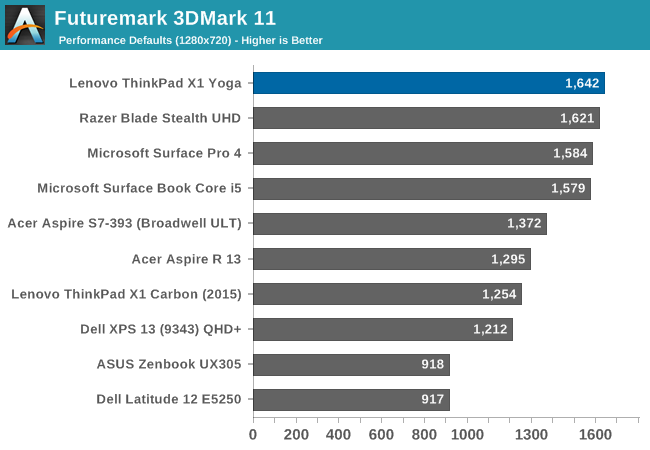
Once again, there are no surprises with the HD 520, and the X1 Yoga falls in-line with the other Skylake GT2 units.
GFXBench
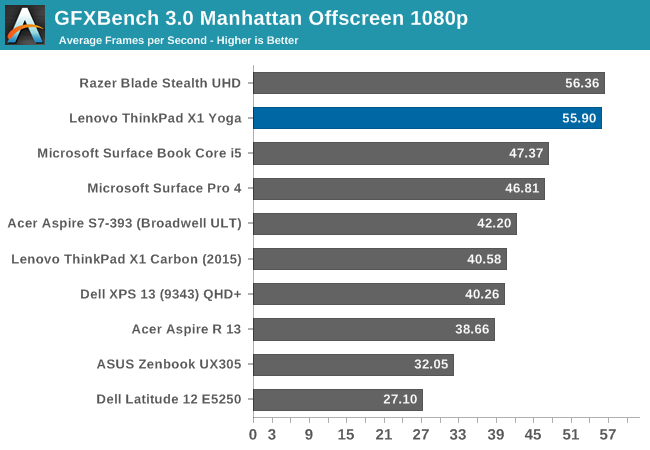
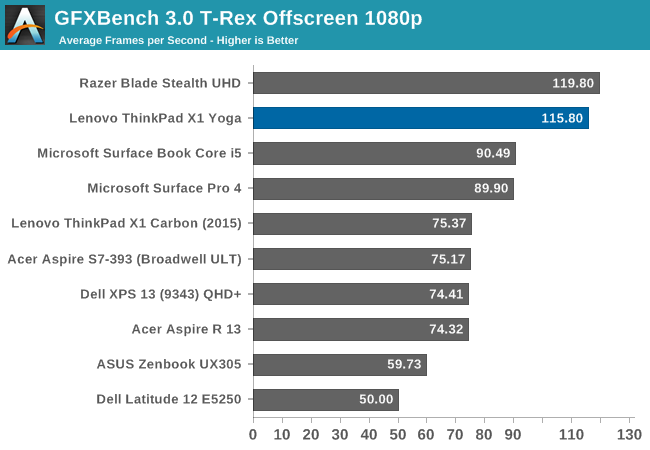
Much like 3DMark, the X1 Yoga scores similarly to the other Skylake devices tested.
Dota 2 Reborn
Valve recreated Dota 2 with a new gaming engine, which limits our selection of devices to compare against since the new Reborn version was launched. As an online game, it is also constantly updated.
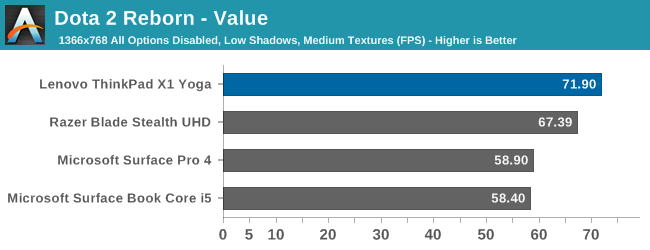
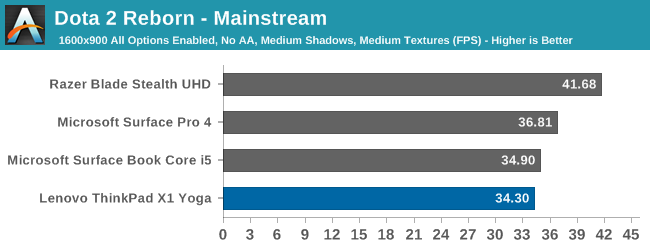
The X1 Yoga outscored the Razer Blade Stealth in the lightest test, but was unable to pass it in the higher quality tests. Due to the nature of it being an online game, with frequent updates, this could be due to game engine changes as well as driver differences between the tests (typically notebooks are only short-term review units, so it can be difficult to maintain consistency). The margins are not huge though, and although the game is somewhat playable on our medium test, it really can only be played well at the lightest settings.
Originally published at https://www.anandtech.com/show/10697/the-lenovo-thinkpad-x1-yoga-review (Wayback Machine).