
The BitFenix Pandora ATX Case Review
- Posted in
- Cases/Cooling/PSUs
- bitfenix
- ATX
- Case
Test Setup
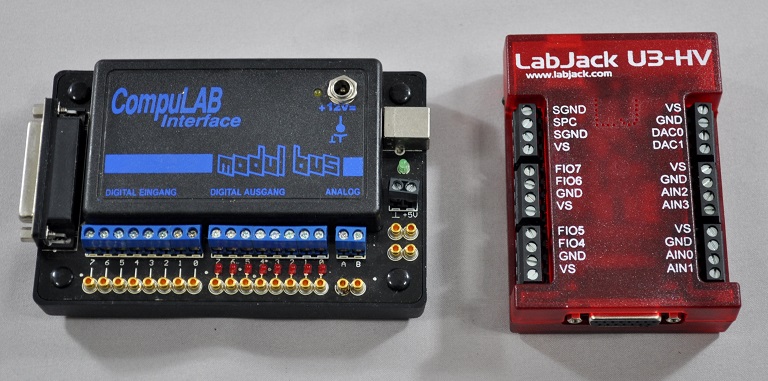
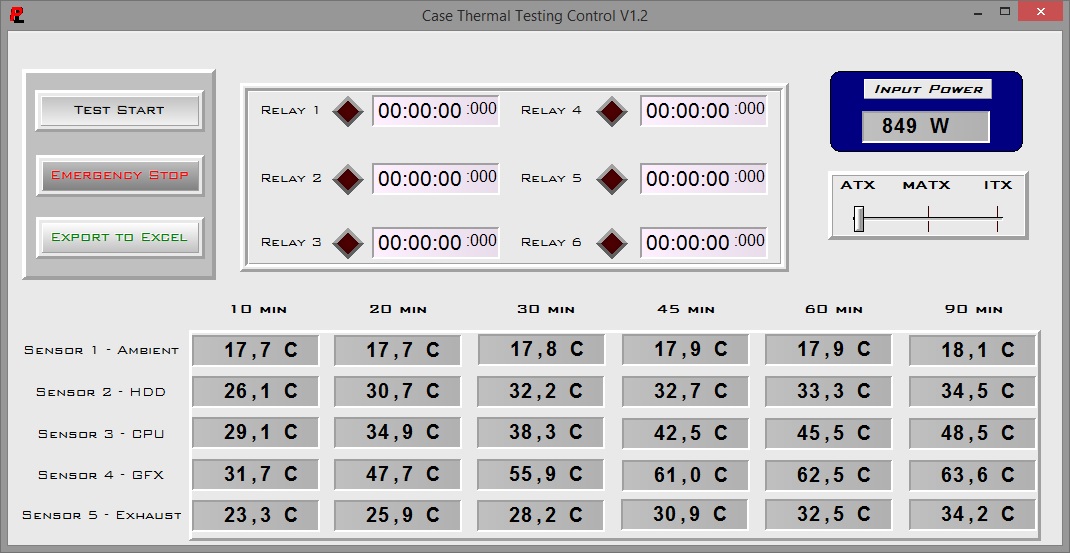
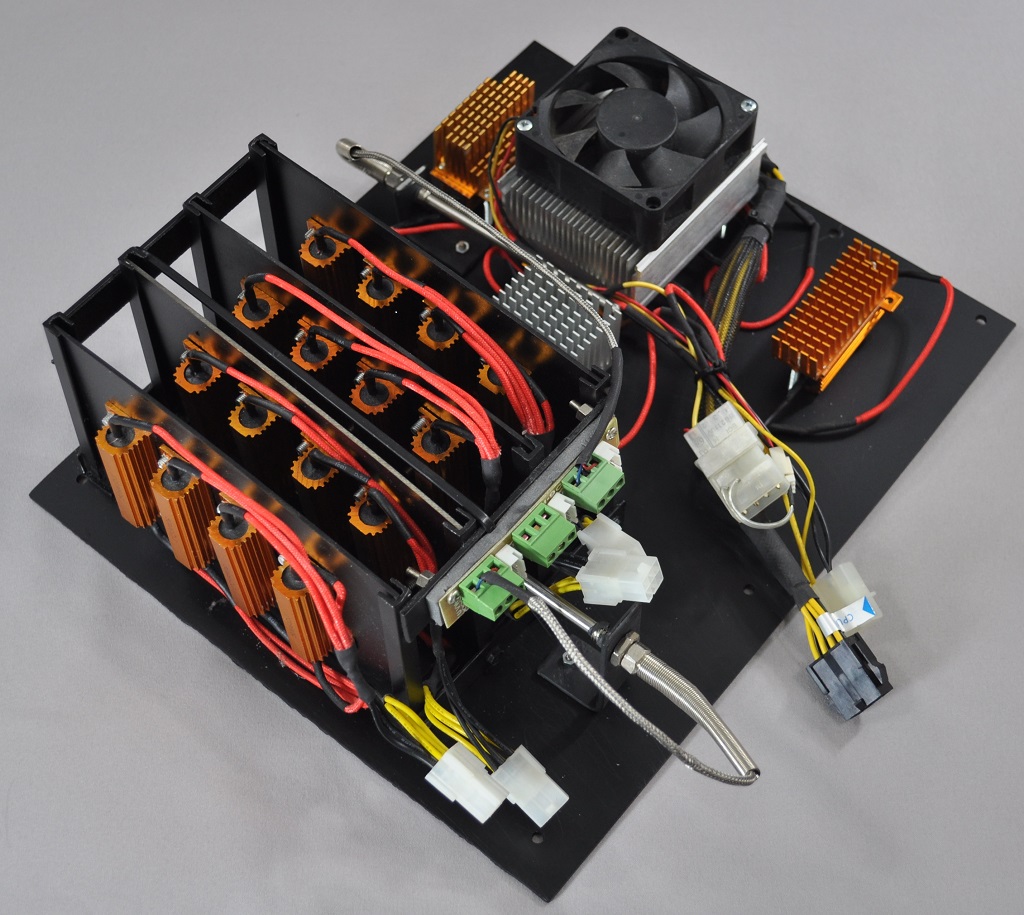
Professional testing requires the emulation of real-world situations but with repeatable results; thus, a perfectly controllable test setup and environment are required, especially for comparable results. Testing the thermal performance of any case with a typical real-world setup technically limits the comparability of the results to this setup alone, as an active system interacts with its environment and the change of a single component would alter myriads of variables. As such, we developed synthetic loads that emulate the thermal output of real systems, which however are passive, steady and quantifiable. As such, the thermal testing now displays the thermal capabilities of the case alone, as if it would have to deal with the entire thermal load by itself, regardless of the system that would be installed inside it. Laboratory data loggers are being used to monitor the PT100 sensors and control the safety relays, which are fully accessible via our custom software. Three such loads have been developed; the ATX version simulates a 200W CPU, 50W VRM, 30W RAM and 4 × 120W GPU card thermal load. Finally, three 3.5" HDD dummy loads have also been created, with each of them converting 30 W of electrical power to thermal, bringing the total thermal load of the ATX test setup up to 850 Watts. As such, the thermal load is immense and only the best of cases will be able to handle it for more than a few minutes, we are also performing a test with a thermal load of 400W, with all of the aforementioned components except the HDD drives at about 42% power, which is more suitable for the majority of cases.
Noise testing has been performed with a background noise level of 30.4dB(A). Advanced noise testing is also being performed, in order to assess the ability of the case to dampen the noise of the components installed inside it. This includes the installation of two noise-generating sources (strong fans) inside the case, one positioned approximately over the first expansion slot and one over the CPU area, which generate ≈ 44.2 dB(A) when unobstructed. During the advanced noise test, all stock cooling options of the case are entirely disabled.
Results & Discussion
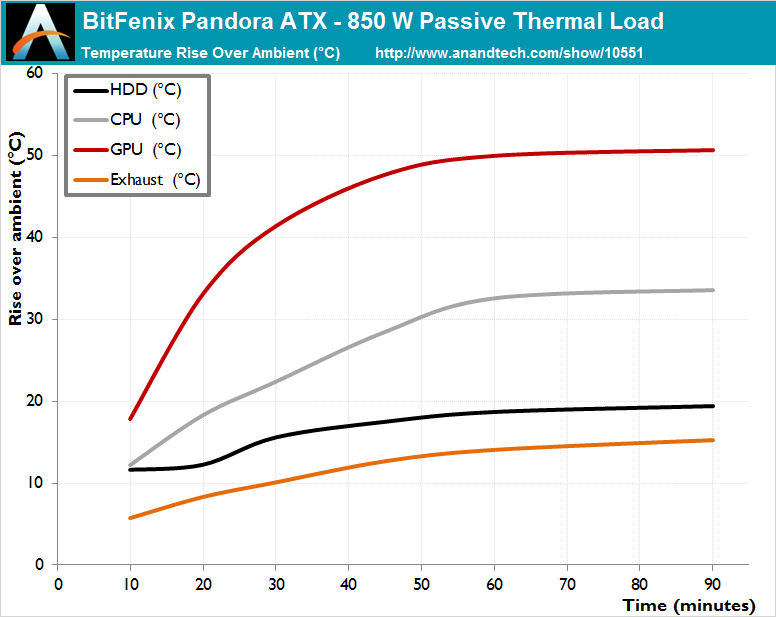
The thermal performance of the BitFenix Pandora ATX is good considering the stock cooling options and size of the case. It handles a very large thermal load very well, yet there are no notable performance differences between it and competitive products. Our measurements showed that the Pandora ATX is slightly better than the Cooler Master MasterCase 5 and falls a little behind the Riotoro Prism CR1280 and the Corsair 760T. The readings coming from our dummy HDD loads installed inside the PSU compartment however were relatively high, especially considering that the front intake fan is positioned so as to enhance the cooling of that area.

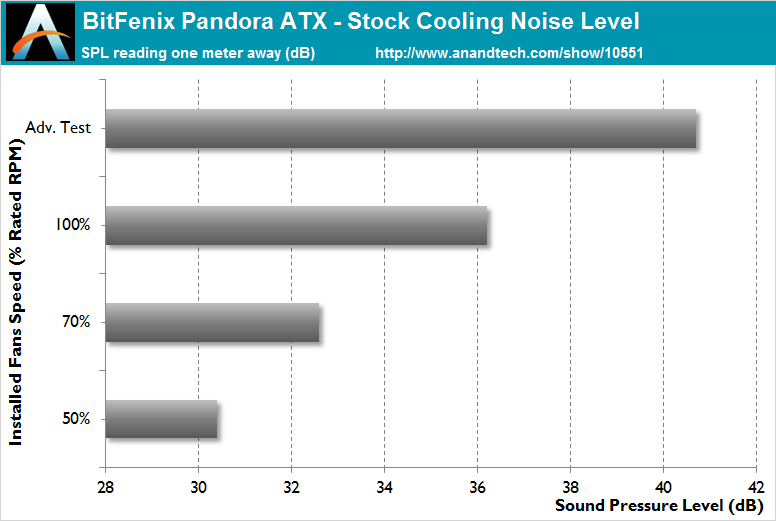
The stock cooling fans of the Pandora ATX provide sufficient airflow to insure the good thermal performance of the case at very reasonable noise levels. With the fans running at their maximum speed, our instrumentation recorded 36.2 dB(A) from one meter away in an environment with a background noise level of 30.4 dB(A). This corresponds to an audible but subtle humming noise coming mostly from the air moving through the openings and filters. At lower speeds, the stock cooling fans are virtually inaudible.
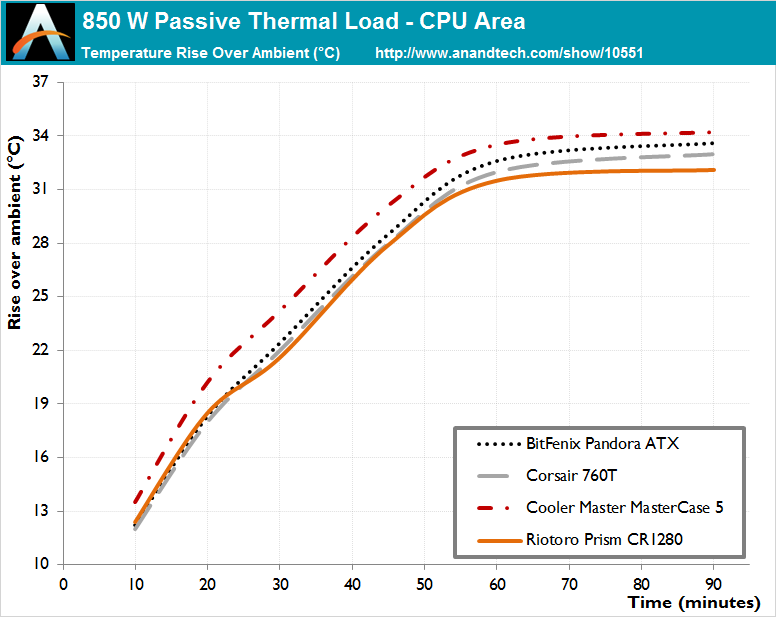
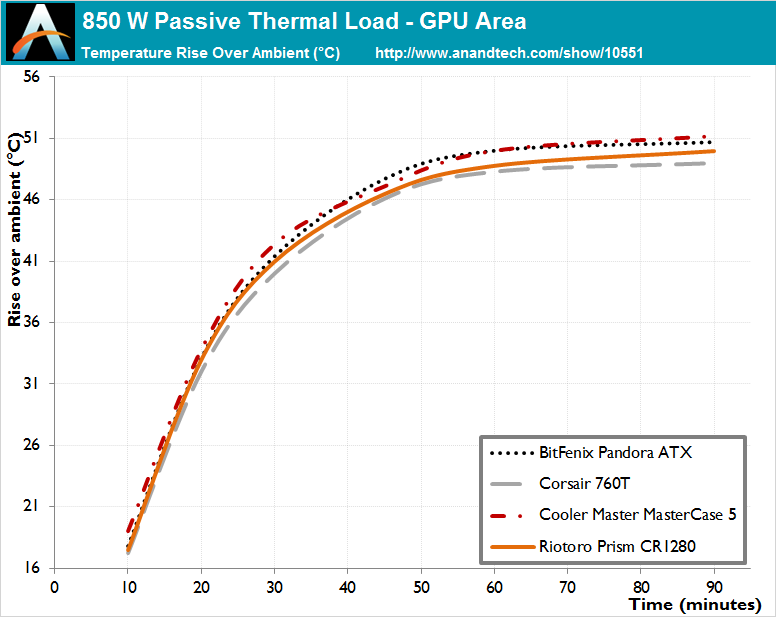
BitFenix did not specifically design the Pandora ATX to be a very quiet case and the design does not use active noise reduction measures, such as the installation of sound dampening material on the panels of the case. Nevertheless, the design of the Pandora ATX lacks any direct openings to the front of the case and that does dampen the noise of the installed equipment by a small, yet clearly noticeable level. Our instrumentation measured a drop of 3.5 dB(A) during our advanced testing, a perceptible difference by an average person.
Originally published at https://www.anandtech.com/show/10551/the-bitfenix-pandora-atx-case-review (Wayback Machine).