
The Samsung 850 EVO 4TB SSD Review
Sequential Read Performance
The sequential read test requests 128kB blocks and tests queue depths ranging from 1 to 32. The queue depth is doubled every three minutes, for a total test duration of 18 minutes. The test spans the entire drive, and the drive is filled before the test begins. The primary score we report is an average of performances at queue depths 1, 2 and 4, as client usage typically consists mostly of low queue depth operations.
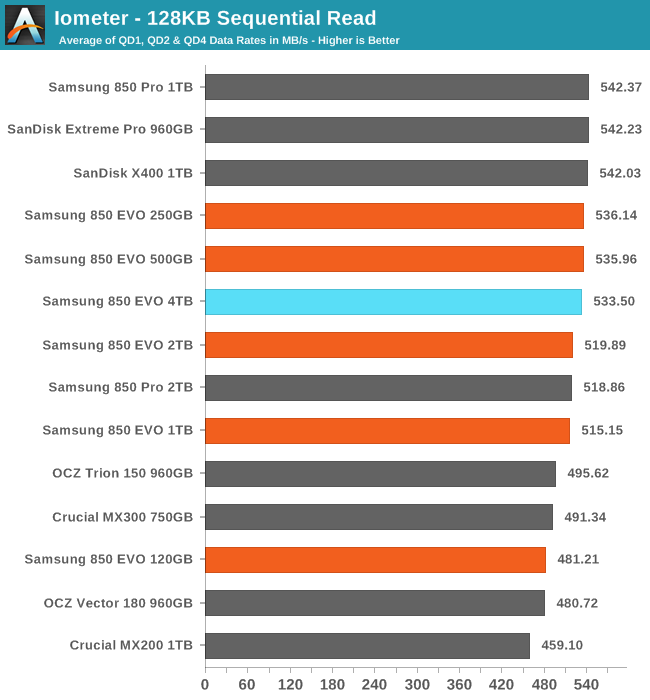
The 4TB 850 EVO scores slightly better than the 2TB for sequential reads, but it is still a hair slower than the fastest drives.
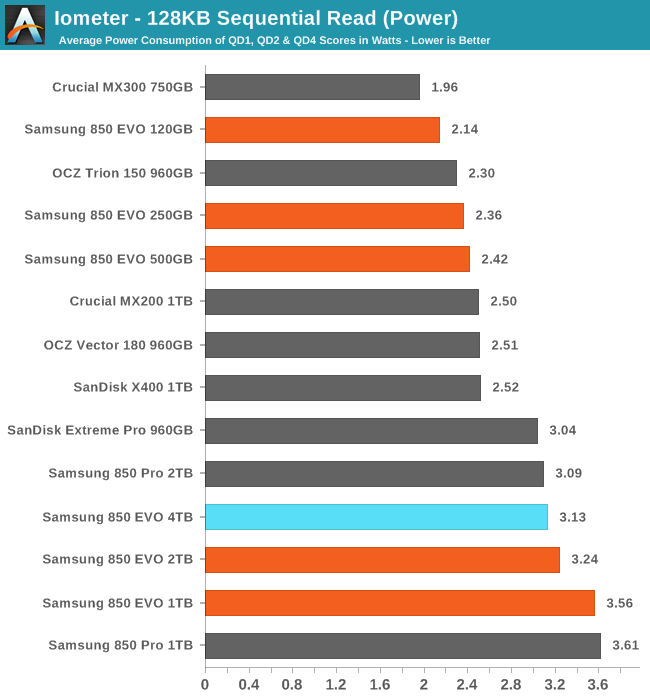
Samsung's large drives draw a lot of power during the sequential read test, but at least the 4TB 850 EVO improves over the 2TB and 1TB 850 EVOs.
 |
|||||||||
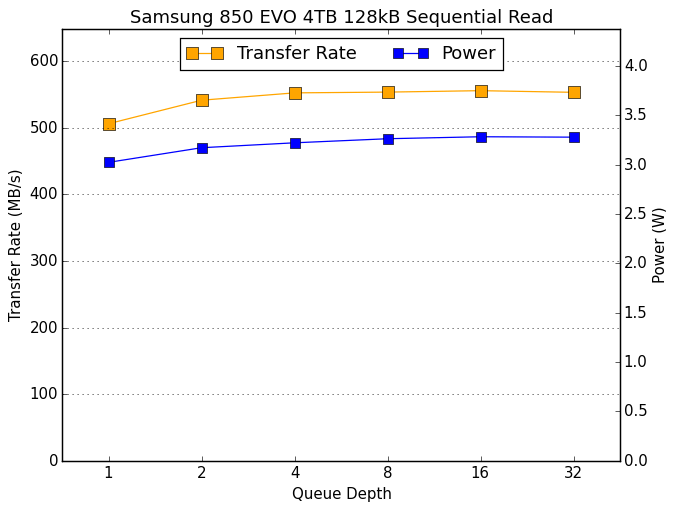
The 4TB 850 EVO does not suffer from the modestly impaired QD1 performance of the 2TB model, but for the rest of the test the 4TB is slightly slower than the other two.
Sequential Write Performance
The sequential write test writes 128kB blocks and tests queue depths ranging from 1 to 32. The queue depth is doubled every three minutes, for a total test duration of 18 minutes. The test spans the entire drive, and the drive is filled before the test begins. The primary score we report is an average of performances at queue depths 1, 2 and 4, as client usage typically consists mostly of low queue depth operations.
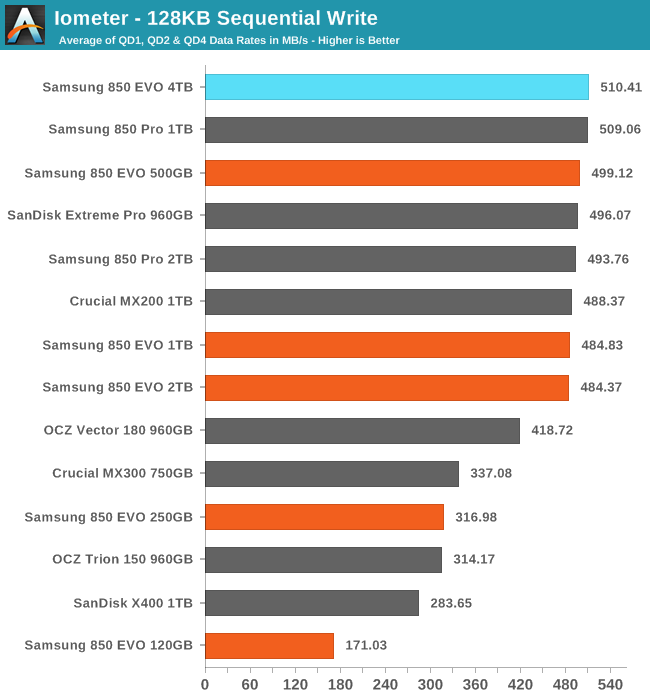
The 4TB 850 EVO manages to just barely break the record of the 1TB 850 Pro for the fastest sequential write speeds at low queue depths.
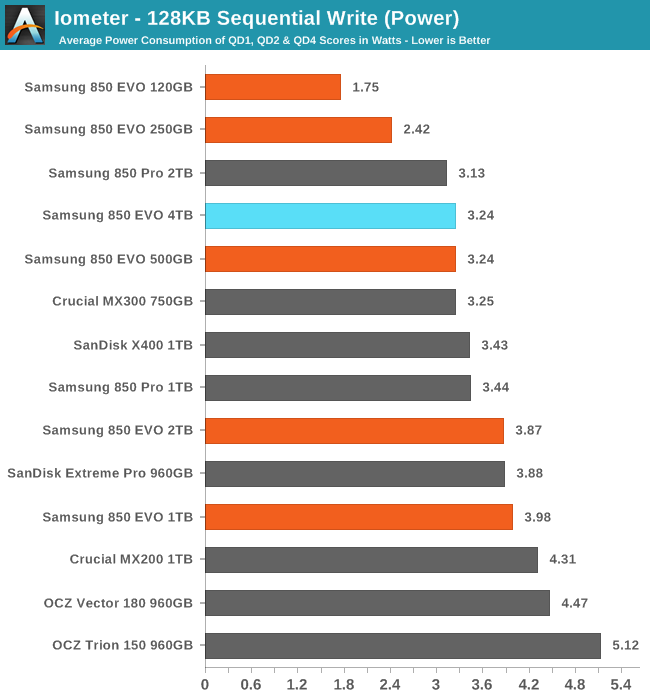
With the fastest performance and the fourth-lowest power usage, the 4TB comes out on top for efficiency.
 |
|||||||||
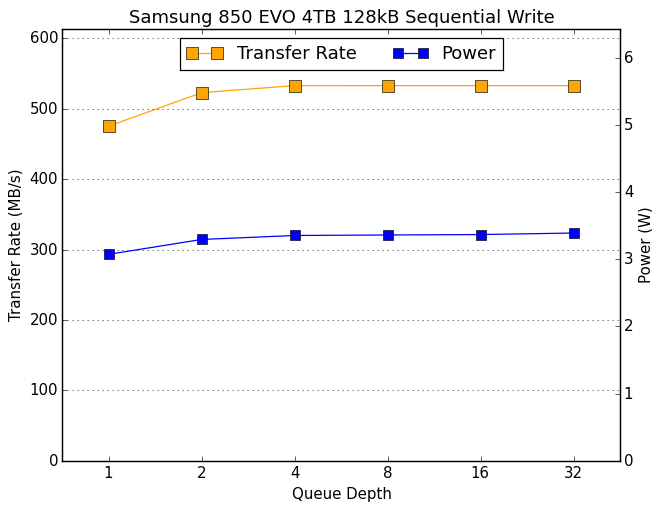
The 4TB 850 EVO shows substantially better QD1 performance and slightly better QD2 performance than the 2TB 850 EVO while having power consumption that is more in line with the 850 Pro.
Originally published at https://www.anandtech.com/show/10481/the-samsung-850-evo-4tb-ssd-review (Wayback Machine).