
Comtrend PG-9172 Powerline Adapter Review: G.hn Gets Primed for Retail Push
Miscellaneous Aspects - Power, Thermals and Coexistence
Powerline adapters tend to get quite warm under sustained loading conditions. The power consumption is also an interesting aspect, since these devices are kept on 24x7. We evaluated these aspects for the Comtrend PG-9172 and the ZyXEL PLA5405. While the master node was left as-is (with the DHCP server NUC connected) in the 'M' location in the floorplan, the other member of the adapter pair was connected to a Ubiquiti Networks mFi In-Wall outlet in the same room as Node C. The In-Wall outlet allows measurement of instantaneous power consumption.
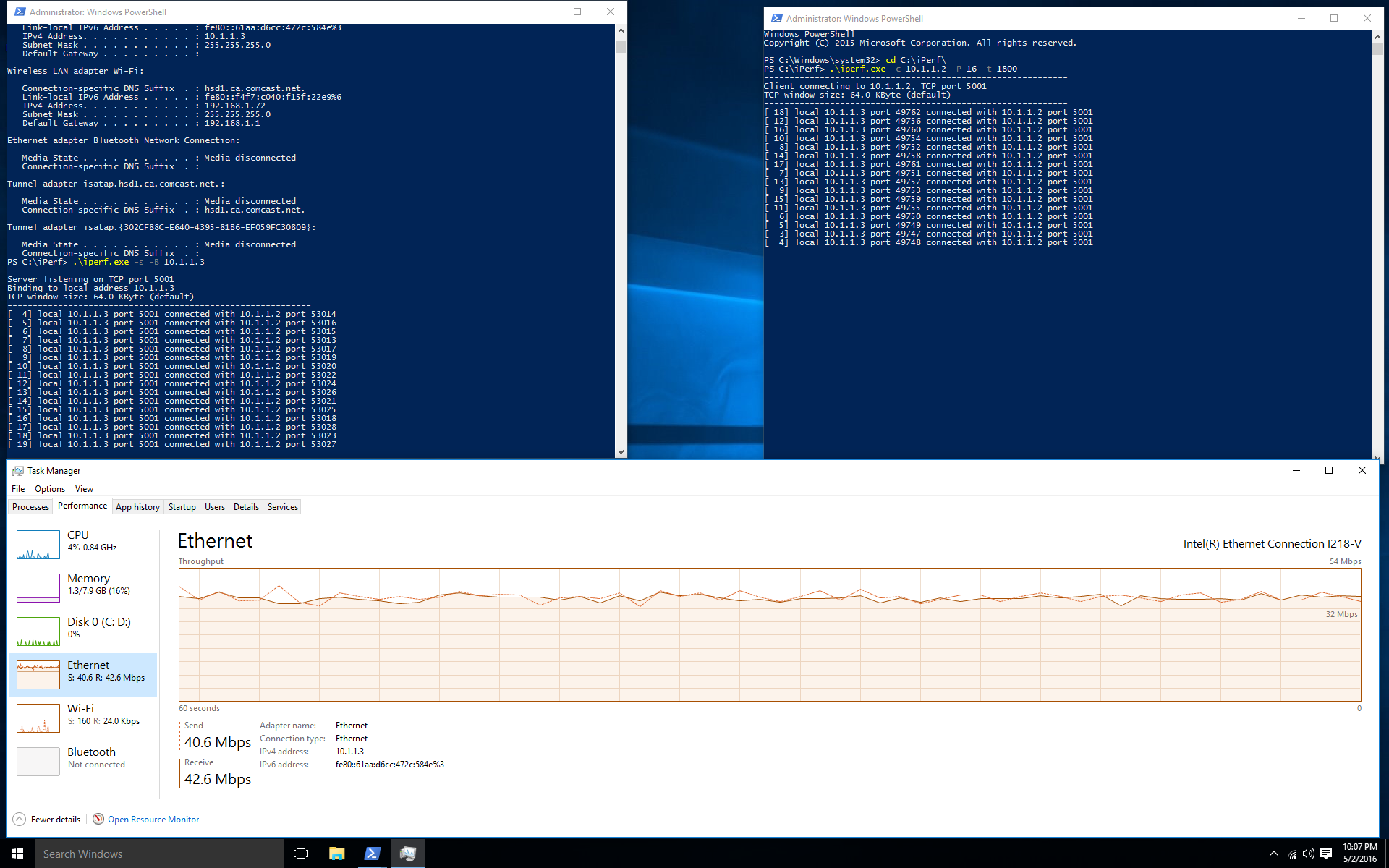
A stress test was set up with iperf servers and clients running on the NUCs at either end. 16-stream TCP benchmarks were processed for 30 minutes from both sides simultaneously.

Under these sustained loading conditions, the G.hn pair was able to maintain 60 Mbps+ uplink and downlink, while the HPAV2 MIMO pair was able to maintain around 40 Mbps
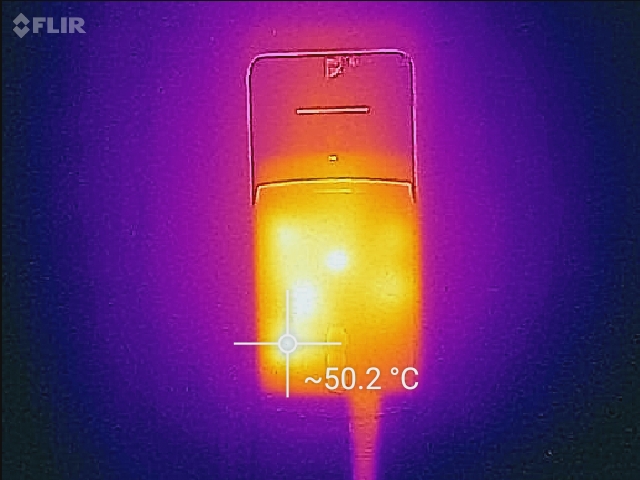
At the end of the 30 minute stress test, thermal photographs of both units were taken using the FLIR One for Android thermal camera.

We find that the G.hn adapter ran hotter (more than 56C) compared to the HPAV2 adapter (around 50C)
The power consumption of the adapters was also recorded under different scenarios. Under stress, the HPAV2 adapter does consume more power than the G.hn adapter. However, the thermal design must be better in the former in order to maintain a lower case temperature. On the other hand, under idle conditions, the disabling of the power saving feature by default in the G.hn adapter results in much higher power consumption compared to the HPAV2 adapter.
| PLC Adapter Power Consumption | ||
| Scenario | Comtrend PG-9172 | ZyXEL PLA5405 |
| Normal (No Traffic) | 3.19 W | 1.98 W |
| Stress Test (TCP) | 3.85 W | 3.97 W |
Coexistence is important if G.hn adapters end up getting installed in apartments with pre-existing HomePlug networks. Marvell has been working on updating the firmware to improve coexistence. Even though our review units were not equipped with the latest coexistence firmware, we decided to test out whether HomePlug and G.hn networks could co-exist. Towards this, we created a HomePlug AV2 network to extend our primary network (192.168.1.0 subnet) and retained the G.hn network described above. The HPAV2 network's master node was connected to a power outlet in the wall adjacent to the G.hn master node.
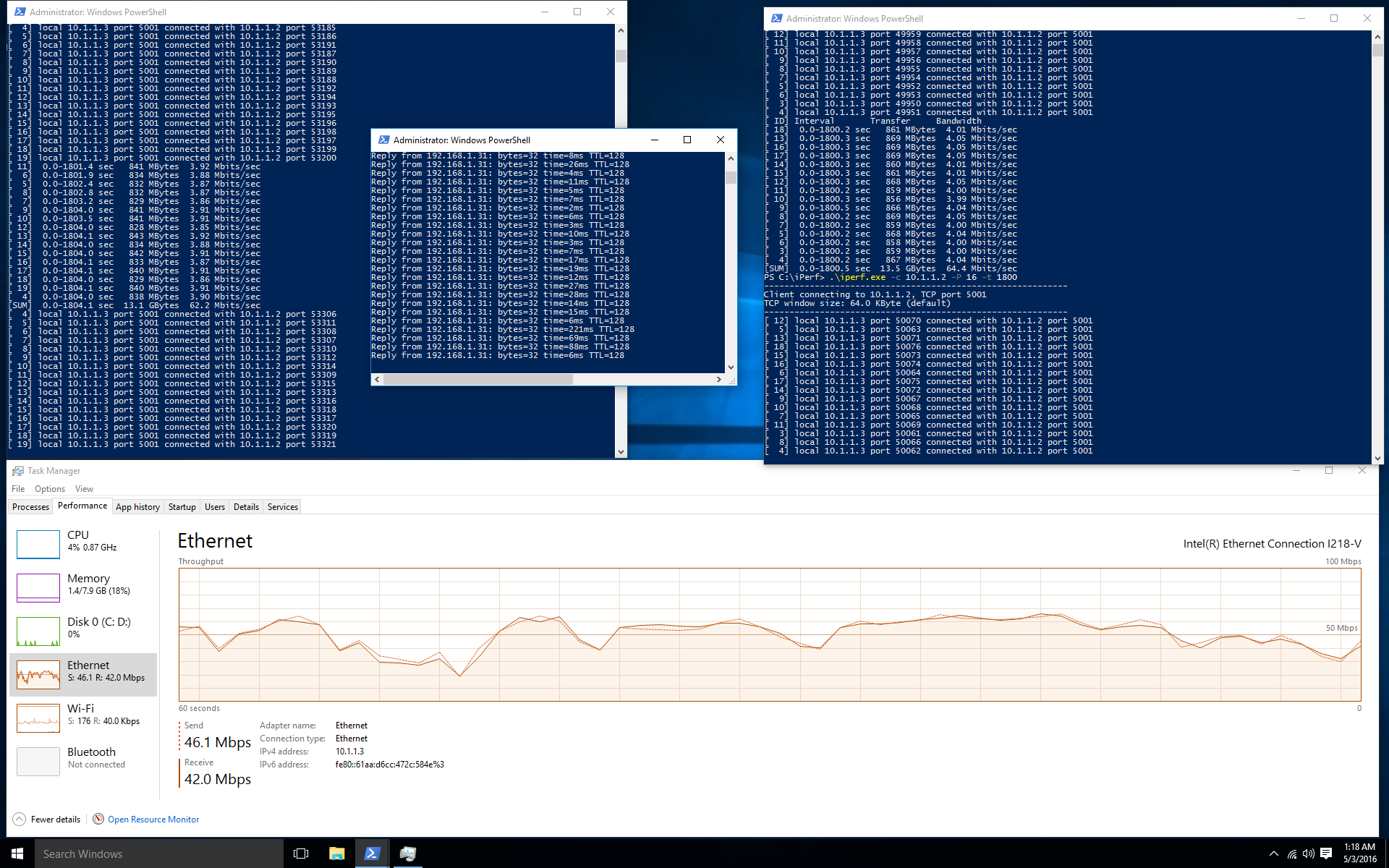
Traffic in our primary HPAV2 network was restricted to a series of pings (over Wi-Fi to a PC connected to the second powerline adapter). In this scenario, we processed the stress test on the G.hn network. There is a clear loss of bandwidth, and the consistency exhibited in the previous run was no longer present. However, it did manage to stay above 35 Mbps all through. On the HPAV2 side, we lost around 4 packets out of a few thousand. On the whole, our conclusion regarding coexistence is that it works in our limited testing. Future firmware updates might help lessen the impact on the HPAV2 network while also enabling the G.hn network to have better performance consistency.
Originally published at https://www.anandtech.com/show/10293/comtrend-pg9172-powerline-adapter-review-ghn-gets-primed-for-retail-push (Wayback Machine).